
The next day I’m sitting next to Michaela, the Co-ordinator, giving her the feedback from my latest batch of patients, when Richard strides into the office, throws his bag on the floor and takes a seat opposite.
‘Developments on the Helga case,’ he says, folding his arms. ‘When you’re ready.’
Turns out, he’d been in to see her that afternoon for another capacity assessment.
‘My guess is, she has it,’ he says. ‘Although I couldn’t actually prove it. She’s adamant she doesn’t want carers going in. She doesn’t want anyone checking up on her, or bothering her about food and getting washed and what have you. She just wants to be left alone. Which is absolutely fine, of course. She’s perfectly entitled to refuse whatever she likes. The only thing she wouldn’t do is stop cursing long enough to listen to me explain the risks she’s running and then repeat it all back to me. So I can’t sit here and categorically say she understands the results of our actions. But can she look after herself? No, I don’t think she can. Is she a danger to herself? Not in the short term. Do we have a duty of care? Of course! Even though she’ll fight us every step of the way.’
He repositions his glasses, and smiles, his teeth white and clamped together, emphasising a slight kink in the crown line, the perfect fit for a pipe.
‘It’s a tricky one,’ he says, to sum up. ‘But as a general rule you have to assume capacity if there’s no direct evidence to the contrary. She seems okay in herself. Her bedding was soiled but I changed that when she was downstairs feeding the cat. There’s food in the house. I think the nephew drops by now and again. It’s just – I can’t stand here and tell you she’s not vulnerable.’
True to her role, the Co-ordinator zones in on the most salient point.
‘So we still need to send carers in to keep an eye on her until the GP has decided what to do next.’
‘Correct!’ says Richard, standing up and towering over us. ‘I’d suggest first thing in the morning, to see she hasn’t spent the night on the floor. She’s not actually that bad, if you take an aerodynamic approach.’
He picks up his bag and turns to go, but then has another thought.
‘You’re right about the cat,’ he says. ‘The cat’s the key. She likes it if you make a fuss. Yes! Lateral thinking! We must use the cat as a lever.’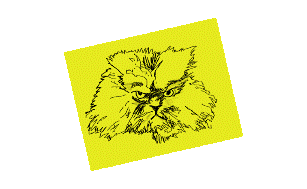
‘I don’t think the cat’ll be too happy about that,’ says Michaela, typing it all up on the smart board.
‘Oh don’t worry! I can’t imagine that cat’s too happy about anything!’
Author: jim clayton
the BFN
These questions of mental capacity – they’re always fraught.
Which is why I’m relieved to have caught Richard on the phone. Richard works for the city Mental Health team. He’s great at untangling these things. Vigorous, avuncular, thorough, clear, with a reassuring volume to him, like I’m floundering about in the boat, panicking, and he’s striding along the shore with a megaphone.
‘Helga? Not one I’ve dealt with personally, but I’m pretty sure she was triaged a couple of months ago,’ he says. ‘Just reading the notes, Jim… ah yes. Here we are. Initial referral from GP. Ninety year old female, query more confused than normal. Carers reported bizarre behaviour, putting faeces on the table and so forth. When the GP went in she wouldn’t let him do anything, no bloods, dips or anything. So we went in to assess capacity.’
‘What was the result?’
‘It doesn’t appear we got very far, I’m afraid. She was marked as having moderate cognitive impairment, but wouldn’t engage in any further tests. Wasn’t bad enough to section, not sufficiently a danger to herself or others. We ended up referring her back to the GP. What’s your involvement?’
‘Helga’s private carer has gone away for a few weeks. The family wanted her to go into a home for respite, but she declined at the last minute. The GP’s sent us in to bridge the care gap, and to try our luck assessing her medically again.’
‘Oh? And how did that go?’
‘Not that great, Richard. She was aggressive, abusive. And now she’s insisting on white females only.’
‘Oh dear!’
‘Yep. She dropped the C-word on me.’
‘The C-word? What d’you mean?’
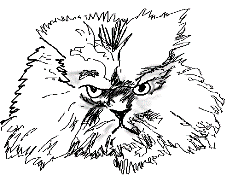
‘Well not cat. Although she has got one. One of those big furry nightmares, with a squashed up expression, like it’s planning something.’
‘I bet it is,’ says Richard. ‘I bet it is.’
four paintings
Lionel is lying in bed, everything in line with everything else – nose, arms (outside the covers), legs (inside the covers) – as neat and square as a newly-boxed toy: The Recently Discharged Patient (batteries included).
On the wall at the foot of the bed are four paintings. The Pope, A Jaguar, Angela Rippon and Twiggy. The three personality paintings are only just recognisable, all slightly off. Angela Rippon looks startled, like an owl that swallowed an over-large mouse. The jaguar doesn’t fare any better, his muzzle twisted, like he caught it in the door of a jeep.
‘I did them,’ says Lionel. ‘What d’you think?’
‘I think you’ve really got something.’
‘That’s my favourite. There.’
He nods at the Pope. A man who seems to be praying so hard his face has turned brick red.
‘I spent a long time on the eyes,’ says Lionel. ‘On all the little veins and bits.’
‘Amazing!’
‘Of course, you know why he’s praying, don’cha?’
I look at the painting more closely.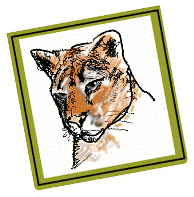
‘I don’t know. Where’s his hat? Someone’s nicked it and he wants it back.’
‘No. He’s praying the jaguar doesn’t catch wind of him.’
the struggle
Once Alan discovers I’m a socialist, he launches into a complex lecture on the rise of Neoliberalism and the dismantling of the Welfare State. He’s so enthusiastic, in such a rush to get his words out, that every now and then he gives a convulsive little sneeze, like an ancient cat clearing a hair-ball. There’s not much opportunity for me to speak, even though I think he gives Stalin an easy ride, considering.
‘So there we are,’ he concludes, gripping the arms of his chair, ‘The post-war consensus replaced by a neoliberal conspiracy and precious little to be done except perhaps civil war.’
I’ve been waiting to chip in with something else, too, something I know he’ll like.
‘You know what I think sums up the Establishment’s contempt for the working class? Zero hour contracts.’
‘Absolutely! Absolutely!’
I want to confess that I nicked that line from Owen Jones’ book, The Establishment, but I’m supposed to be getting on with the examination and I’m running out of time.
Alan’s a fascinating case. His notes describe self-neglect, and whilst it’s true his bungalow is extremely unkempt, it’s also true to say that I’ve never seen such a beautiful bookcase, filled with interesting books, some of great age, on philosophy, history, politics – all the spines nicely aligned, everything looking as carefully tended and height-ordered as a cottage garden.
Apart from the general frailty you might expect of someone in their late eighties, Alan’s past medical history is remarkably clear. Except for one term, something I had to look up before I came out to see him. Somatoform disorder. Distinct from psychosomatic in that his symptoms – dizziness, unsteadiness – have no discernible medical cause, and that after many years of detailed investigations. The fact is, the doctors simply don’t know what’s wrong with him.
‘Let me fetch you my folder,’ he says, standing up and tottering precariously across the room. ‘You’ll never find it.’
I write up his obs, which are all normal.
‘It’s been lovely talking to you,’ I tell him, shaking his hand.
‘Likewise. Keep up the fight!’
‘Don’t get up. I can see myself out.’
‘No, no,’ he says, struggling up and almost pitching sideways into a pile of clothes and newspapers (a soft landing, at least). ‘It’s the least I can do.’
I hear him lock the door behind me as I walk down the path. When I reach the garden gate I turn to look back. He’s still there, watching from behind the patio glass. I give him a raised fist salute: solidarity or something like. He waves back cheerily.
I throw my bag in the car and carry on with my visits.
the gatekeeper
The sign outside the main door of the residential home is admirably clear. Big white letters on a green plastic plaque: Ring and Enter. Just beneath it is a large Bakelite nipple. I press it, there’s a resonant buzzing deep inside the house, I push the door open and go through into the hallway. Another door, this one with ancient stained-glass panelling. Another notice. Big white letters on a red plastic plaque: Please use the hand gel provided and, just below it, Please sign the visitors’ book.
This one opens of its own accord. An elderly carer stands there, her smile as wide and fixed as a woman who allowed a psychopathic nephew to do her make-up, then dried it all off in a wind tunnel.
‘Can I help you?’ she says.
‘Hi! Yes! I’m Jim, from the Rapid Response Team. Come to see Derek.’
‘Derek?’
‘Weasenham.’
‘Derek Weasenham?’
‘Yes. Derek Weasenham. Does he live here?’
I look at my diary for comfort. (It’s not even open).
‘Ah, yes! Derek!’
‘That’s him!’
But just as she’s about to show me the way, another, younger, fiercer carer approaches, dressed in the same fluourescent pink pinafore, both hands thrust deep into the front pocket, like she’s concealing a weapon.
‘How did you get in?’ she says.
The first carer makes a discreet sideways step. I feel like doing the same – in fact, there’s a big, floor-standing vase filled with fake sunflowers. I’m tempted to dive behind that.
‘Well – I just rang and came through.’
‘The door was open, was it?’
‘It wasn’t open, but it wasn’t locked. If you see what I mean.’
‘So the door wasn’t locked, you rang the bell and you came through.’
‘Yes.’
I make a backwards thumbing motion. With my thumb.
‘There was a sign,’ I say, pathetically.
‘I know there’s a sign. I work here.’
‘It says ring and enter.’
‘Which means ring the bell and wait for someone to come and let you in.’
‘That’s not what it says.’
‘That’s what it means.’
‘I’m sorry to make a point of this….’ (not as sorry as the first carer; although her make-up is still supporting her smile, there are worrying signs of fatigue).
‘…but, the way I’d read, ring and enter is ring the bell and let us know you’re around, then come in and make yourself known.’
‘Make yourself known?’
‘Present yourself. For inspection.’
‘No. You should ring and wait like everyone else.’
‘Well I think in that case you ought to change the sign.’
‘What to?’
‘Ring and wait.’
The first carer has opened a cupboard. She takes a vacuum cleaner out, and then stands there with the flex in her hand, still smiling.  She’s so stressed, I wouldn’t be surprised if she plugged it in her ear.
‘Not now, Davina,’ says the second carer.
And then to me: ‘Who is it you’ve come to see?’
‘Derek. Derek Weasenham.’
‘This way,’ she says.
Which I have to admit is pretty damned clear.
something
I open the keysafe and let myself in.
‘Hellooo.’
Even if Myra hadn’t hollered out, I’d know where she was. A long green tube runs from the compressor in the hallway, snaking through the kitchen and on into the back room, terminating in the nasal specs looped around her ears.
‘Where’s Stella tonight?’ she says.
‘Stella’s sick, so they asked me to drop by instead.’
‘Well that’s good of you, pet. Thank you.’
‘How are you doing?’
She shrugs.
I put my bag down.
‘Your line’s a bit kinked.’
‘It’s a kinky line,’ she says. ‘Always has been.’
‘What d’you fancy for supper, Myra?’
‘There’s one of them microwave meals on the side. Could you heat that up for me? And I’ll have a trifle out of the fridge n’all, if you don’t mind.’
‘How about a cup of tea while you’re waiting?’
‘Good idea. And one for yourself while you’re at it.’
‘Thanks.’
The ready meal takes a little longer than normal. Five minutes on full power; one minute to stand, then another five minutes. Whilst it’s cooking I take the teas through and start writing out the yellow sheet. It’s only then I notice Myra has the same December birthday as me, give or take forty years.
‘Fancy that!’ she says.
‘I was due on Dad’s birthday the day before, but I made a point of coming out a few minutes after midnight.’
‘You dug your heels in.’
‘Fingers, heels. I wonder they didn’t get a vet in and use a rope.’
‘Your poor mother.’
I take a sip of tea.
‘People always used to ask me if I minded having a birthday that late in the year. Did you?’
‘No. Never.’
‘I didn’t, either. I’d open the last present on Christmas Day, but then I’d know I’d have a load more in a few days’ time. Well – some.’
‘You poor thing!’
The compressor makes a clanking noise; Myra adjusts her specs.
‘We never had presents at Christmas,’ she says. ‘My parents were Jehovah’s Witnesses.’
‘I didn’t know that.’
‘Well – they had a lot of rules. Blood transfusions was one. I was an only child. One day my mum was ill with internal bleeding. In a coma – close to death. The doctors asked me for permission to transfuse her but I really didn’t know what to do. In the end I said yes.’
‘So what happened?’
‘She got better. Didn’t speak to me for a good long while, but we made our peace. Silly really. All over a book.’
‘The bible?’
‘Ay. It’s just words, after all. Human words. I never did understand. It’s just one person’s interpretation. Don’t get me wrong. I still believe in God and everything. Just not the kind who’d get himself stuck in an old book.’
The microwave pings. I go into the kitchen to put the meal on for another five minutes.
Back with Myra, she’s finished her tea and getting ready to eat.
I set her up with a tray and some cutlery. She hands me the knife back.
‘Just a spoon, pet,’ she says. ‘It’s gloopy. And I spill stuff off a fork.’
‘I’ve always been a little jealous of people who have religion,’ I tell her, putting a napkin by her side. ‘I think it must make life a bit easier. You’ve got a ready-made set of rules. You don’t have to think much for yourself. And you’d have that feeling someone’s looking out for you, whatever the situation.’
Myra flips the tubing on her lap and sits up straight.
‘I don’t know about easier, Jim, but it definitely helps,’ she says.
‘I think that desire to worship some greater being must be pretty deep in our DNA,’ I tell her, fetching her a spoon. ‘I remember seeing this documentary about some Palaeolithic caves they found in France. Sealed for thousands of years by a rock fall. Paintings of animals all round the walls, then in the centre of it all, a standing stone like a plinth with the skull of a bear on the top.’
‘A bear?’
‘I think it was a bear. Like an altar, in the middle of a cathedral. A hundred thousand years before Christ.’
‘Do you think they worshipped bears, then?’
‘I don’t know. Something, at least.’
‘Who’d have thought?’
‘I know.’
The microwave dings again. I serve it onto a plate, put it on a tray, bring it through.
‘Haute cuisine,’ I say. ‘Or hot, at least.’
‘Lovely!’
I finish the paperwork. Myra pushes the ready meal around to help it cool.
‘D’you think it’s still there?’ she says.
‘What?’
‘That bear. On the altar.’
‘I think so. Maybe. They said they were going to seal the caves up again, because if they had too many visitors, all the condensation would damage the paintings.’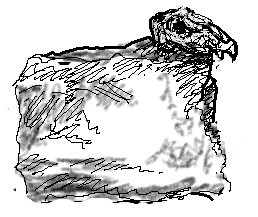
She nods, and turns the spoon round and round in her hand, like the
dish of a radar receiving signals.
‘Still,’ she says at last, scooping up a mouthful. ‘It sounds like something, don’t you think?’
a perfect match
Jean slipped off the sofa and couldn’t get up again. Even though she’s ninety-four, she’s been pretty mobile and independent, but just lately she’s been feeling a little off-colour, weaker in the legs, slightly nauseated. She tried everything to get back up, different angles, improvising with furniture, any object she could think of to help. Nothing worked, so she sat there, marooned on the rug, stroking the cat, wondering what to do. The phone was within reach, thank God, so that was some comfort. It was midnight, though, too late to call her grandson, she thought. He’s got work in the morning. He needs his rest. It wouldn’t be fair. So she made herself as comfortable as she could and stayed there until mid-morning, when he happened to pop round during break.
The doctor was called. She couldn’t find anything wrong particularly, although it would have been useful to get a sample of urine, to screen for UTI. Jean was adamant she didn’t want to go to hospital, and to be honest, the doctor didn’t think it was entirely necessary. She would make a referral to The Rapid Response Team, who’d come in and blitz the place with equipment. They could set up a micro-environment downstairs, with grab rails, a commode, zimmer frame and what have you. Take blood. Maybe get that urine specimen. And start on a course of physiotherapy to get things working again.
Jean was anxious, but the doctor said there was every reason to be optimistic.
‘I don’t want to go into a home,’ said Jean.
‘We’re not there yet,’ said the doctor, closing her bag. ‘Nowhere near.’
Jean’s daughter Ruth caught the next train down. She’d be there to look after her and superintend all the comings and goings.
‘We can get a wet room installed downstairs,’ she said. ‘Plenty of room to move about, a shower, raised toilet. It’ll be fine, mummy.’
‘Don’t let them put me in a home, Ruth.’
‘No-one’s thinking of that. All we’ll do is change things round a bit. Get a bed put in downstairs, so you can look out into the garden and see all the birds.’
‘That’ll be nice.’
*
My visit happens to coincide with Jackie, the OT. Jackie has been working in the community for a good many years. It’s always a treat to see her car outside.
I was worried about her the other day, though. When I came into the office she was being comforted by one of the nurses. As a senior practitioner, Jackie’s expected to act as department co-ordinator now and again – a hellishly stressful role, especially at a time of increased workload, decreased budget, a perpetual fog of re-organisation blowing through the department.
‘The director was here first thing,’ she said, ‘striding through like the Master of the bloody Universe.’ She blew her nose on a hankie. ‘Everything all right? Good! Good! I can’t remember the last time I saw him down here. Can you? I mean, can you?’
The nurse rubs her shoulder.
‘What’s the use?’ she said. ‘If I have to go, fine. I’ve got nothing to lose. But this? This is crazy.’
It’s a worrying development. When practitioners as valuable as Jackie are threatening to quit, you wonder how tenable the system is.
Out of the office, though, Jackie quickly recovers. The community is where she belongs, where she thrives. Like the best community health practitioners, she has a highly developed sense of where people are, what they need, and how best to give it to them. Her skill is so natural that in using it she heals herself as much as the patient.
After she’s introduced herself to Jean and Ruth she settles onto a stool to get the whole story, clarifying points when she needs to, making sure she knows exactly what happened, and what might be needed. Jean is a little guarded at first. Ruth explains her mum’s anxiety about losing her independence.
‘She’s lived here sixty years,’ she says. ‘She doesn’t want to go anywhere else’
‘Of course not,’ says Jackie. ‘Why would you? A lovely house like this. But you know what? There’s so much we can do to make it so you don’t have to move. That’s why we’re here. To help you stay at home.’
It’s reassuring stuff, but even I can tell that Jean isn’t entirely convinced. All those hours on the floor have dented her confidence as much as anything.
Suddenly, Jean’s cat, Arthur jumps up on Jackie’s lap. She immediately makes a fuss of it.
‘You’re gorgeous!’ she says. ‘Aren’t you? What a sweetie?’
‘He certainly rules the roost,’ says Jean.
‘I bet you do!’ says Jackie, tickling it under the chin. ‘I’ve got a cat,’ she says, reaching into her pocket. ‘D’you want to see?’
She gets out her phone and scrolls through to a stout tortoiseshell-and-white in a red, diamante collar. ‘Say hello to Marilyn!’ says Jackie.
‘Oh!’ says Jean.
Arthur reaches up and rubs his chin on the corner of the phone.
‘Arthur and Marilyn!’ says Jackie, turning the phone to show him. ‘A perfect match!’
By the end of the consultation Jean and her daughter are as relaxed as Arthur. Once again I’m struck by how great Jackie is. As an occupational therapist she knows the trade as well as anyone. She can size a mopstick rail or a bathboard without even thinking. She knows how to turn the most unprepossessing living space into a workable therapeutic environment. But beyond the technical limits of the role there’s something else, something warmer and even more useful, perhaps. And that’s her ability to align herself with the patient and their family, to show them she’s not just some official person descending from who-knows-where to make changes they may not understand or even want. She’s a human being, like them. She’s on their side. And when that’s understood, anything’s possible.
I tell Jean what I’m going to do next, shake her hand and say goodbye.
‘See you back at the office’ I say to Jackie.
She smiles and waves, but her expression darkens a little. Ruth comes in with a cup of tea. The moment passes.
‘I’ve got a dog as well as a cat,’ says Jackie, brightening. ‘Wanna see?’
‘Ooh – what sort?’
I leave them to it.
the other side of the hedge
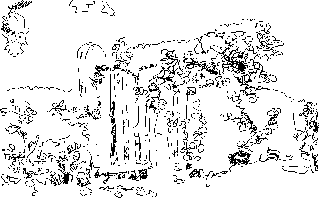
When The Old Farmhouse was just The Farmhouse, when all the flints were freshly set in the walls, and the roof was still thatch, the busy main road just the other side of the hedge was probably just a track. Now, it would be impossible to find the place if Megan’s Great-Grandaughter Clarissa hadn’t come out to wave.
But once you’re through the gap in the hedge, the ground widens out nicely, the old house on one side of the lane, and dilapidated outbuildings scattered about in the undergrowth. Beyond the trees at the back you can just glimpse a tidier, more current world, with horseboxes and freshly-painted sheds; here, everything is slowly being subsumed by nature, the incoming tide of green that was kept back for years reasserting itself now, in its own order, and shape.
‘She should never have been discharged,’ says Clarissa, talking and checking her phone at the same time. She leads me up the steps that probably once doubled as a mounting-block, into the tiny house. Bare-boards. A dresser covered with ancient crockery, pictures, mementoes. An ancient radio that if you turned on would probably give you news about the war. Through to the back room, where Megan is lying in bed, asleep.
‘If only they’d kept her in a couple of days longer till Daddy got back,’ says Clarissa. ‘I just don’t think she’s ready for this.’
On the face of it, I’d have to agree. Megan’s been referred to our team for all the usual things, the health checks, equipment provision, intermediate care package and so on – but as she is now there’s nothing in the house to support her. It’s going to take a lot of intensive work to keep her safe, and this at a time of huge demand on the service. I can understand why Clarissa feels overwhelmed; I’m used to the scenario, and still I have to take a breath.
‘One step at a time,’ I say. ‘First thing I’ll do is check to see Megan’s okay in herself.’
‘I just started a new job,’ says Clarissa, helplessly. ‘It wouldn’t look good if I asked for some time off.’
‘Don’t worry. If you have to go, you have to go.’
‘I’ll stay a bit longer.’
She’s remarkably assured, given the stress of it all, but if she wasn’t wearing a leather jacket and clutching a phone, it feels as if she’d fly apart in a shower of sparks.
Megan’s observations aren’t great. Although for a frail old woman in her nineties who survived a fall, a long period on the floor, an acute MI, chest infection and three weeks in hospital, she’s remarkably cussed.
‘What are you doing?’ she snaps, grabbing the duvet back. ‘Leave me alone!’
An OT arrives to help. Between us we make what improvements we can, organising the care plan, liaising with the GP, investigating the possibility of a night sitter, tracking down the DNACPR and so on. It remains to be seen over the next few days whether a programme of rehabilitation is feasible, or whether this is more end of life care. Based on her condition, I would have said the latter, although it’s possible she’ll pick up when the trauma of the discharge home has passed. It’s hard to say. Once she’s rested, I’m sure Megan will be able to put her view across.
‘She was always one of those mad old women, even when she was younger,’ says Clarissa. ‘You know – the kind that shakes their stick for no apparent reason.’ She checks her phone again, and then finally puts it away. ‘She’s been great, though. I hate to see her like this.’
I walk with Clarissa to the door. The sun is so bright it takes a moment to adjust. After the muted gloom of the interior, everything is sharp, too intensely green.
‘She was born here, you know,’ she says. ‘Lived here all her life. Imagine that.’
We both look around. I can see Megan pulling on her boots to play with the dog in the snow, or dashing out in the early sunshine to feed the chickens, or any of the hundreds of chores she’d have had on the farm. Now it’s pretty quiet, nothing much happening, just Megan asleep in the back room, her breathing harsh and quick, the traffic endlessly rushing backwards and forwards on the busy main road a thousand miles away just the other side of the hedge.
the great escape
A couple of days later I’m back to see Jeremy for a follow-up appointment. There’s a van parked outside, sheets laid out on the paving slabs underneath the windows and around the front door, and two sun-burned guys in overalls sitting on the garden wall, smoking. The oldest one, Terry, has long grey hair tied back in a pony-tail and leathery brown skin; his assistant, Mick, is a younger version, looking more like a painting and decorating marine, with a shaved head and tattoos you can barely make out beyond the tan.
‘He’s upstairs,’ says Terry, licking along the edge of his roll-up, nodding instead of pointing. ‘Pauline’s nipped out to the shops.’
‘Mind as you go in,’ says Mick. ‘Don’t touch nothing.’
Inside, the door between the kitchen and the rest of the house is shut. As soon as I open it, a blurred white shape races out.
‘Shit! Brian…’
The dog has run straight out into the back garden. He stands out on the sunny decking and watches me to see what I’ll do next. When I take a step towards him, he takes a step back. I crouch down, hold my hand out, lower my head submissively and make kissy-kissy noises; when I look up again, he’s standing exactly as he was, his head crooked slightly on one side.
‘Brian…?’
His ears prick up.
‘Come on, Brian! Let’s see who’s upstairs….’
He turns round and trots off into the garden.
The first thing I do is go outside again and speak to the painters.
‘Ah – don’t worry,’ says Terry. ‘He’s all right in the back garden. He can’t get out. It’s the front you’ve got to worry about.’
‘But we can’t shut the front door. It’s wet.’
‘Yeah – but – we can put this plastic table across the front…’
Mick produces a flattened white plastic garden table and props it up against the kitchen cabinets.
‘And I’ll secure it with these saucepans,’ says Terry. ‘How’s that?’
I go up to see Jeremy, leaving the connecting door open in the hope that Brian will follow.
He doesn’t.
Jeremy’s much the same as before. But despite his illness he’s warm and welcoming. When I tell him about Brian he bats the air.
‘Oh well,’ he says. ‘So long as the garden gate’s shut,’ he says. ‘It is shut, isn’t it?’
I go back down to check.
Brian is parading round the far side of the garden like he’s at a show.
I check the gate. It’s firmly closed.
I try a few more tricks to coax Brian over – ‘innocently walking away’ – ‘finding something interesting in the flower bed’ – ‘putting my hand in my pocket and saying what’s this?’ – but each attempt is treated with equal disdain. Seriously? Did you honestly think I’d be persuaded by such amateurish tricks? How little you know me.
I give up and go back inside.
Ten minutes later I’m halfway through the examination when I hear a cry from the kitchen.
‘Pauline!’ says Jeremy.
I tear off my stethoscope and hurry back down.
There are two shopping bags in the middle of the floor; the plastic table is angled away from the door, the saucepans are up on the counter, and on the freshly-painted wooden step, two neat paw prints.
Terry is rolling himself another fag.
‘It’s all gone tits up, mate’ he says. ‘I was round the side, Mick was in the van, and we didn’t see Pauline come back from the shops. ‘Course as soon as she moved the table Brian ran out. He’s high-tailed it down the road, Mick’s gone after him, and I think Pauline’s heading them off at the pass.’
‘Do you think I should have a drive round?’
‘Nah! They’ll be all right,’ he says. ‘Brian’s got previous. He always comes back.’
But then he spoils it by saying: ‘He’s a smart dog all right. I reckon he’s been planning this. I wouldn’t mind betting he’s got a system of tunnels, like in that film.’
He plants the fag in his mouth and wanders around the driveway shaking the legs of his overalls to illustrate how Brian got rid of the soil.
‘Yep. A very smart dog. Mind you,’ he says, taking the fag out again and picking a strand of tobacco from his bottom lip, ‘it wouldn’t be so bad if he had the road sense to match.’
I go back upstairs to tell Jeremy the bad news.
‘That dog’ll be the death of me,’ he says. ‘But don’t worry. I’m sure he’ll be fine.’
He doesn’t seem easy about it, though. And neither am I.
I finish the exam.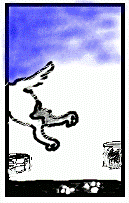
Just as I’m writing up the results, I hear a commotion down in the kitchen. Pauline’s back, with Brian on a lead, frowning and looking furious.
‘I’m so sorry,’ I tell her. ‘I didn’t think. As soon as I opened the door he was off.’
Brian looks up at me.
Snitch he says.
okay brian
As Pauline leads me through the house she fills me in on Jeremy’s past medical history. The operations and treatments, consultations and confirmations, missed appointments and misunderstandings. Things had picked up for a while, she says, but then three weeks ago Jeremy’s health took a marked downward turn, and now here we are, confined to bed, awaiting developments.
We’re accompanied up the stairs by their little dog, Brian.
‘We didn’t call him that,’ she says. ‘But he’s seven and we thought it’s too late to do anything about it.’
I don’t tell Pauline, but I wouldn’t say he looks like a Brian. He’s such a curious mongrel mix, though, I’m not sure what would work. The tight white curls of a sheep. The soft black eyes of a seal pup. The spindly legs of a Windsor chair. At a push I’d say he was more of a Barnaby.
‘Through here,’ says Pauline, stopping on the landing.
Brian stands behind her and gives me a look.
Even from here I can tell Jeremy’s very unwell. His skin has a grey quality, his nose pinched, the prominence of his mouth, the hollows of his eyes – everything a testament to disease and decline. I was told before I came out there were anomalies on the most recent chest x-ray. I wonder what conversations they’ve had on the subject, and I’m conscious of the words I should use.
Despite his sickness, though, Jeremy’s pretty chipper. He jokes about getting caught in the crossfire between the GP and consultant, about the tragic-comedy of the patient transport service, and most particularly, about his fervent desire never to set foot in another hospital again.
‘It’s the endless waiting around! Days pass into weeks, and let me tell you – you really start to notice the cracks! No thank you. I’d far rather take my chances here. What d’you think, Brian?’
Brian responds to his name, sits back on his haunches and angles his head up at Jeremy. Then after a moment he looks round and rests his eyes on me. He’s such a funny little dog, and the room is so bright and peaceful, I wouldn’t be all that surprised if he put a paw to his muzzle, cleared his throat and spoke.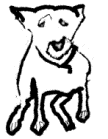
I’d really appreciate it if you could do something for Jeremy. I’ve grown rather attached to the old chap, and I’d hate to see him suffer.
I get my obs kit out, loop the steth around my neck, and open Jeremy’s folder to the obs page.
‘Okay Brian,’ I say. ‘Let’s have a look…’

