living in the dark

Mrs Butterworth is wearing a cornflower blue chenille dressing gown, its plump collar falling open at the neck. She talks in a soft, sadly undifferentiated way, like fog flowing over the brow of a hill. And whilst she talks, she gently rubs the side of her tummy, in the unconscious way pregnant women sometimes stroke their bumps, although the last time Mrs Butterworth was pregnant it was back in the sixties, and the swelling in her abdomen is now diverticula disease. Behind her on the wall is a photograph – the seventies, I’d guess, with Mrs Butterworth in the centre, smiling brightly, her arms left and right around a smart looking boy standing straight-backed, and a younger girl with bright yellow hair, leaning forwards, her face a little out of shot.

‘Gilly’s not a bad daughter. She’s got her own problems. It goes back a long way. It’s all diagnosed. She’s been on Prozac for twenty years or more. Who knows what she’d be like if she ever came off. She’s had therapy and a few stays in hospital, but nothing seems to do the trick. She’s just fundamentally unhappy, I suppose, and I can’t help blaming myself. But it’s just – I don’t know – what with my recent scare and all this and that, I wish it could be different. Like normal families. My eldest child Peter, he lives in Australia, and he does what he can from there. He rings every other day and whenever his business takes him this way he makes a point of stopping over. What do you need? he’ll say. Just like that. Name it. He’s such a good boy. You wouldn’t think they came from the same place. I know he gets cross with Gilly, but he holds it back because he knows it’ll only make things worse. There’s nothing anyone can do. It’s just such a shame. She only lives three streets away but I’ll tell you something: Australia seems closer. I haven’t seen her since January. To be fair, she did come to the hospital with me that time, when I went in for the operation. I mean – it was a serious thing. They didn’t know if I’d come out of it. I had to sign papers. And the morning of the operation, there I was, sitting in bed waiting to get wheeled through, with this terrible thing hanging over me, and Gilly was pacing up and down, sighing like she does, checking her phone every five seconds. And then she turns round to me and she says I can’t wait here all day. I’ve got things to do!  And she left. And that was that. I didn’t make a fuss. I knew it wouldn’t help. I told Peter about it and I know he was furious, but what could he do? I think he did ring her, though, because when I was discharged she came over to see me. I kept the conversation as light as I could. I mean – what was there to say? But my grandson, James – not the most prepossessing boy in the world. Well James was sitting on this chair with his head down in his phone, jabbing away with his thumbs, and it was all very quiet, so I just thought I’d ask him about school. Right! That’s it! she said. I don’t have to stand here and listen to this! And they left. And that was the last I heard from them. Although I did try ringing her last week, when I needed a bulb changing in the living room. Her husband Trevor answered the phone. Well. He’s not what you might call an attentive son-in-law. Do you know what he said to me? He said Can’t you just stand on a ladder and do it? Me! On a ladder! That’s okay, Trevor I said. I’m getting used to living in the dark.’
a matter of life and death

I can see Jeremy through the window, sitting in an armchair in front of the television, his fingers laced across his bare chest, his eyes closed, the television bathing him in a flickering blue light. I watch for a moment, to make sure that he is actually breathing, and it’s not some animating trick of the light. But then he squeezes his eyes and wrinkles his nose, and adjusts the position of his head on the cushion. I tap on the window again.

Even though the screen is facing away from me, I can tell it’s an old David Niven film. That beautifully modulated, terribly sincere English accent. But you know, are you in love with anybody? No, no don’t answer that…

‘Jeremy? Jeremy! Can you come to the door? It’s Jim, from the hospital.’

He doesn’t respond. I knock again. When he seems to open one eye, I press my ID badge against the pane. It’s no use. He sinks back into what now appears to be a determined kind of sleep.

Not that I’m keen to go in. I’ve already been warned to wear shoe covers, and I can see through the window that the accounts of rotting food and piles of rubbish were no exaggeration. Anyway, even if I hadn’t seen the report, the windowsill would tell me all I needed to know. It’s littered with the husks of flies, lying on their backs with their legs crimped up, so large I’m guessing they just dropped from the air and died from sheer luxuriousness, whilst around them, hyperactive amongst the webby detritus on the windowsill, a multitude of jumpy, crawly things, sensing fresh blood, hurling themselves against the glass.

I take a step back, scratch my head, then try his mobile once again. I can hear it ringing somewhere amongst the trash, but it doesn’t rouse him anymore than my banging on the window.

Even though it looks from here as if he just doesn’t want to acknowledge my presence, I can’t rule out the possibility that he’s unwell with a hypo or something. But just as I try the handle of the door to see if it’s actually open, a woman coughs and says hello from the end of the path.

‘Have you come to see Jeremy?’

‘Yeah. I can see him sitting in his chair but he doesn’t seem to want to come to the door.’

‘I’m Sharon, his neighbour,’ she says, holding out her hand. ‘It’s probably down to me that you’ve been called.’

‘Oh?’

We chat in the cover of an overgrown buddleia.

‘We’ve been increasingly worried about Jezza,’ says Sharon. ‘He’s been on the slide for some time now, a good few years. Ever since Eric died. Then he lost his job, and things went from bad to worse. He hasn’t put a foot outside the house in eight months or more. If it wasn’t for us and number twenty, he’d have starved to death. He’s skin and bone as it is. And his house. Well, I mean, my god…’

‘I know. I can see through the window.’

‘It’s worse inside.’

‘I’ve got shoe covers.’

‘Yeah? I think you’re gonna need something more than shoe covers. You need one of them bio hazard suits you see in the films.’

She mimes one, holding her arms out to the side, rocking a little from side to side and puffing out her cheeks.

‘I could totally use it,’ I say. ‘But I’ll just have to make the shoe covers stretch.’

‘Good luck with that.’

‘What does his doctor say?’

‘I mean – they have tried, bless ‘em. But it’s difficult. He was driving to the supermarket till recently.’

She turns to look at the wreck on the road outside the house, a mossy old Rover saloon, melting into its tires. ‘Mind you,’ she says, ‘I’m glad he’s done with all that. He was a menace. He used to go at five miles an hour, all the traffic building up behind him, going crazy. And he wouldn’t park so much as randomly stop and get out. It’s a shame. He used to be a nurse, funnily enough.’

I’m just about to ask Sharon some more questions when the front door opens and Jeremy pokes his head out.

‘Ah! Hello Jeremy!’ I say. ‘Sorry to disturb you.’

‘That’s okay,’ he says in a voice as smooth and dry as grease-proof paper. I can see from here how emaciated he is, the ribs and bumps and hollows of his torso a testament to years of self-neglect. He opens the door wider and smiles unexpectedly, with a flare of yellowing stumps

‘How can I help?’ he says.

daisy d.

‘Are you alright with dogs?’ says Clara, throwing open the door anyway. It’s not a great risk, though. Daisy is the cutest dachshund I’ve ever seen. With her long, lugubrious expression and sad brown eyes, she could be a circuit judge passing sentence even though it breaks her heart to see, once again, what humanity has been reduced to.

‘Hello little one!’ I say, bending down to reach out my hand for her to sniff. She does so – with such a tragic air – then reverses so awkwardly you’d think she was being remotely controlled by someone in the next room with a poor view of the action. Somehow she manages it, though, and leads me through to the living room, her tiny legs making heavy weather of the three carpeted steps up to it.

Even if Clara hadn’t immediately explained her relation to Peggy, I would have known they were sisters. Whilst it’s apparent that Peggy is the one with all the health problems, still, they share the same square face, the same way of holding themselves, lightly upright, their hands just-so on the armrests of their chairs, the same level, mildly amused sparkle to their eyes.

I have to say, Daisy fits right in.

‘I don’t live here,’ says Clara, heading off any questions I might have on that front. ‘I make it over as often as I can, though. Which reminds me, Pegs – you’re almost out of washing tabs. I shall have to pop out and get you some more.’

‘Righto,’ says Peggy – and the matter settled to the satisfaction of both, they both turn to stare at me.

Daisy has temporarily absented herself from the room, but she soon comes bouncing back with something squeaky in her mouth – a well-chewed plastic hamburger – which she places neatly and carefully at my feet, and then backs up.

‘Who wants it?’ I say, picking it up and waving it in the air.

‘Well – Daisy, I should think,’ says Clara.

ken, cowboys & aliens

Ken has got one of his pipes on the go. In any other house it would stink the place up as comprehensively as a termite fumigation, but Ken is sitting in his usual seat by the open patio window, so most of it billows out harmlessly. As soon as he spots me striding across the lawn, he taps it out, and follows my progress towards him with a baleful air.

Ken has always reminded me of someone and it’s only now I realise who. At the very end of the closing credits of the first Star Trek series, after the stills of multi-coloured planetary landscapes, Kirk in some catacombs, or a ship coming in to dock – there was always a closing shot of a gaunt and quite terrifying figure in a robe, staring straight at you, as a Desilu production appeared on its forehead and the music thrilled to a conclusion.

That’s Ken.

To be fair, he’s friendlier than Balok, who, I only just learned, was actually a fearsome puppet used by cuddlier beings to test the friendliness of anyone coming to call. So whilst Balok’s slack-jawed, unblinking expression was designed to be scary, with Ken it’s more a symptom of his general bewilderment, and of the hours he spends sitting in his chair by the window smoking his pipe, watching old films on the TV.
‘How are you, Ken?’ I ask, struggling in through the window, past the drinks cabinet shaped like a globe, and a kitchen trolley stacked high with necessaries.
‘Terrible,’ he says.
‘I’m sorry to hear that. What’s the worst thing, would you say?’
‘The worst thing?’
‘Yes. You know – are you in pain? D’you feel sick, dizzy…?’
‘No,’ he says. ‘It’s just my bloomin’ memory.’
‘In what way?’
‘I can’t remember nothing. Not a thing.’
Carefully he places his smouldering pipe on the tray beside him, and folds his hands in his lap. ‘I’m old,’ he says. ‘I’m just one of them ones that goes on too long’
‘Well – let’s see what’s what,’ I say, putting my bag down and reaching for his folder. ‘Shall I make you a cup of tea?’
‘No. I’m all right.’
‘Okay. So – I understand you had a fall this morning.’
‘Did I?’
‘Apparently. The ambulance came and picked you up. That’s why I’m here now. To see you’re okay.’
‘I don’t remember. If you say so.’
I scan through the notes and then put them aside.

There’s a western playing on the TV. No shoot-outs. Just some guys talking round a campfire, tipping their hats back, toeing the dirt, looking regretful.
‘Glenn Ford!’ says Ken, pointing at the set. ‘And there! That dodgy looking one, sneaking round the horses. Ernest Borgnine!’
He turns his sad eyes on me. ‘You see,’ he says. ‘The longer ago it was, the more chance I’ve got of remembering it.’
He reaches for his pipe, looks at me, then slowly puts it back again.
‘So I’d like you to explain to me if you can,’ he says. ‘Where’s the sense in that?’

the name of the fox

Ray answers the door. I know from the referral he’s eighty something, but if you snatched a look on a foggy night after falling out of the pub you could be persuaded he was twenty-four. His skin has a deep leathery tan, hair dyed black, swept up in what would have been a substantial quiff in the late fifties; his teeth suspiciously even, cardboard white, his flowery shirt unbuttoned to the navel, revealing a slew of chains of differing lengths and thickness, pendants of silver and gold, crosses, St Christophers, a US dog tag, an Egyptian ankh.
‘Hi!’ he says. ‘Come in!’
‘Just a flying visit, Mr Clarke. The nurse asked me to drop by with a couple of things for Daphne.’
Daphne?’ he calls over his shoulder. ‘Another lovely person to see you.’
Oh fantastic! Wowee!’ says a thin voice from the room straight ahead.
‘Go through’ says Ray.
‘Thanks.’

The lounge is a shrine to Elvis. Images of The King on everything, from mirrors and paintings and gold records and film posters, to ceramic statues, a throw over the back of the sofa, even the clock over the mantelpiece – Elvis in his Las Vegas incarnation, legs apart, arms windmilling the minutes and hours.
‘Hello, Daphne! Lovely to meet you. I’m Jim, from the hospital.’
‘Lovely to meet you, too!’ she says, holding on to my hand, squeezing it, gradually pulling me in. ‘Aren’t you handsome?’
‘You’re making me blush,’ I say.
‘Now, now,’ says Ray.
She laughs and releases my hand..
‘I’ve just dropped round to bring you this special cushion to sit on. To protect your bottom. And some cream for the carers to put on in the morning.’
‘Now – you hear a lot about the NHS,’ says Ray, taking the things off me. ‘But I have to say, we’ve had nothing but the very best treatment.’
‘That’s good to hear,’ I say.

Daphne is beaming up at me from the armchair. I’m guessing Ray does her make up, because there’s something doll-like in the way the lipstick and rouge has been applied. She’s immaculate, though, as perfect as the figurine of Elvis, circa sixty-eight special, in a glass bell jar on the coffee table. She’s cuddling two soft toys, a fox in a waistcoat under her left arm, a scruffy looking teddy bear under her right.
‘And who are these two gentlemen?’ I say, patting the bear on the head. ‘They look amazing.’
‘Guess their names!’ she says.
‘Well – this one here, I’m going to start low and say … Ted!’
‘Yes!’ she says. ‘Now – what about this one?’
‘Mr Fox? Hmm. That’s a bit more tricky. But I’m going to take a wild guess, and I’m going to say… Elvis!’
‘No. It’s Montgomery. How do you do?’ and she offers up his paw for me to shake.

the ghost comes home

‘To be honest with you, I can’t believe I’ve reached the age I have. I had four brothers and sisters, and now I’m the only one left. My sister Judith was the first to go. She was only eleven. I was fourteen. And now here I am, ninety-one! Me and Judith, we used to love going to the pictures on a Saturday. The matinee performance. This one Saturday, my mum stopped me as we were headed out the door. You’re not going out till you’ve sewed that button on your cardie like I asked you to she said. And I was furious about it but I did what I was told. I sewed the biggest button on there I could find, quick as I could, then I took Judith’s hand and we ran off down the street to the cinema on the corner. We were about half way through the main feature when there was an almighty crash and a flash and the whole place came down around us. Because we were late getting there we’d had to sit at the back, not like all the other kids sitting at the front. They were all killed outright. But we made it outside, and Judith, she was badly hurt, worse than me. We both got taken by someone to the hospital, and Judith died a little while later – not that I knew about that straight away, because I was having bits and pieces taken out of me. When I came round in bed a day or so later, the doctor showed me a chunk of metal and d’you know what he said? He said This would’ve finished you off if that button hadn’t taken some of the force out of it. So it just goes to show. I learned later on what happened. A German bomber had ditched its load early trying to get away from some Spitfires that were chasing it. He wasn’t targetting the cinema or anything. It was just one of them things. Didn’t do him no good, though. They caught up with him over the Channel, and that was that. The film? I’ll never forget what that was. A comedy, a silly little thing, only just out. The Ghost Comes Home.

addio catania

‘The doctor, he was here yesterday, he said Squeeze my hands. Hard as you can. I said to him, I said You sure you want me to do that, squire? He said Do your worst. So I grabbed a hold and give him a squeeze, and the next thing you know he was pulling ‘em away shouting All right, mate! All right! You’ve made your point!
Mr Wilson laughs, a desiccated kind of rattle, and shakes his head.
‘I was a stone mason all my life. I could squeeze the juice’ve a pebble.’
I think the doctor was being kind, though. Whilst it’s true Mr Wilson’s wrists are still impressively thick, the rest of his body has been sadly depleted by age and illness, and he pays for his enthusiastic outbursts with a degree of gasping that the oxygen through his nasal cannulae struggles to correct.
I’ve arrived at the same time as Mr Wilson’s morning carers. It’s lovely to see how they chivy him along, making a game of it all, distracting him from the frustrations and indignities of his situation. I’ve no doubt Mr Wilson has been a positive kind of person all his life, though, used to making the best of things. He cusses and carries on in the wheelchair, tetchily snapping the oxygen cable when it gets in his way, kicking his slippers off when they snag in the footrests. The carers obviously love him.

When he’s settled in the wheelchair and recovered his strength, and the carers have given him a peck on the cheek, signed the book and left, he folds his great hands on his middle and shakes his head.
‘I can’t go to Catania,’ he says. ‘I don’t suppose I’ll ever see it again.’
I get the story in short bursts. He fought in Italy during the war. Met his wife there. Settled back in the UK, but every year they went back to Catania to see her family. But his wife died last year, and his illness had progressed, and he was faced with the fact that he’d never see Catania again.
‘I wanted to say goodbye proper, like,’ he said. ‘I wanted to say Addio. Now look at me.’
He picks up the green plastic tube and holds it in front of him, like he was showing me something else, the thing that was tethering him to this world, the line that he’d play out if he could, all the way to the eastern shores of Sicily, and Catania, and his wife, and the adventures and the life they’d had together, so he could relax his grip, and let go the end, and disappear himself, off into the sun.

a head for depths

Craig has the key so we agree to meet outside Sally’s flat at midday, when he’s due to make her lunch.
‘Have you been here before?’ he says, bending down to stretch some blue plastic covers over his trainers.
‘I hear it’s bad,’ I say, taking some out of my bag.
‘It’s not the worst, but you’ll definitely need these.’
Craig seems tired, a reflection of my own state of mind. It’s not so much the number of patients on the list and the number of miles we cover, hurrying from place to place. It’s more the endless parachuting in to situations that are failing in one way or another, trying to set them straight – or, at least, straight enough so you can feel some kind of progress is being made, and that things might change for the better.
An adult safeguarding report has already been put in on Sally, but it’s complicated. In the meantime, we’re going in to do what we can to ameliorate the situation.
‘Ready?’
‘Ready.’
‘Okay then.’
He knocks on the door and then opens it with the key.
‘Sallly? It’s Craig – and Jim. From the hospital. How are you doing?’

He’s right. Whilst it’s not as bad as many places I’ve been in, it’s definitely the kind of place you have to start with shallow mouth-breathing for a minute or two, till you’ve adjusted sufficiently to breathe normally through your nose. Walking down the hallway, our covered shoes make the ticky-tacky noise so characteristic of encrusted and unsanitary surfaces, and the air has a familiar and gloomy sag to it.
‘Hello?’

Sally’s waiting for us in the lounge, in an armchair so low and squashy and discoloured it looks less like a piece of furniture than some giant, malignant bloom. She’s wearing an electric blue silk nightie with a green cardigan over the top. Her bare legs are mottled, swollen, pressed together at the knee. She smiles easily, reaches up to shake our hands, but her conversation is muddled and difficult to follow. One of my tasks is to take some blood, to determine whether infection is making her more confused, but I can see I’m going to have to sidle up to it.

Whilst Craig busies himself preparing a microwave meal in the kitchen, I chat to Sally about this and that, and take her observations as carelessly as I can, almost as if I’m as surprised as her to be doing it.

When Sally talks it’s the equivalent of pretend writing. The patterns of her words, the fact that they follow a line, and start and stop in the usual way, with the usual loops and flourishes, everything looks superficially like conversation. But the truth is, I have to make assumptions about what she might mean, and reflect it back to her, and she’ll either laugh or frown, or wave her hand in the air, and we’ll move on, as if something’s been said, though neither of us really knows. But there’s the reassurance of the tone of what we’re saying, if nothing else, and it does seem to be working. She’s distracted sufficiently to let me take some blood, and whilst she obviously doesn’t have mental capacity to refuse, I take the fact that she doesn’t pull her arm away as consent.
Just before I actually puncture the vein, I ask her some more about her family, particularly her father, who (I think) she said was a miner.
‘Have you ever been down a mine?’ I say, preparing the needle.
She answers with a laugh and a string of garbled words that, if they were in a foreign language and I was forced to guess the meaning, I would say: That was a long time ago now / He was a lovely man / He worked so hard.
‘He sounds great!’ I tell her. ‘You know – I’ve always quite fancied the idea of going down a mine.’
She laughs again.
The blood flows into the tube.
‘God knows, it must be a difficult job.  But I quite fancy seeing what it’s like. I mean, when you think where it all came from, what it was, all that coal. Millions of years ago, all these giant trees and plants in some wacking great swamp somewhere, and then it all gets buried and changed into black rocks you can burn. I know I probably wouldn’t pay much attention to any of that if I had to go down in a cage every morning and swing away with a pick. If that’s what they do. I’ve really no idea.’
She listens to me with a tolerant smile on her face, tutting at some things, frowning at others, but keeping her arm still so I can get what I need.
‘There! All done!’ I say, taping a piece of gauze to the crook of her arm. ‘You’re a model patient!’
Meanwhile, Craig has come through with lunch. He’s standing just behind me with a tray of Lancashire hotpot.
‘You thinking of a career change, Jim?’ he says, helping Sally get set up in the chair, ready.
‘Me? Maybe,’ I say, stashing the phials of blood and peeling off the gloves. ‘I don’t know though. I’m not sure I’ve got a head for depths.’

the story of Old No.7

Before I go up to the first floor I stop by the warden’s office.
‘Pete? He’s what you might call a colourful individual,’ says the warden. ‘He’s certainly done a lot in his life, what with his boxing and his business interests and his running around. I’m not so sure about the Krays, though. You have to take a lot of what he says with a shovel of salt. But y’know – we’re all worried about him. Pete’s always had a short fuse, but he’s gotten a whole lot crankier. The carers are having to double-up.  For safety – y’understand? God knows he’s got a lot on his plate, poor bastard, what with his eyes and his back. We take his meals up and try to rouse a bit more of a spark in him, but.he’s retreated to his room these last few weeks, and short of dragging him out by the feet, there’s not a lot else to be done. It’s like he’s given up.’
‘They’ve sent me round to take some blood this morning.’
‘Yeah? Well good luck with that!’ says the warden, shaking his head and leaning back in his office chair. ‘My advice? Keep it simple. Don’t fuss. And wear a tin hat.’

Pete is standing waiting for me in the doorway to his flat. A tall, pale, withered figure, dressed in boxer shorts and a string vest, he peers out at me as I approach along the corridor.
‘What took you so long?’ he says.
‘Sorry, Pete. I stopped by to have a word with Gerry.’
‘What for?’
‘Just a quick hello. He’s a nice guy, isn’t he?’
‘If you say so. Anyway. What’ve you come for? I’m sick of all these people barging in all hours of the day and night.’
‘It must be annoying,’ I say. ‘But I suppose it’s just because people are worried about you. They want to make sure you’re okay.’
‘What people?’
‘Carers, nurses. The usual.’
‘Well, I’m fed up with it.’
‘So how are you today, Peter?’
He shrugs, but lets go of the door handle and turns to walk back to his armchair.
‘Just be quick,’ he says.
‘I promise I won’t keep you long.’
He settles back into his chair as I get my things ready.
‘What are you? Some kinda nurse?’ he says.
‘Nursing assistant.’
‘Ah!’ he says. Then after a pause: ‘In Spain you’d be called a practicado.’
‘I like that. Practicado. That feels about right. So – how come you know Spanish?’
‘Well I should do. I lived there ten years. I had a bar on the Costa del Sol.’
‘Wow! That sounds great. Hard work though, I expect.’
‘See that bottle up there,’ he says, pointing to an ornate glass bottle on the top of a shelf of sculptures and photographs. ‘That’s a traditional Spanish whisky, about a million per cent. So spicy it’ll blow your tits off.’
‘I bet.’
‘I haven’t touched it in over twenty years. Don’t suppose I ever will now.’
‘You know – the worst drunk I ever got was on an American whiskey. Something called Wild Turkey. I was knocking it back because it was so smooth and easy. And I was thinking This is all right! This is great! And the next thing I knew, I was lying flat on the floor with my eyes going round and round, like the red spot on one of those old electricity meters.’
‘American whiskeys are the best,’ he says. ‘Have you ever had Jack Daniels?’
‘Yep. Love it.’
‘D’you know the story behind it?’
‘Was it something to do with the Civil War? Or was that Colonel Sanders?’
‘No! He was the chicken man, you numpty. What I mean is – why’d they call it Number Seven?’
‘Don’t know’
‘It’s because his first batch was just seven barrels, and they all come loose in a storm and rolled down the mountain, and the only one they never found was this number seven. And it’s still out there now. So if you went and found it, you’d be a millionaire.’
‘I’ll just take this blood and then I’ll be off.’
‘Ye-es, mate. I’ve lived all over the world. Spain, Italy. America. I’m no good now, though. I mean – look at me! And then have a look at me on the beach.’
He nods over at a bookcase as I tape a wad of gauze to his arm. Shaking the vials of blood, I go over to the picture. A young man in his twenties, doing that greased-up, muscle-man thing of leaning forwards whilst flexing his arms and shoulders, smile-grimacing into the lens.
‘You look quite a prospect.’
‘Wha’d’ya mean, prospect?’
‘I mean you look handy.’
‘I could take care of myself, don’t you worry.’
I sit down to write the vials up when he says, in a surprisingly shaky and vulnerable change of tone: ‘What d’you suggest I do about all this, then?’
‘About what, Pete?’
‘About all this what I feel. I’m no good any more. I’ve got pain the whole time. I can’t hardly see nothing. The doctors have run out of ideas.’
He licks his lips and then adds: ‘Do you know what irony is, Jim?’
‘What – d’you mean it’s ironic you were so fit and now you’ve got all these health problems?’
‘No. The irony is – a few years back everyone wanted to kill me, and now that I’m properly fucked and want to die, they all want to keep me alive.’
‘I’m sorry you’re feeling so low. It’s not surprising, though, given all the things you’ve got to put up with.’
‘Yeah, well,’ he says.
‘I can refer you on to our Mental Health nurse. She’s really good – and she can start figuring out ways to help you feeling better again.’
‘If you think,’ he says.
‘Good. I’ll speak to her when I get back to the office.’
I’m just putting my stuff away when he leans forwards and says:
‘Have you heard the one about the two psychiatrists in Chicago?’
‘No. Go on.’
‘So there are these two psychiatrists in Chicago, both working in the same building, nodding to each other when they pass in the lobby. The first one’s always bright and cheerful, dressed nice, expensive hat, big cigar, whilst the second one, he drags himself around looking shabby and down at heel, with a face like a smacked arse. So anyway, eventually, this second, sad psychiatrist, he can’t take it no more, and he stops the first one in the lobby, and he says: I don’t get it, mate. We spend all our time listening to the same old dreary problems, none of which we can’t do nothing about, and yet there you are with this big smile on your face. And the first one, he turns round, and he says: ‘Who listens?’

the strange case of the branch loppers

There’s a meeting place over the woods. A hexagon of rough benches, each one a stack of four cut timbers capped with a plank and then wired together. I’ve never seen anyone sitting on them, let alone a fire in the middle – which they must light sometimes, as the centre is blackened with a scattering of cold embers. It must be nice to sit there chatting about this and that with the fire burning and the light playing over the perimeter of trees and undergrowth. Like old times.

Yesterday when my dog walk with Lola took us through the woods past the meeting place, I thought I’d stop for a while, sit down on one of the benches and imagine what it must be like. As soon as I sat down, the plank wobbled alarmingly and I got up again to see what the problem was.

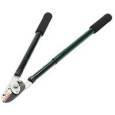
A long-handled branch lopper. I could see what had happened. One of the volunteers who work in the woods must have left it out. And then someone else found it, and hid it under the plank to keep it safe until it was found again. The volunteers have a tin shack nearby with all their tools locked away. The bench was as good a spot as any – or was it? The meeting place is pretty open. I figured it might be better to take the branch lopper and hide it round the side of the shack.

So that’s what I did. There was some timber to the right and I hid it under that. I was a little anxious someone might see me and wonder what I was doing. It looked suspicious, rootling around like that. But if they came close enough I’d explain, and we’d all have a good laugh about it.

When I was happy the branch lopper was well hidden, I set off again with Lola, aiming for the meeting place again. This time I didn’t stop, but walked right through. And it was just when I’d left the hexagon on the north side that I saw them – another pair of branch loppers, lying in the grass.

It was all so unlikely. What was this? Some kind of sign? How many times would I have to repeat the same thing before I realised what was happening?

I picked up the branch loppers and headed back to the shack. Lola took a while to come back – as if even she was uneasy about the way the walk was going. But I dealt with it quickly. I was an old hand already with the whole lost branch lopper thing. I knew exactly where to put it.

As I made my way back to the shack I started to think of a story that might account for this scattering of branch loppers, and what I might find next. And it was then that I remembered years back when I was out walking with a friend and we found a body.

We’d been trespassing on private land. We knew it was private because there were all these crazy signs, red paint on warped boards, saying KEEP OUT and TRESPASSERS WILL BE SHOT. By the look of the place no-one had been around for years, so we thought it was a fair chance we’d be okay. We carried on past the ruined farmhouse and into the overgrown fields beyond, making up a cliché horror story about the guy who lived here and all the people he’d killed. It was only when I pretended to get shot and did a spectacular cartwheel death fall that I noticed the jacket

It was dropped in the long grass just exactly as if someone had taken it off and carried on walking. There were odd things in the pocket – a bus pass, a ball of string, a blood-stained handkerchief.

‘Shit!’ said Rich, glancing back in the direction of the farmhouse.
We started looking around. We came across other things: a shoe, a pair of trousers. And then we saw the body, lying on its right side over by the barbed wire fence at the nearest edge of the field. We both ran over, but as I’d done a first aid course by that time, I went first.
‘Are you all right?’ I said, leaning over and tentatively touching the body on its shoulder. But the face was all rotten and fallen in, and when I jerked back I remembered the trousers we’d found, and realised that the legs were uncovered and blackened. It was winter, though, and there was no smell. I remember a blackbird perched on a post just a little way away, bobbing up and down, chip-chip-chipping in alarm.
‘We’d better call the police’ I said.
‘Has he been shot?’ said Rich. ‘Turn him over and look.’
But I didn’t really want to do that and in the end neither did Rich.
‘We’d better call the police.’

This was before mobile phones. We could see the roof of a cottage over a nearby hedge, some smoke rising. We walked over there. I climbed on a stump and peered over. There was an elderly woman gently prodding around in a flower bed with an immaculate trowel.
‘Excuse me’ I said
She straightened, and looked about, the trowel held out to one side.
‘Over here,’ I said. ‘The other side of the hedge.’
‘What do you want?’ she said. ‘I’m not alone.’
‘No. It’s okay. Only – we found a body and we wondered if you’d call the police.’
‘I will call the police!’ she said.
‘Great. Thanks. We’ll wait on the road by the abandoned farmhouse.’
‘I’m going to call them right now!’
‘Thank you very much’ I said, jumping back down.

There was a long wait, but eventually they came. Two patrol cars, blue lights flashing, no sirens. We took them to the spot, and then whilst one of them made calls on his radio, another drove us back to the police station to take statements. It was only months later I got a call to let me know what happened. An elderly man had absconded from a home for people with dementia. He’d become lost and confused, and the weather was bad, and the likely cause of death was hypothermia.
‘Why’d he take his clothes off like that?’
‘It’s called paradoxical undressing. People do that when they’re very cold. Apparently,’ said the officer on the phone. He sounded like he was in a rush and didn’t want to be drawn into anything. I thanked him for the update.
And that was that.branch loppers