




depression’s my driver
that’s how it feels
an oily striver
who greases the wheels
with high grade angst
performance anxiety
dread in the tanks
wired by psychiatry
I hate the way
he wears his hat
says thas’ okay
and shit like that
I’d walk if I could
but I’m doomed to ride
he’s no damn good
but my hands are tied
I promise
I’m being honest
when I say it threw me
as a cold wind suddenly blew right through me
the night Dad came back
I mean
he seemed
a bit quieter
like a ghostly proprietor
drifting in the shop to offer help
reaching stuff from the tallest shelf
I can tell
you’re not well, Jim
he said, as I watched him
drift through the bedroom door
a femur’s length above the floor
that’s rich
coming from the undead
I said
bravely
have you looked in the mirror lately?
he sighed
did an eerie, weary, dead dad kinda glide
over to the bottom of my bed
sat down (sort of) and shook his head
tell me if I’m out on a limb
but drop the pretence and be honest, Jim
I can tell when something’s not quite right
call it the gift of eternal sight
well okay dad, it’s true
I was never any good at lying to you
like that time when
I was nine or ten
and I snuck out
to edge the lawn
like I’d watched you do since I was born
in my defence
it was meant
to be helpful
but I wasn’t successful
it was horribly stressful
the edges were crap
may as well have been hacked
by a gardening psycho with a fireman’s axe
so I put the spade back
hurried inside
and when you finally arrived
home from work
you went berserk
stormed in the front room
where my brothers and me
were watching TV
and you yelled who made that god awful mess
and I kept my head down and I didn’t confess
well – newsflash son
I actually knew it was you all along
you always were a headstrong kid
it was exactly the sort of thing you did
your feckless brothers never touched a spade
so it was pretty obvious it was you I’m afraid
but that’s not why I’ve come back from the grave
he said as he gave
a flickering kinda glower
(understandable, given the hour)
tell me why you feel so lost?
I needs must know at any cost
(weird his speech turned so archaic;
but I suppose when you’re dead you’re beyond prosaic)
I don’t know, Dad
it’s sometimes really bad
and I wonder if maybe I was born
with an invisible caul that never got torn
doomed to live in a membranous fug
something like that, I said, and shrugged
Jim! Is that an extended metaphor?
if it is I have to give you credit for
being so cute & melodramatic
but as life skills go it’s problematic
you always did like to dress yourself
in words that dented your mental health
so what the hell do I do I said
throwing myself helplessly back on the bed
he drifted round the room a while
then settled back down with a weary smile
folding his bony hands in his lap
tossing back the hood on his demonic wrap
I’m sorry we never seriously chatted
before my atoms got royally scattered
all I can say in my defence
is MY dad was bad in every sense
stayed out drunk most of the night
coming back angry and up for a fight
and I know grandad was just as shite
so it got passed down as a kinda blight
no excuse but maybe explains
the dodgy links in the family chain
but it doesn’t have to be your inheritance
you have the tools and the competence
to forge yourself a better life
and that’s my message here tonight
he spoke like a spectral jiminy cricket
all he needed was a brolly and a ticket
to the transformation of the long-nosed puppet
to a real-life dancing boy or summat
(quite how many metaphors can you stick
in a poem – apparently five or six)
the universe is basically huge
cold as a wet weekend in Bruges
so it’s up to you to bring some heat
and find the love in those Belgian streets
I’ve lost where I’m going with that one, okay?
but I think you know what I’m trying to say
embrace your darkness! feel the burn!
find out what there is to learn
from the pain you sometimes feel in your heart
and greet each dawn as another fresh start
there’s nothing more fucked up than families
he sighed, patting my head with his white phalanges
then suddenly he straightened and flapped his cape
his sockets flamed and his jawbone gaped
‘I’m sorry to say, Jim, that’s really that
I’ve really enjoyed our spectral chat
but I’m off to explore Messier 83
a distant spiral galaxy
sounds nice in the brochure, but hey – we’ll see…’
with that he shot straight up through the ceiling
and left me with an awkward feeling
Dad never read a book, so honestly?
how did he come to learn astronomy?
Gavin lives in a new development near the station.
‘It’s tucked away,’ he’d said to the call taker. ‘Ours is the one with the triangular balconies.’
Except – they’re actually rectangular.
‘Maybe he got his shapes mixed up,’ says Alexi, pressing the buzzer. ‘Maybe it’s more of a geometrical crisis.’
It’s a smart, designery place, with a wide, plate-glass main door and giant chrome handle, the name etched into the glass in bold lettering – the kind of details you might expect to see on a hotel. There are lots of nice touches, in fact. A rack of multicoloured letterboxes, a series of inset lights. And then out front, a garden area that incorporates some old industrial features, with a slatted wooden walkway snaking gently up to road level alongside a wall with climbing hand grips. A kid on his way to school is demonstrating their use, doing some last-minute bouldering on his way to school, his mum creeping up the slope beside him, his superheroes backpack in one hand whilst she checks her phone in the other.
We’ve come out early because Gavin has rung the service to say he was going to kill himself. The person who took the call tried to give him the crisis number for Mental Health, but he rang off, so our only options are to call the ambulance service or go ourselves. We know the ambulance is appallingly stretched, and we’ve got space this morning, so we’ve come along to triage the call in person.
Gavin comes down to meet us at the front door, although he could just as easily have buzzed us in and let us come up. If you didn’t know he’d made such a distressing call you would never have guessed. He’s a trim, easy-looking guy in his early fifties, stubbly white hair, tanned complexion, dressed in a white cotton shirt and trousers, and comfy sports sandals. He could have stepped out of a catalogue for the stylish retiree.
‘Have you been here before?’ he says, pleasantly. ‘Follow me.’
He shows us up to his flat, a smart, bijou studio overlooking the communal gardens. There are art prints and photos around the place, a bookshelf crammed with art books – Van Gogh, Goya and the like – an expensive SLR camera on the coffee table, and then a smaller bookcase with Penguin classics and a few self-help titles, and on the wall a collection of DVDs that reads like a list of the Fifty Films You Must See Before You Kill Yourself.
‘Take a seat,’ says Gavin, smiling pleasantly, and then running his hand backwards and forwards across the silvery stubble on the top of his head.
‘How can we help?’ I say, as Alexi and I sit on the sofa.
‘You can’t,’ says Gavin. ‘No-one can.’
I nod as neutrally but encouragingly as I can. Alexi’s leg begins to jiggle up and down. He has his obs kit on his lap. I know he’s keen to get stuck in medically.
‘So – you rang the office saying you wanted to kill yourself?’
Gavin takes a long breath and closes his eyes.
‘I’m sorry things are so difficult for you at the moment,’ I say. ‘But just to be clear – have you done anything to hurt yourself this morning, Gavin? Or made specific plans to do that?’
‘I’ve been planning to kill myself since I was nine,’ he sighs, carefully pulling out a chair and sitting down. It’s an odd and not entirely comfortable configuration – me and Alexi side-by-side on a low sofa, looking up to Gavin on our right.
‘I have monsters in my head,’ he goes on, rubbing his stubble again, as if that’s all he can do these days to contain them.
‘Do you have a support worker? Or a number to call when things get difficult?’
He shakes his head.
‘No-one can do anything,’ he says. ‘I’m dangerously ill. I have severe heart problems. Lung problems. I almost died when I was rushed into hospital. They didn’t know what was wrong. I collapsed several times. It’s been going on for years. I’m on every medication you can think of.’
We’d looked over his past medical history before setting out. There’d been nothing about heart problems or any other medical issues other than some minor orthopaedic work in the past. He’s not on any medication for anything other than Mental Health.
‘I’m constantly dizzy,’ he goes on. ‘I have pins and needles. I can’t breathe. My legs aren’t working properly. This morning I went outside and collapsed….’
‘I’m sorry to hear that, Gavin. What happened?’
‘My legs buckled.’
‘Did an ambulance turn up?’
‘No,’ he says. ‘I managed to get up again and crawl back inside.’
He looks at me and sighs.
‘I’m fighting for breath,’ he says. ‘I can’t speak. I’m dangerously ill, but no-one can do anything. I know more about my condition than the most senior doctors in the country. I have to tell them what’s wrong with me, and that can’t be right, can it?’
‘It does sound difficult for you.’
‘I’ve tried every approach under the sun. You name it, I’ve done it. Deep meditation, CBT, group therapy. I’ve been exorcised. I’ve done cleansing rituals. I’ve swallowed every antidepressant and antipsychotic that was ever made. I’ve even written a book about my experiences…’
He reaches over to the table behind him and produces a red plastic document pouch bulging with paper.
‘It’s not quite ready to be published but when it is it’ll change the way they do medicine in this country.’
‘What’s it called?’
‘Don’t Think I Won’t Because I Will’ he says.
‘Amazing.’
He puts it back on the table.
‘The thing is, Gavin – we’re a little limited how we can help you this morning. As you know, we’re a community health team. We either support people coming out of hospital or try to stop them going in to begin with.’
‘I see,’ he says.
‘So – I think this morning we’ve got two options. One is to help you contact the Mental Health crisis line, or the other is to call an ambulance to take you to hospital. I really don’t think hospital is the right thing to do, though. It’s horribly busy there at the moment – definitely not the place to go if you’re feeling anxious or – you know – delicate. So why don’t we ring the crisis line? See what they have to say? They’re the experts. How does that sound?’
He nods, then crossing one leg over the other and hooking his hands around the knee, waits for me to make the call.
The line is answered almost immediately by Rick, a mental health liaison nurse I know well. Rick is the most affable guy you could wish for, addressing the most extreme behaviours with such a soft Irish accent it immediately makes you feel better.
‘Jim!’ he says. ‘How funny! What’re ya doing there today? How can I help…?’
I explain the situation as evenly as I can, then pass the phone over to Gavin. It’s strange to hear Gavin describe his situation: struggling to breathe… collapse…. monsters…. all in the most conversational tones. I can hear Rick responding, gently but firmly getting to the nub of it all. After five minutes, Gavin hands me the phone back.
‘That’s fine, Jim. Leave it with me. I’ve got his notes here. There’s a few bits and pieces we can do. I’m going to ring him back in five minutes and talk some more, but it’s fine if you want to toddle off. Thanks for coming out – and it’s so lovely to talk to you again…!’
‘You, too! See you soon.’
I put the phone back in my pocket.
‘So – is that okay, Gavin? Rick’s going to ring you back in five minutes, and we’re going to head off. But in the meantime, if anything happens, you’ve got some numbers you can call, including 999 in a desperate emergency.’
‘My whole life is a desperate emergency,’ says Gavin, rising and smiling pleasantly. ‘I’ve had fifty years of it.’
‘Good luck with the book,’ says Alexi.
Back outside, we tear off our plastic aprons, our masks and gloves, and breathe in the sharp morning air.
‘I couldn’t work in mental health,’ says Alexi.
‘Me neither,’ I say. ‘I thought about retraining as a counsellor at one time, but I’m not sure I’ve got the patience.’
‘Rick is amazing, though,’ says Alexi. ‘Did you see the way he coped with it? It was like water off a duck’s back. Is that the expression? Water off a duck’s back?’
‘It is!’ I say.
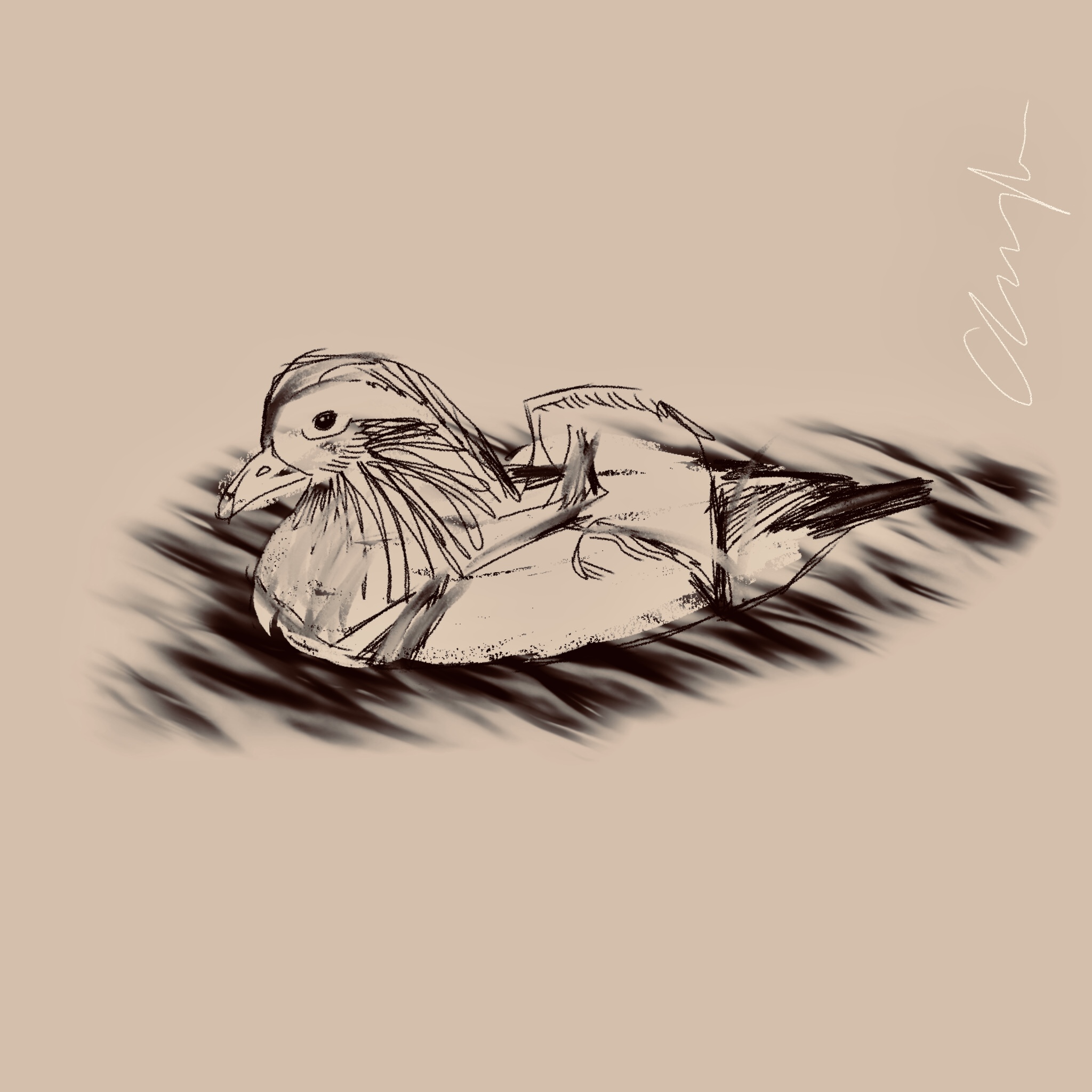
And I think of Rick as one of those lush Mandarin ducks, button eyes and punky hair, splashing about in a big old pond somewhere, bobbing under the water, up again. Under. Up. Shaking off the water. Basically loving it.
I knew the street – or thought I did. A utilitarian cut-through in an older part of town, with the sort of uniform civic redevelopment it makes you wonder whether the original buildings fell victim to town planning or the Luftwaffe. The street is dominated on the leading corner by a long, low, smoked glass office building, leading on to other, smaller offices, a single, more original building in a rotten-looking antiques warehouse – mobile phone number painted on the peeling double-doors where the cart used to go in and out – and half way up, a pristine meditation centre, operating out of the old telephone exchange, finding new ways to make connections.
Giles’ block is narrowly squeezed-in, set-back, anonymous, thrown together from the same Lego tin as its neighbours. The only thing that gives it away as a private address is the scrappy intercom console, the names of the people who live there scrawled in marker pen, stuck over with tape or missing completely. Two office workers vape and sip coffee, leaning up against the black pointed railings to the right. They’ve both got such perfect, Edwardian-style beards and moustaches, it’s a shame they can’t get vapes designed like long clay pipes. Before I can suggest it, Giles buzzes me through.
If the exterior of the apartment building looks flimsy and plastic, the conversion inside is even more extemporary. It looks so thin, if I tripped and put out my hand to save myself, no doubt all the walls would tumble down one against the other like a pack of cards, until I was left standing in the shell (with the two bearded vapers peering in at the window).
Giles’ door shows signs of a forced entry. I know he was admitted to hospital after an overdose, so I’m guessing that’s what it was. It wouldn’t have taken much putting-in, that’s for sure. A butterfly could’ve done it. With an ant as a battering ram.
No need for that today, though. Giles is waiting for me in the doorway. He’s gigantic – much too big for this place – a vast, fleshy monolith of a man, wearing an old Motorhead t-shirt and cut-off trackie bottoms. When he turns and leads me into his flat, his left shoulder slightly higher than the right, his palms swipe backwards to help him along, like a polar bear paddling for purchase in the floes. The whole building bounces.
His living room is a mess. There’s one armchair in the middle of it all, blackened and sagging in the middle. When Giles sits himself into it with a thundering sigh, he’s almost completely subsumed, like he’s dropped himself down into the maw of a particularly giant and noxious kind of fungus. He spreads his fingers on the arms – to stop himself disappearing straight through the floor, probably – and regards me with a baleful look.
‘What’s all this about?’ he says.
I explain what the team is and the things we do.
‘I’ve come for the initial assessment,’ I tell him. ‘It’s a formality, really. I think you’ve been referred to us by the hospital for very specific things. For physiotherapy – because I think you injured your shoulder? Is that right? And for some bridging care, to help you get back on your feet. Unless you think there’s any equipment you might need?’
He raises his eyebrows.
‘What do you mean? Equipment?’
‘Well – in the loo, for instance. To help you get on and off. Given your shoulder problems. To make sure you don’t have any more falls.’
‘I fell because of the overdose’ he says.
‘Yeah. But still…’
He gestures behind me.
‘Be my guest. See what you think.’
‘Okay.’
What I think is that the toilet is as terrible as the rest of the flat. I imagine the gateway to Hell might look similar – although I’m sure even Satan would be a bit shamefaced and throw something down there. The only equipment this place needs is a wrecking ball.
‘Hmm,’ I say, going back in to the living room. ‘Maybe I’ll get the OT in to see you after all.’
Giles nods and smiles.
‘I’m sorry,’ he says, making an effort to get up again, but defeated almost immediately. ‘I haven’t offered you tea.’
‘That’s kind,’ I say. ‘But it’s fine. I just had one.’
‘As you wish,’ he says.
We smile at each other.
Henry doesn’t come to the door so much as slowly coalesce from the shadows beyond the glass.
Henry is frail but not physically unwell. I know his story pretty well by now. He’d been living in Portugal for many years until things started to go wrong, his marriage ended, he was hit by severe financial problems, lived a while in his car, was sectioned following a suicide attempt. After a great deal of toing and froing, his daughter Diane managed to repatriate him, temporarily setting him up in a basement flat whilst she sorted out something more suitable and long-term. I’d spoken to Diane many times on the phone. She was bright and busy and supremely well-organised, but I knew she was struggling to cope with work and family as well as the traumatic fall-out of her parents’ separation. Diane knew as well as anyone that the basement flat wasn’t great. It had a set-aside feel, silent and secluded – not at all the kind of place you’d choose for someone suffering depression and anxiety. But even though it suffered from having the generic, impersonal feel of showroom flats the world over – blown-up photos of Times Square and a colourised London bus driving over Westminster Bridge in the rain; enormous, squashy leather sofas impossible to get out of once you’d sat in them; glass vases with white pebbles and a single, artificial lily; a flat screen TV; venetian blinds – at least it was warm and safe, and near enough to where she lived to make keeping a regular eye on her father vaguely feasible.
The good news is that Diane had managed to find a better, brighter place. Henry is due to move the following morning; my visit here this evening is to be the last in this place, a welfare check, to see he’s okay.
‘Hello,’ says Henry.
We’ve met a few times before, but he makes no sign he recognises me. He’s as still as a photograph, completely neutral, like it really makes no difference to him whether he shakes my hand here in the doorway or stands inside staring up through the casement window at the feet of the people walking by.
He lets me in. We relocate to the living room. Henry drifts over to the kitchen counter, next to a tall suitcase on wheels, all zippered up and ready to go. I have the eerie feeling that If I was an alien probe sent into the room to scan for life, I’d struggle to differentiate between them.
‘Have you eaten anything this evening?’ I ask, glancing around for clues.
He shakes his head.
‘Aren’t you hungry?’
‘No.’
‘Do you mind if I have a look and see if there’s something I can get you?’
He shrugs.
I go into the galley kitchen area, so pristine you can smell the caulking gun.
The fridge has nothing in it. I open the overhead cupboards, and I can’t help thinking of the old nursery rhyme: …but when she got there, the cupboard was bare, and so the poor dog had none.
The only food I can see anywhere are five Kilner jars of pasta lined up on a shelf, each one holding different shapes and colours.
‘I could do you some pasta…’ I say, wondering what on earth I’d use for a sauce.
He shakes his head again.
‘Display purposes only,’ he says.
Harold doesn’t just suffer with anxiety – he’s anxiety incarnate. He is fret and worry and apprehension and dread, bound together with chains of despair. He is one hundred percent uneasiness, with a side order of foreboding. Anxiety has invaded his body, worn him thin as a pier post submerged by the tide, the black water rusting out the bolts, leaving just a pair of drilled holes for eyes.
‘But how do I know you’ll come?’
‘I will come, Harold. I promise. I’ll be there in about twenty minutes.’
‘But what if you don’t? Who would I call?’
‘You could call the office. The number’s in the folder. But I should be there in twenty minutes, traffic permitting.’
‘What do you mean, traffic permitting? You mean you might not get here at all?’
‘Well – sometimes the traffic’s a bit sticky, Harold. But twenty minutes should do it.’
‘But it might not do it. It might not. And then where would I be?’
‘I think you just have to trust that things will work out.’
‘But you can’t guarantee it.’
‘No. I suppose when it comes down to it, I can’t.’
‘So you can’t promise me you’ll come?’
‘I can promise I’ll try.’
‘And you you’re not lying to me.’
‘No. I would never lie to you. I’ll always be honest. Even though it might not help sometimes.’
‘Because I don’t want to be told one thing and then something else happens.’
‘No. That’s not nice at all.’
‘So you’ll be here in twenty minutes?’
‘Twenty minutes. Try not to worry.’
‘But it could be longer?’
‘I’ll see you in a bit, Harold. Take care.’
I ring off. Take a breath.
Take care? Why did I say take care? It sounds too final – the kind of thing you say when you don’t think you’ll see someone for a while. Certainly longer than twenty minutes.
Even over the phone I can feel the glittering mycelia of anxiety reaching out to me. I shake them off. Take a breath. Drive more positively than normal. Get there in ten.
* * *
When Harold comes to the door it’s like someone throwing a curtain aside on a monologue.
‘I was worried I’d caused a stain on the road.’
‘A stain Harold? What do you mean?’
‘A stain. I could see a black patch on the road outside, and I was worried my milk had leaked from the bottle. There was a workman outside and I asked him about it.’
‘What did he say?’
‘He said it wasn’t the milk, it was the repairs they’d made to a hole. He said if it was milk it would’ve dried by now. But it could’ve been the milk, couldn’t it? The milk could’ve leaked and caused damage to the road? And then what would I have done?’
‘It definitely wasn’t the milk.’
‘You’re sure?’
‘Positive. There are many things I’m not sure about, Harold, but I can absolutely guarantee your milk hasn’t leaked and damaged the road surface.’
‘But it was all black and shiny.’
‘That’ll be the bitumen.’
‘Bitumen?’
‘Yep. I would think.’
‘What’s bitumen?’
‘It’s a tarry substance they use to resurface roads.’
He frowns.
I take the opportunity to redirect his attention.
‘Would you mind if I came inside, Harold? The doctor wants me to take a little sample of blood…’
His round eyes deepen.
‘Blood? What on earth for?’
‘Let’s go inside and I’ll tell you all about it.’
‘But why does the doctor want you to take my blood? Am I ill?’
‘It’s nothing to worry about, Harold…’
It carries on like this all the way in to the living room. I put my right hand lightly on his shoulder, hoping the human weight of it might reassure him a little. When we reach the living room he hitches up his trousers, lowers himself with enormous care into a ruined armchair, then sits with his hands gripping the armrests, his spindly legs close together, his slippered feet flat on the floor. Only when all this is safely done does he turn his drilled gaze onto me.
I try the usual tactics. I ask him about his family, what job he used to do. I ask casual but specific questions about his daily routines. What he eats. How he sleeps. I ask about his bowel habits. How he’s managing. I make banal comments about the weather. I make him tea, and so on. But despite adopting the conversational profile of a pebble, every last thing gets turned into evidence of imminent ruin and disaster.
I settle back.
The walls are covered with pictures: kitsch, mini motivational posters, one of a kitten in a boot saying I hate Mondays; some with blocks of text saying stuff like Only I can change my life… or something good is just about to happen – but the one that really catches my eye is a copy of the Mona Lisa with a photoshopped spliff in her hand.
I look back to Harold and smile.
‘Am I ever going to be well?’ he says. ‘And don’t lie to me.’
 jim clayton