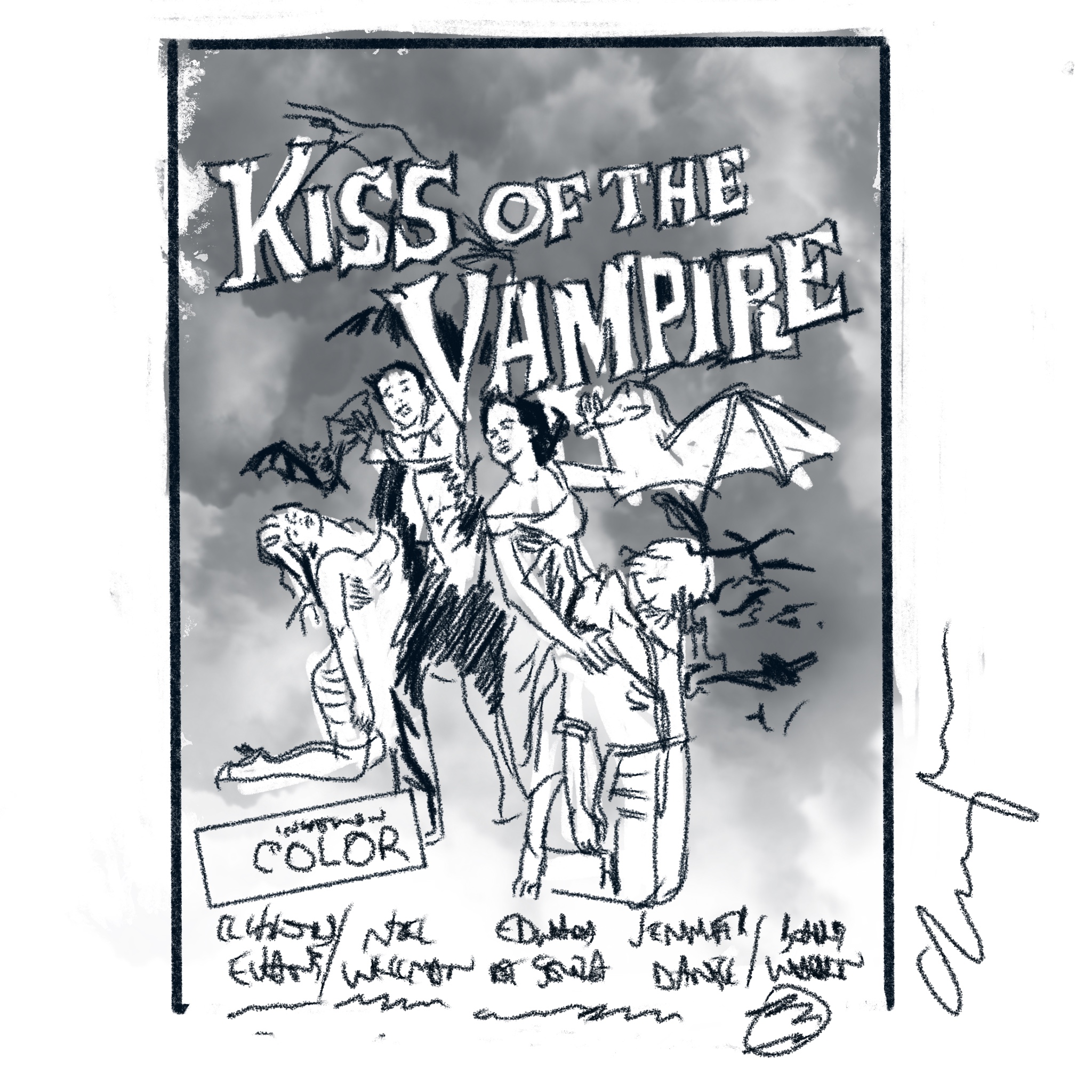
The Kiss of the Vampire, 1963. Dir. Don Sharp. Watched on YouTube, so you don’t have to.
I’m feeling sick and feverish, so what better way to recuperate than watch a sick and feverish film from the sixties. Forgive me if I wander off topic or panic at any point. This is probably a bad idea, but here goes…
0.18 Starts with a horrible old tree, a bell tolling, a priest doing some incantation. I’m already sweating.
0.52 A burial, it seems. The pall bearers make an awkward turn and almost dump the coffin, but I don’t think it’s part of the script. I think Don Sharp decided not to reshoot as it would’ve made him late for lunch.
1.21 Whilst the pallbearers struggle to get the coffin in the grave (talk about an open goal), a mysterious cloaked figure watches from on top of a wall, waiting for his cue.
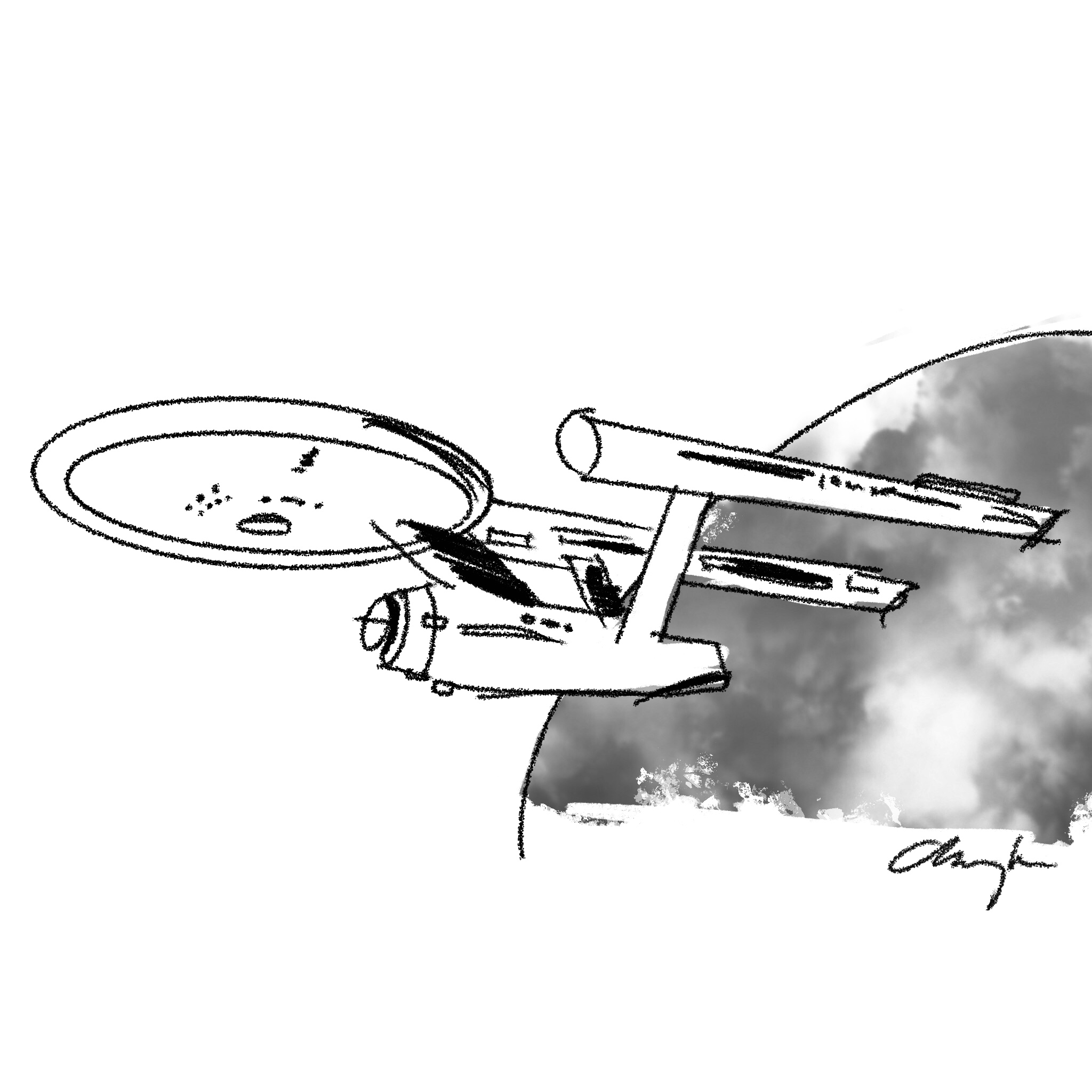
On a side note: Latin makes the service more sombre. I suppose if they were burying a Trekkie they’d do it in Klingon, which would also be effective.
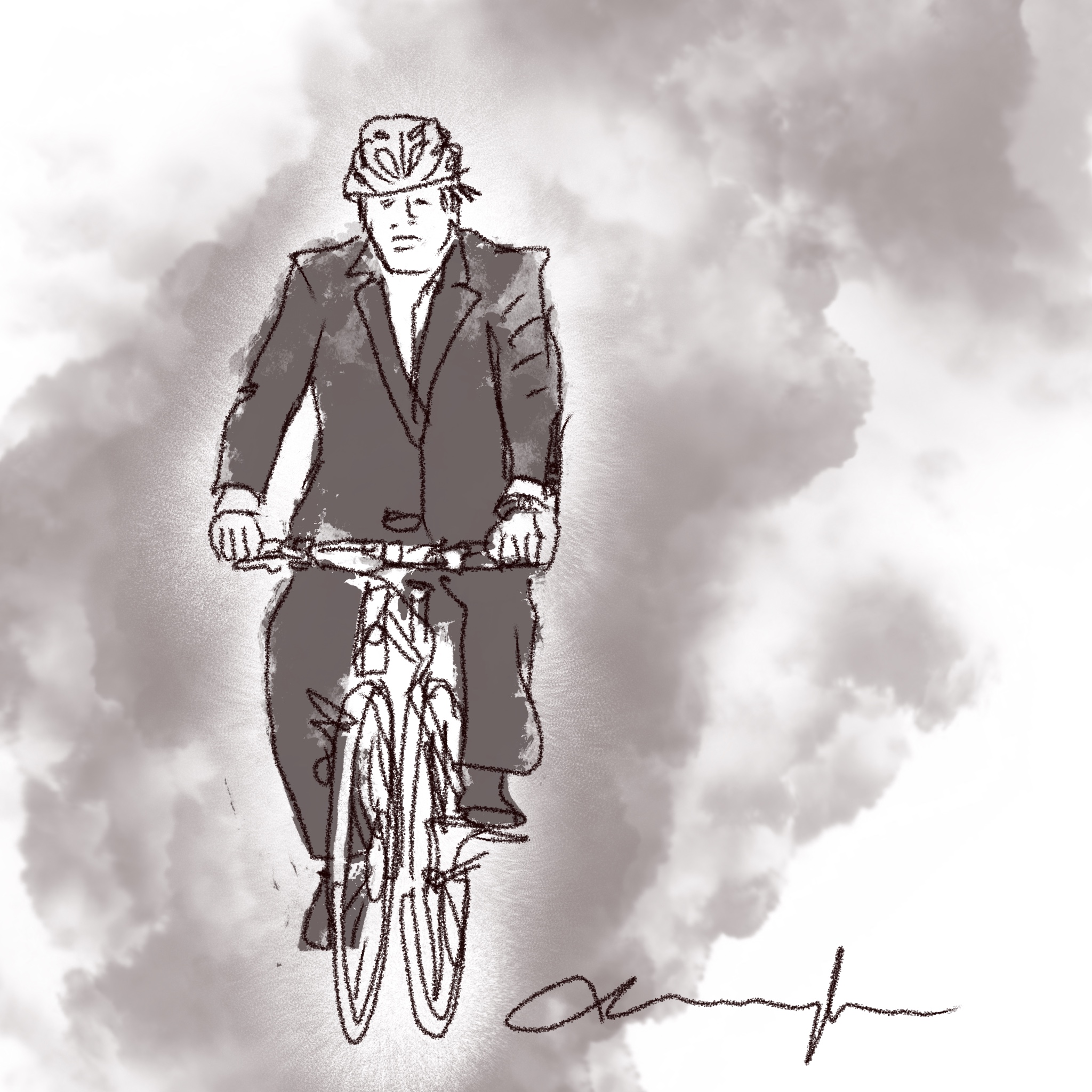
1.50 Two old mourners notice the mysterious man in black. ‘He’s been drinking again’ says one. We get a close-up of the man. He’s got a marvelous pointy beard and moustache. If you have facial hair like that you’d be contractually obliged to wear a top hat and cloak.
2.05 The guy comes down to join the service. Everyone moves back nervously. The priest finishes off with some holy water sprinkling. The man takes the holy water, does his own sprinkling. Then holds out his hand for the gravedigger to give him the spade. Then he smashes the spade through the coffin lid, and you hear a woman scream from inside the coffin. Blood oozes out. Everyone screams and runs away (the priest screaming in Latin). Crashing orchestral music plays as the camera dissolves through the coffin lid …. onto the lips of a vampire! Then we get the title sequence. Lots of bloody lettering. Nice (but not helping my fever).
5.30 Cut to: A mysterious man in a gruesome old castle (the SAME mysterious man? I’m not sure. His face is obscured by a gargoyle). Anyway, he’s looking through a telescope at two people driving towards the castle in what looks and sounds like an old sewing machine.
6.00 It’s Gerald & Marianne. They’ve run out of petrol. Apparently Gerald brought Marianne along as an early form of SatNav, but they’ve gotten lorst, what with the twisty roads and what not. Gerald’s phlegmatic, though. He’s wearing gauntlets. (The two may or may not be connected).
6.30 Gerald goes off to find help, leaving Marianne in the car. (I say ‘car’ – it’s more like a leather hamper on wheels). ‘It’ll be quicker if I go alone’ says Gerald, slapping his gauntlets. ‘Try not to be long,’ says Marianne, although if it were me I’d be glad of a little Gerald-free time. And I’ve only known him 30 seconds.
7.10 The wind picks up. We hear wolves etc. Marianne looks anxious. I hope she’s got a pistol in that muff or she’s for it. She leaves the safety of the car (er-hem), sees the castle on the rocky prominence.
7.45 The mysterious man in the castle with the telescope (God I hope I learn his name soon because that’s just too much typing), comes into view. He’s a Peter Cushing wannabe – same ascetic look, same widow’s peak, same sad, sad eyes – except it’s not PC it’s (reading notes) Noel Willman playing Dr Ravna.
8.08 Marianne is so freaked by the wind in the trees and branches coming down that she leaves the car and runs through the forest. She runs straight into the original mysterious man in black (checks notes: Clifford Evans playing Professor Zimmer, so – Prof Zimmer from now on). He glares at her. ‘Go back to your car’ he says. ‘GO!’ (widening his eyes – which, when combined with that beard, leaves absolutely no room for doubt). ‘Yes’ says Marianne. She runs back – straight into Gerald’s gauntlets. He’s found a guy with a horse, an early form of the AA. ‘Gerald I was so frightened,’ she says. She’d be even more frightened if she’d seen what Prof Zimmer did at the funeral the other day.
8.58 Their car gets towed by the horse to the entrance of the Grand Hotel (which should really be called The Gothic Abandoned Hotel for accuracy). Gerald asks the guy with the horse to put the car somewhere else, but the guy says it’s okay, no one will want to stop there. Gerald gives the man twopence and asks him why not. ‘Good night, sir’ says the man, and drives off on the horse. Gerald pulls on his gauntlets and goes to catch Marianne up.
10.02 Marianne looks up at the hotel and you can tell she’s not impressed. The shutters are banging (which doesn’t mean ‘amazing’ in this context) and there’s almost certainly no wifi. It starts to rain (off camera, with a hose). They sprint inside.
10.11 Sheltering in the porch, Gerald takes off his gantlets and raises Marianne’s face by putting his finger under her nose and levering it up. I’m guessing this is beginning to seem like a VERY long and ill-advised road trip to Marianne.
10.23 A creepy doorman called Bruno opens the door in a creepy way and seems amazed they want a room. (All this creepy and they STILL want to stay?)
10.52 Bruno starts pulling the dust covers off the furniture and it’s probably a good job they put dust covers down because they absolutely are chock full of dust. He shouts up the stairs for his wife Anna to come quick because they have guests.
11.08 Anna comes down the stairs, one at a time, her hands straight down by her sides and her shoulders straight back, like she’s hypnotised or got sciatica or something. ‘Will you sign here, please?’ says Anna, opening the ledger of the damned (after blowing the dust off it – should’ve covered it).
11.52 She tells them all the rooms are vacant – except one. She looks positively terrified. I think we’ve all had guests like that.
12.10 Anna shows Gerald and Marianne to their room. They both look quite amused. A holiday adventure. Just a shame they don’t know the title of this particular adventure is ‘The Kiss of the Vampire’
12.47 Actually, once the dust sheets are off, their room doesn’t look too dusty. Vamp chic, I think you’d call it.
13.44 Bruno shows Anna some rice he found in their car. ‘Don’t you see?’ he says, excitedly. ‘They’re just married!’ Anna gives him exactly the look I’d have given him in the same situation.
14.00 The newlyweds are just sitting down to some tea when a carriage arrives outside. Gerald watches as the coachman gives Bruno a letter. Gerald has some shaving cream behind his ear (not the whole canister, just a blob). Marianne wipes it off, which is enough to start them kissing, only interrupted by Bruno running in with the letter. It’s an invitation to have dinner with Dr Ravna, the Peter Cushing knockoff with the telescope we saw earlier.
16.06 I have to say, the actress playing Marianne always looks as if she’s struggling not to laugh. I think I’d be the same. I mean – Gerald is wearing the most ludicrous dressing gown. It has two enormous satin lapels, like the running boards on the car. First the gauntlets, then the lapels. I bet it took a hundred takes to get this far. (And it’d explain why they didn’t have time to reshoot the fumbled burial). They decide to accept the invitation and go down to the carriage.
16.19 Prof Zimmer is hiding in the bushes watching as the carriage with the newlyweds rattles into Dr Ravna’s castle.
17.05 The big creaky door opens and a big creaky butler called Hans stands staring at them. ‘Good evening,’ says Gerald. ‘Dr Ravna is expecting us’. Hans bows and creaks aside. Marianne looks around at the bird in the cage, the drapes, the mad piano in the background – gets the giggles.
18.00 Dr Ravna appears, walking down the stairs in the same way Anna did, like underneath the suit he’s shrink wrapped in cling film. He says he likes to be surrounded by beautiful things, and gazes into Marianne’s eyes as he hoovers the diamonds from her fingers with his lips. I love Gerald, though. He’s so guileless and hopeless. He has that way posh people have of talking very quickly – I mean DASH quickly – but only from the bottom half of the face, giving the occasional little jut of the jaw to emphasise a point. He could be surrounded by vampires and werewolves and bloody corpses and still say ‘Gosh I’m just so flabbergasted you managed to cook the whole bally thing up with so little time and so on.. well done you.’
18.40 A rapacious woman in red comes halfway down the stairs and then stops to eavesdrop when she sees they have company.
19.00 Dr Ravna asks them through to meet the rest of his family. There’s a sensitive looking guy playing the baby grand in a velvet jacket (the guy’s wearing the jacket, not the piano). Next to him is an intense woman with big hair and a horrible dress. It’s hard to say whether she likes the music or is waiting to shoot him, but I guess we’ll find out. Meanwhile, the rapacious woman in red (RWIR) puts on a cloak and slips out of the castle.
19.56 Dr Ravna introduces Sabina his daughter and Carl his son. Hans brings in some wine. Carl threatens to play some more after dinner.
20.10 The RWIR is tramping round a misty graveyard. She starts clawing at a fresh grave, saying ‘Why have you not been to see us, my sweet?’ Finds a handle. Just as she’s about to pull it, Prof Zimmer appears and grapples with her. They grapple for a little while (I can’t think of another word for grapple. Wrestling won’t do, because you might think he picks her up and does a body slam, which might be great but a little anachronistic). She shows her fangs and takes a chunk out of his wrist (he needs Gerald’s gauntlets). Prof Zimmer looks at the puncture marks. Does that mean he’ll be a vampire, too? Not sure.
21.44 The RWIR goes back to the castle. She does some more eavesdropping. Dr Ravna is explaining to his guests that ‘a few years ago I conducted a series of experiments, some of which went wrong… ‘ which is why he can’t return to the city of his birth. They all stand at the bottom of the stairs awkwardly whilst Dr Ravna makes a speech about the dirty feet of the peasants that trampled the grapes that made their wine and so on, the pheasants they ate that had been hanging for months. No one says anything. They probably think he doesn’t throw that many parties. Then they move on.
23.12 They settle down to listen to Carl play the piano again (Carl is a primitive form of Spotify). We get a close up of Dr Ravna. I love his hair. It must take him hours, smothering it in grease, then hanging upside down in the closet all day.
23.27 Carl plays something he composed himself. An intense little number that goes with his jacket.
24.00 Dr Ravna gives Marianne a green-tinged drink. I don’t know what’s more worrying, the drink or Carl’s playing. Dr Ravna hands Gerald a glass, too. ‘You have a singularly lovely wife’ he says to Gerald, who juts his chin out and says thanks, like a nervous swinger about to throw his gauntlets in the bowl.
24.30 Meanwhile, Prof Zimmer staggers into his house with his hand bandaged. He’s got a mobile of dried bats that I’m guessing he made himself. Nice. He pours vodka or maybe holy water over his wound. Takes a swig of it for good measure. Then holds his wrist over some flames to cauterise it. The pain is so terrible his ears actually waggle. Then collapses. I’m pretty sure he’s not a professor of medicine.
25.36 Dr Ravna gives Marianne some more green liquor. She’s sitting enraptured, listening to Carl go full Rachmaninoff. Dr Ravna, Sabina and Carl exchange loaded looks. He plays faster. Marianne rocks backwards and forwards in the Edwardian version of the mosh pit. Gerald comes over and helps her up. Sabina goes to call them a carriage.
28.54 The couple drive off in the carriage. Carl is playing the piano again. ‘Why did you let them go?’ says Sabina. ‘They have no petrol. They can’t leave until I say so,’ says Dr Ravna. Who probably exercises mind control over the local refinery or something.
29.47 Back at the hotel, Prof Zimmer is getting wasted with Bruno, who’s wearing his doorman jacket over his nightshirt. I’m guessing Prof Zimmer is the other guest, the one Anna was so scared of.
30.33 Going up to their room, Gerald and Marianne hear a woman sobbing. It’s Anna, holding a bundle of clothes like a baby. And then staring at a photograph, in case we didn’t get the point. They leave her to it.
31.33 The next day it’s raining, no doubt the same effects guy with the same hosepipe. Marianne stares out of the window and tries not to laugh. Gerald is doing calisthenics. Marianne kisses him between swings. The doorman interrupts to invite them down to breakfast. ‘We’ll be there in ten minutes,’ says Gerald. Then kisses Marianne again. ‘Or fifteen…’ (As racy as his little car).
32.00 A VERY long shot of Anna laying the plates for breakfast. They don’t even have bats on them. There’s an extra place laid for someone – the dead child? ‘No one comes here any more’ says Bruno, sadly. Then immediately brightens. ‘More bread?’
34.05 Marianne snoops in Anna’s room. Finds baby stuff, a bible, rosary etc. The photo. Turns out the photo is of Tania, the RWIR. ‘She looks like Anna’ says Gerald, driving home the stake, I mean, point.
36.15 Gerald confronts Prof Zimmer in the lobby. But Prof Zimmer won’t shed any light on the mystery – just says that they should leave. ‘Well! That puts ME in my place!’ says Gerald, chin out and then straight back in again. I feel quite protectively towards Gerald. I’d love to adopt him. As a pet.
36.35 Dr Ravna’s carriage arrives for them again. (Side note: why is everyone so grumpy looking? I know it’s Bavaria and everything, but it looks like they haven’t paid their actors in a long while). Sabina gets out of the carriage in the most ludicrous fur hat I’ve ever seen and says ‘We can’t stay long. Look. The weather’s changing.’ Which is a bad line to deliver at the best of times, but in THAT hat? I think she does it as well as anybody could expect. Carl looks furious, though. He’s missing his piano.
37.37 Carl tells them his father has ordered some fuel to be brought up from Konensburg express delivery, by ox. He also invites them to a party at the castle on Saturday.
38.30 They’re chatting about who’s coming and what they’ll be wearing, when Prof Zimmer stomps into the foyer. ‘It’s getting a little brighter,’ he says, sweating. ‘The weather is improving.’
Carl and Sabina run out, jump in the carriage. ‘Drive like the devil!’ he says to the coachman, who does a doughnut in the yard at about 2 miles an hour and they trot off back to the castle.
41.23 Later that evening (yeah – okay – I skipped a bit, but honestly, my fever isn’t getting any better), Gerald and Marianne are dressed up ready to go Dr Ravna’s ball. Just before they get in the carriage, Prof Zimmer staggers round the corner, making the horses and waiting staff whinny. ‘Madame!’ he says. ‘I beg of you. Be careful.’ Why he can’t come out with it and say ‘if you go to the party you’ll be drained of blood by the undead vampires there’ and make it clear to everyone, I don’t know. So of course, they drive on.
42.51 At Chateau Ravna all the guests are wearing horrible masks. The table is set with a sumptuous feast of white chocolate chicken and so on. Carl and Sabina bring Gerald and Marianne their masks – Gerald’s looks like a demonic walrus. I just hope there’s enough room for his chin.
44.30 The guests waltz very nicely. Gradually the dance floor clears until it’s just Carl waltzing with Marianne. The guests stare at them emptily. Maybe they want to waltz with Carl. Maybe they know what’s coming next (hopefully not Carl on the piano).
45.30 Gerald has disappeared somewhere. Marianne goes to get something to eat. Carl gets a mask that looks like Gerald’s and then catches up with her. He gestures for Marianne to follow him up the stairs, into a secluded part of the castle. He throws Marianne into a room and locks it. There’s the sound of sobbing behind a curtain. When she pulls it back she sees Dr Ravna lying on his back with blood dribbling from his mouth. She screams and runs to the door.
48.41 Meanwhile, Gerald is drunk, jumping after balloons and so on (Sabina is keeping him occupied; I don’t think it’s difficult).
49.07 Dr Ravna is standing in front of Marianne looking particularly vulnerable in a white silk blouse and pointy teeth. He holds his hands out to her, then beckons her forth (that sounds like the right language to use here). She stands up and walks slowly towards his bed. Lies down. He kisses her forehead, reveals his fangs and ….
50.26 ‘Where d’you think she could be, Sabina?’ says Gerald, down in the lobby. Sabina gives him a special glass of champagne and he collapses into a bucket chair. Sabina helps him upstairs where he collapses for keeps this time. The butler drags him into her room. Downstairs in the ballroom, the orchestra silently packs up and leaves. The guests bolt the doors and quietly take off their masks.
52.50 Dr Ravna is dressing Marianne in a white robe. Vampires like white (although it shows the blood terribly).
53.31 In the ballroom, all the guests have changed into white robes. They sit down on the floor unselfconsciously in a circle. It looks so uncomfortable I hope for their sake it’s not a long scene. Dr Ragna leads Marianne into the room. ‘Ladies & Gentlemen. May I introduce a new disciple…’ Close up on Marianne, and two puncture marks on her neck.
54.45 Gerald half falls down the stairs. Everything’s blurry. ‘What’s happened to the party?’ he says. Carl appears. ‘Where’s Marianne?’ says Gerald. Carl denies everything. ‘You came here alone. And you can leave that way.’ Hans throws him out.
57.38 Walking back to the hotel, Gerald gets run down by a carriage. But he gets found by Prof Zimmer, who checks his pulse (so maybe he IS a doctor after all). Puts him over his shoulder and carries him back to his room at the hotel.
59.01 Gerald wakes up alone the next day. He calls for Bruno. ‘Where’s my wife?’ he shouts. ‘What wife?’ says Bruno. OMG – they’re all in on it.
1.00.02 A police man talks to Gerald in the lobby. ‘I understand you wish me to issue a warrant, sir. Is that correct?’ But the interview doesn’t go well and it looks like the police are in on it, too. Can you get vampire police? I guess so. Gerald runs off to find Prof Zimmer, whose room has also got a stuffed crocodile and an hourglass – which makes him a REAL professor. ‘Please help me’ says Gerald. ‘My wife’s disappeared.’ ‘I know’ says the Prof. ‘She’s being kept in the chateau.’
1.02.17 Prof Zimmer gives Gerald a little speech about the devil and evil. I love the way he says those two words. ‘De-ville’ and ‘E-ville’ He’s never sounded more Welsh. He seizes his dramatic moment, whether he’s been paid or not. He paces around his room, ducking under the bat mobile (no – not the one you’re thinking of). ‘Do you know what a VAMP-eyre is?’ he rattles, snatching off his pince nez and almost taking his eyebrows with them. He tells the story of his daughter who left home, lived with a guy, mixed with the smart set, came home ‘what was left of her…riddled with disease’. Yes, a VAMP-eyre. Then he crosses himself. Families, eh?
1.04.48 Prof Zimmer has given Gerald a drug to help him sleep (poor Gerald’s getting drugged by just about everyone – and he was so happy at the beginning of his film in his gauntlets, wandering off to find the AA).
1.05.17 Nightfall. Gerald wakes up and hurries off to the castle. He knocks out one of the servants and gets inside. Breaks into Tania’s room. Persuades her to take him to Marianne. He follows her down spooky corridors – but it’s a trick! She leads him in to see Dr Ravna instead.
1.07.56 Gerald takes a swing at Dr Ravna but he ducks and gets him in an armlock. ‘You must not expect your Queensberry rules here, Mr Harcourt!’ he says (although I think ducking IS actually in the Queensberry rules).
1.08.23 Carl and Hans come in to help subdue Gerald (which isn’t that difficult). They use his own tie to tie his hands, rubbing it in, somewhat. Dr Ravna says he’ll bring Marianne in to show Gerald. Tania and Sabina go to get her.
1.09.29 Marianne walks in dressed in white, natch. ‘Don’t you want to see your husband?’ says Dr Ravna. ‘No. I only want to see you,’ says Marianne. ‘Prove to me that you do not love him.’ So she walks up to Gerald and spits in his face. ‘Well done, my dear!’ says Dr Ravna. Then asks Tania to initiate Gerald into their society (but I hope she wipes his face first because – well – hygiene issues…?)
1.10.40 Tania walks over to Gerald (I see a pattern emerging). She bares her fangs and bares his chest. Rakes his chest with her nails. Marianne looks like she’s trying not to laugh.
1.11.29 But…. Gerald has slipped his hands out of his tie. He pushes Tania away, then uses the blood on his chest to make the sign of the cross. Tania screams and everyone looks horrified (except for Marianne, who’s giggling).
1.11.33 Prof Zimmer bursts in the room. Gerald hits Hans with a stool, which he doesn’t appreciate. Grabs Marianne and runs out of the room with her.
1.13.00 Hans follows them outside. They hide round the corner. Hans isn’t the brightest butler in the mansion because he stands on the threshold looking puzzled. Meanwhile, Gerald pushes a gargoyle onto him, which is as labour intensive method of dealing with a vampire butler as I’ve ever seen. Prof Zimmer makes the sign of the cross on the front door, to buy them some time (although I’m guessing the mansion has more than one door, so…)
1.15.00 Prof Zimmer sends Bruno off to the police (yes – THAT police) with a note that’s supposed to convince them to come. ‘It’s a full moon. We’ve got work to do,’ he says as Bruno hurries off. Prof Zimmer tells Gerald he’s been working on a solution to the vampire question – a ceremony he’s distilled from a lot of medieval books he got from the library and so on, especially effective on a full moon with Capricorn in Uranus or something – which, luckily for them but not for the vampires – is tonight.
1.15.48 All the vampires are dressed in white back at the castle. ‘Well? What does he say?’ says one of the vampires, and then all the others chip in anxiously, proving the point that even the undead can get a little panicky sometimes. Dr Ravna appears in front of them back in his white robes, too. When the vampires ask him what’s going on, he says ‘they’re trying to destroy us’. When the vampires jump up and crowd round him for more, he explains the situation like this:
‘They came here tonight to take the girl away because they did not want to risk her life while they were trying to destroy us.’
(Vampire or not, you’ve got admire his breath control).
The plan is to get Marianne back so they won’t be able to destroy them. Like a human shield. But how will they get her back, when the doors have got crosses on them?
1.17.00 Prof Zimmer is drawing a circle on his bedroom floor. (So this magic doesn’t require them to visit the chateau in person? Handy!) He leaves a gap in the circle so he can come and go. (If I was Gerald I’d be thinking of my options at this point). Back at the chateau, Dr Ravna is using mind powers to make Marianne walk to the chateau by remote control or something. Like a drone. I’m surprised Prof Zimmer didn’t think of that one. But he drinks a lot, sets fire to himself, so maybe it’s not so surprising after all.
1.18.19 Prof Zimmer has finished chalking the circle. He’s got the horn, the sword and some other stuff. Starts his incantation – which is basically the Welsh phone directory in reverse. Gerald is standing outside the circle, and chooses his moment to sneak away and check on Marianne. But dash it all! She’s gone!
1.20.13 Gerald and a priest (where did HE come from?) hurry through the misty woods on the trail of Marianne.
1.20.49 Prof Zimmer reaches the climax of his incantation, holding the sword above his head and commanding Beelzebub to appear. The door blows open, the bat mobile swings around, the candles go out.
1.21.12 Back at the castle, all the vampires are screaming as the wind rushes through the place. Marianne is still gamely walking on to the castle, followed by Gerald and his priest. Gerald catches up with her, they grapple or wrestle, I’m not sure, then the priest shows her his crucifix and bible, which totally works.
1.22.06 ‘Look! Look!’ says the priest, holding his crucifix up again. Thousands of crudely animated, sub-Scooby Doo bats are converging on the castle. The vampires can only watch in horror as the animated bats are supplemented by rubber bats on strings, smashing through the windows, invading the castle. There now follows the best mass slaying of vampires by rubber bats on strings I’ve ever seen, and I’ve seen literally this one. Full credit to the actors – paid or otherwise – who scream and do their best to look terrified as they’re brutalised by the things. They may as well have been savaged to death by Furbies. It’s dreadful. I’ll never forget it.
1.23.42 Meanwhile, Marianne comes to her senses in the forest. The marks on her neck have gone. Everything’s going to be alright. And they’ll have a ripping honeymoon story to tell the folks back in Henley.
The End.
That’s it! So what’ve I learned?
- Bavaria’s nice if you’ve got gauntlets and plenty of petrol.
- Don’t drink the green cocktails.
- Vampires are people too. And they work very unsocial hours.
- You MUST get a building inspector to sign off on your gargoyles from time to time.
- Treatment for a laceration of the wrist is compression and elevation – NOT holy water and open flame.