antmare

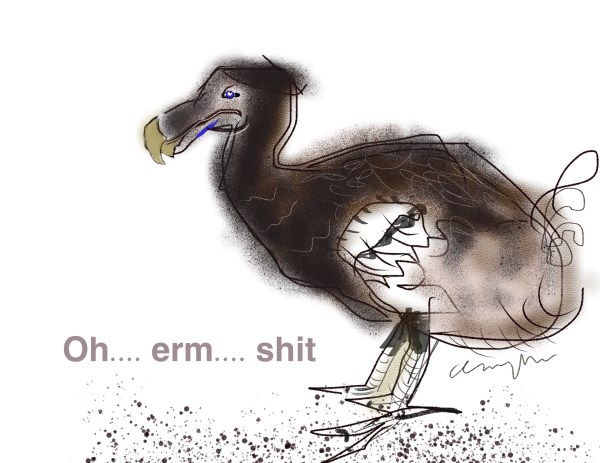
the ants are busy cleaning up / the sugar round the coffee cup / the bin bags back of the catering truck / the frosting lost from the tossed / wedding cake / of the fraught call taker / the overworked undertaker / the butcher, the baker, the fake news operator / the supermarket clown with his pants falling down / throwing plastic flowers around / while the lines / of shocked shoppers / the pantomime dames and party pill poppers / the princes, paupers & live-feed gawpers / talk about the healing power of music / steroids, benzos & antibiotics / antipsychotics / while Donalds Duck & Trump / hiding in plain view top of the dump / struggle with their waterproof pumps / red, white and blue sou’westers / finally acknowledging a change in the weather / and Doctor Doonothing / shakes his head as he pulls out your stuffing / huffing & puffing / muttering some bullshit voodoo / invoking a push me pull you, fuck me, fool you / who knew? / but the effect is immediate / and hey – you paid for it / so put that in your feed and smoke it / along with that other meme / the one about the Garden of Eden / where a giant snake / more give than take / so fat the branch’ll surely break / slowly unfurls / swinging low to lick Eve’s curls / waggling comedy eyebrows / at the luscious apple hanging solo / so low / but no worries – Eve knows / always has, I suppose / she eats the snake, tosses the apple, wipes her hands & goes / cutting to a vista / of all the other shit we missed / the fossilised fish in the shale and schist / impressions of all the creatures we lost / their curly horns poking through the permafrost / the sad rise and wreck of it all / so bad even Attenborough’s blocking your calls / he knows you can’t be trusted / he knows when the floes are finally busted / and the dead rise up to be costed / you’ll be parked two abreast / on what’s left / of the inundated / demarcated / cemetery hard-standing / with as much understanding / of what just happened / as that flattened / and battered / halloween pumpkin / gaping, waiting for something / anything / an end to the rain / an end to the pain / a storm of fireworks to light the sky again

IMG_1411

portrait

Ella’s flat faces the sea – so close you could run out of the front door, across the road and dive straight in. When I step out of the car I can’t help but stand for a moment and take it all in. There’s a break in the morning rain, the sun is shining powerfully, and suddenly the sea is a phosphorescent slice of pure light. The wind turbines on the horizon are as clear as I’ve ever seen them, delicate cuts of white, their rotors imperceptibly turning against the inky clouds of the next weather front.

When I’d rung ahead to make the appointment, Ella had said to use the keysafe to let myself in. It’s a complicated arrangement, though. Ella’s flat is on the ground floor, but because the building is in a conservation area the keysafe has to be hidden away in the basement. ‘It’s in the second cupboard on the right,’ she’d said. But the front door is in the centre of the building with two windows either side, so in fact there are two basement flats, right and left of the main steps. It feels intuitive to take the steps down the right hand side basement, but when I get there I find only one cupboard, fixed with a rusting padlock. So I go back up, down the other steps, find the keysafe, retrieve the keys, come back up. There are three keys on the keyring; none of them fits the front door. I stand there stupidly for a minute, jangling the keys, trying to figure out how this could possibly make sense – until I look up, and realise I’ve actually gone one door along.

As it turns out, I didn’t need the keys. Ella’s son Peter and his wife Becky are with her. Ella stands in the middle of the living room, still in her hospital gown, tags on her wrists, holding on to her zimmer frame, whilst they put her shopping away.
‘I bought you plenty of pineapple,’ says Becky, holding up a plastic carton as big as the fruit itself. ‘I know you like it.’
‘Where does this go?’ says Peter, waving a pack of panty liners in the air.
‘Bedroom cabinet, second drawer down,’ says Ella. And so on.

The room is like a domestic version of a royal court, the walls dressed in rich tapestries and huge, abstract paintings, the furniture a mixture of ethnic and modern, the rug on the floor intricately patterned. With the sunshine streaming in through the windows, the whole thing has a rich, painterly feel, like Caravaggio decided to branch out from biblical scenes, this one called: ‘The Hospital Discharge’.

‘Let’s get you sat down,’ I say to her. ‘Then we’ll talk.’
She shuffles over to a chair set in the middle of the room, very much like a throne, with claw feet, woven back, and – incongruously – a pressure cushion.
‘I feel absolutely dreadful,’ she says when she’s settled.
‘In what way, dreadful?’
‘Just that. Dreadful. What more do you need?’
‘Are you in pain?’
‘Pain? Everywhere, darling.’
‘Where do you feel it most?’
She waves a hand in mid air.
‘Agony,’ she says.
‘Do you feel sick?’
‘Sick? No.’
‘Short of breath?’
‘I’m always short of breath. Haven’t you read the notes?’
‘Yes, but I just want to see how you are right now – if anything’s worse, or about the same…’
She closes her eyes and gently shakes her head.
‘If by the same you mean dreadful, then yes, I’m the same.’
‘I’m sorry to hear that.’
‘And I’m sorry to feel it.’
‘I got you some of those yogurts you like,’ says Becky, from the kitchen.
‘I couldn’t possibly,’ says Ella. ‘Not in a million years.’
‘Well – I’ll put them in the fridge for later.’
‘If you must.’
‘Right. I’ll just do some obs and then we’ll take it from there,’ I say, unpacking my bag and then kneeling in front of her chair.
‘Obs?’ says Ella, suddenly glaring down at me. ‘What d’you mean, obs?’
‘Observations. Your blood pressure, temperature, that kind of thing.’
She sighs, then closing her eyes and resting her head back, holds out her hand – whether it’s for me to kiss or put the SATS probe on, it’s hard to say.
‘If you think it will help,’ she says.

the wonderful thing about tigger

Carl climbs back into bed and slowly pulls the covers up to his chin. He’s a frail, tentative man in his forties, skin like parchment paper, his teeth sharp and defined. I’m surprised he’s been discharged home like this, but then again, he’s a convincing witness, and they’re short of beds on the psych wards.

‘I’m over it,’ he says. ‘I won’t be trying to kill myself again.’ He grimaces, and pulls the covers even more tightly around him.

This last time was the second attempt. Carl had taken an overdose of medication he’d stored up over time. He’d panicked at the last minute and called a friend, who’d dialled 999. When the paramedics broke the door down Carl was in cardiac arrest. They managed to get him back, though, and after a prolonged stay in hospital – a couple of weeks in intensive care, a month on the wards – he’d been discharged home with community support.

It’s a nice flat, but so bare you’d think Carl had just moved in. Even though he’s an artist, there are no pictures on the walls apart from two, childish, brightly-coloured crayon drawings of a dragon and a butterfly. The bare boards seem to go on for miles, from Carl’s bedroom at the back of the house to the huge bay windows at the front. By the bed he has an alarm clock and a glass of water. At the foot of the bed is a stuffed toy: Tigger, from Winnie the Pooh.

‘Tigger saved my life’, says Carl. ‘When I came out of ITU I only had the strength to stroke his head. It gave me power, though. Sounds silly but it’s true. He was my best friend in there. He kept me going, stood up for me. I mean – ITU was the worst. It was a nightmare. You’d think I was unconscious to look at me, but I wasn’t. Everything was out to get me – the equipment, the nurses. Everything was holding me down trying to climb inside me. I struggled like mad. One time I even threw myself out of bed. I just climbed over the cot sides and ended up on the floor – drips, lines, cables, the lot. Everyone came running. I thought they were coming to finish me off so I fought like crazy. Then they sent me back under. Next thing I knew Dad was standing by the bed on the ward. He looked so old and sad and worn out. It was Dad who gave me the spare kidney when I needed it, a few years ago. He’s amazing, my Dad. He came all the way down from Cumbria to see me. On the train. That’s a long way! I just kept thinking about him, sitting there, staring out the window. But when he got here I didn’t know what to say to him. Other than sorry, obviously. The worst thing was, when he left me at the hospital he came back here to sleep – in this bed, where I did the deed. That made me feel very strange. But he couldn’t afford a hotel, so I suppose it made sense. I wondered how I’d cope, coming back to this flat. It’s been alright, though. I don’t think about it all that much. Funny, isn’t it?’

the man with all the goals

Melvin answers the door in his pants. He’s quite a sight. Wild white hair sweeping back from his head, a long, ginger-white goatee to match; perfectly round gray-blue eyes, and the kind of ravaged and rangy body you might see trotting alongside your jeep on the Serengeti.
He doesn’t speak. He just stands there, staring at me, one hand on the door, one hand adjusting himself.
‘Hello!’ I say. ‘My name’s Jim. From the Rapid Response Team. I’ve come to see Helen.’
He smiles suddenly, a wide, gummy affair, but makes no other sign that he’s understood what I’ve just said.
‘Here’s my badge’ I say, holding it up.
He glances at it, then carries on staring at me.
‘Is it okay if I come in and see her, d’you think? Helen?’ I pause. ‘Is she in?’
He opens the door wider, still holding on to it, which I take as an invitation to come in. It’s a squeeze to get past him, though, especially with all my bags. The hallway is so tiny there’s barely room for the two of us. I’m expecting Melvin to make some room, but he doesn’t.
‘I’ll take my shoes off,’ I say, struggling in the cramped space. ‘It’s a bit wet outside.’
‘If you don’t mind,’ he says, suddenly animated, as if the last minute or so was just a technical glitch. ‘We’ve had so many people in and out.’
‘No worries,’ I say. ‘I bought these shoes ‘cos they’re easy to slip on and off. There! Good! Okay! So – shall we go through…?’

The sitting room is swelteringly hot. The gas fire’s on all-bars, and the air ripples above a free-standing radiator (all of which explains the pants). Melvin hops over to his chair and goes through an athletic, sitting down routine, involving him taking his weight on his arms, raising his legs, lowering himself slowly, then folding his bony arms and legs and smiling with a self-satisfied leer.
Helen waves me over.
‘Ignore him,’ she says.

The examination is straightforward. Everything’s fine. Helen’s recovering well and she’s happy to be home. I tell her we’ll be discharging her from our service, but that it’s easy for us to come back if anything changes.
Melvin watches the whole procedure with intense interest. Whilst I’m writing up the notes, he starts talking again.
‘I played a lot of football,’ he says, as if I’d asked. ‘A lot of football. But it did my head in. Have you heard that before?’
‘D’you mean sport and head injuries? I think I heard something.’
‘It’s the big leather balls. Laces down the middle. I played centre forward. I was heading it all the time.’
‘I suppose it wouldn’t do your brain much good. All that shaking. Like boxers.’
‘I did boxing, too. And rugby. You bang your head a lot in rugby.’
‘You certainly do.’
‘But football was the main thing. I did all the trials. I played semi-professionally for years. One game I scored eleven goals. This guy comes up to me after, and he says How’d you do it, Melvin? How’d you score all them goals? And I says to him What goals? I don’t know what you mean, mate. The ball comes to me, something happens, it’s in the net. That’s it. It’s a natural thing, like breathing. They sent me to Germany.’
‘Did they?’
‘This German coach, he runs over to me. He leans in … like this … and he wags his finger in my face… like this … and he says You! You’re the man with all the goals. You’re a professional. You shouldn’t be here. So I says to him Mate! What goals? I don’t know what you’re talking about. The ball comes over – it’s on my head – it’s in the net. That’s it. It’s got nothing to do with me.
‘How’d he take it?’
‘How’d who take what?’
‘The German manager. How’d he take hearing about all the goals?’
Melvin shrugs.
‘He could see,’ he says. ‘He knew what he had there.’
‘So then what happened?’
‘I came back, didn’t I? Got a job in a laundry. And here we all are!’
‘Just ignore him,’ says Helen.

batteries not included

Stella has known Glad for quite a few years. More than she cares to think about. Lately their friendship’s been under something of a strain, though. Glad has become increasingly obsessed with her dolls – expensive, hyper-realistic babies with internal motors that give them a heartbeat and make them breathe. The dolls are so authentically painted and well-made you’d never know they were fake until you got up close.

‘Her son gets them for her – why, I couldn’t possibly say,’ says Stella. ‘They cost an absolute packet. You have to send away for them. To America or somewhere. She spends hours going over the details, telling them what she wants. Then he buys them with his credit card. I don’t know what he thinks about it all. He’s an only child. It must mean something.’

It’s interesting, talking to Stella about this. We’re sitting in her front room, a warm, slightly down-at-heel place with overstuffed sofas, bookshelves, a coffee table with TV magazines and remote controls, a dog curled up in a fleecy bed. Unlike Glad, Stella’s had lots of children. Their photographs line the walls, glimpses of the usual family situations: holidays, weddings, graduations, babies. It’s all so real. I can imagine sending away for it, and then waiting for the delivery, everything flat-packed, ready to assemble, even the dog (batteries not included).

‘It makes me so uncomfortable,’ Stella goes on. ‘She puts them in a pram and takes them for a walk round the park, even the play area. People come over to have a look because of course they think she’s just a grandma helping out with the kids. And then when they see that they’re dolls, well, they pull away. I think they think she’s got dementia. Maybe she has. The other day one of the parents called the police. They turned up at her house to talk to her about it. They didn’t do anything, though – well, Glad says they took it in turns to hold the baby and take photos, but that was it. I don’t know. It’s all a bit weird.’

I spy

There are four of us, strewn over our chairs like so much debris hung up on tree roots after the flood. It’s been a busy day, but unusually, we’re back in the office at the same time, all the admin and follow-ups completed, nothing else to do but sit and chat and think about going home. We’re exhausted; after a while the conversation dries.
‘I spy with my little eye…’ says Keisha.
‘Or drone,’ says Mel. ‘Gives it more scope.’
‘Okay then. I spy with my little drone… something beginning with…. S.’

‘A soaking,’ says Laurence. ‘I was standing outside the patient’s house, no shelter, no porch, not even a bush. And it started to rain. The patient was ages getting to the door, and then when they got there, they rattled the handle a few times, and they said I’ve just got to go and get the key. And went away again. By the time they let me in I was half drowned. You’d better take your shoes off she said. So I said I’d better take EVERYTHING off – but I heard myself as I said it, and she looked shocked, so I just said Joke and carried on. And then …. and then!… it turned out I wasn’t even needed. She’d seen someone the day before! I’d been double-booked!’
‘No,’ says Keisha.
‘Oh,’ says Laurence. ‘Suit yourself.’

‘Sandwich’ says Kerry. ‘Does anyone want my sandwich?’
‘Why? What’s wrong with it?’
‘It’s got avocado. I don’t like avocado, especially when it’s been sitting around.’
‘Who made your sandwich?’
‘I did.’
‘O-kay.’
‘I’ll have it’ says Laurence. ‘Thanks.’
‘Laurence, the human dustbin,’ says Vihaan.
‘It’s called survival,’ says Laurence, tucking in.

‘Saluki,’ says Barbara. ‘I met this gorgeous dog today. It was stunning. Absolutely beautiful. Like someone stuck a wig on a greyhound. It just followed me around with this sad expression, you know? Like it could see exactly what the problem was and how I was doing my best but really we all knew it wasn’t going to turn out well. It’s funny – I remember more about the dog than the patient. I could’ve sworn it showed me to the door when I was finished, shook my hand and said goodbye. So – Saluki.’
‘No,’ says Keisha. ‘Next.’

‘Syringe driver,’ says Anna. ‘I mean – how can you have a syringe driver, anticipatory meds, nurses coming in and out all the time, a hospital bed, everything, all the equipment, all the fuss and this and that – and still not know you’re dying? There’s a note on the system – very clear – do not talk about end of life issues with Mr Smith. And then what does he do? He goes and asks me, very directly. Why am I having all this stuff? So I just say to him, I say We-ell, Mr Smith… you’re really not very well. So they’ve given you this for the pain, this to make you feel more relaxed, this for your chest…. I think if you speak with your GP they might be able to tell you a little more. Okay darlink? I feel so bad doing it, but the note is very clear. Later on I speak with the district nurses and they say he does know he’s dying but he doesn’t like it to be acknowledged, you know? He doesn’t like it all out in the open, which make it more real for him. He freak out and can’t handle it. Which I can understand. It’s a freaky-scary situation, God knows. But I hate dodging the question like that. It’s not me at all. I prefer to be open about things. Especially scary things. But he’s not my patient, so…’ Anna shrugs, finishes her coffee in one gulp.
‘No,’ says Keisha.
‘Oh. Okay,’ says Anna. ‘Fuck you and your stupid drone.’

Keisha looks at Vihaan and raises her eyebrows.
‘I don’t know,’ he says, yawning, stretching, glancing across the desk. ‘Stapler?’
‘Yes!’ she says.
We all groan.
‘Shut up,’ she says. ‘It saw it during take-off, okay?’

the rules according to raab

No-one gives a toss
about social media
the whole truth-telling procedure
it’s totally overrated, mate
outdated
just throw shit out there, see what sticks
everyone uses dirty tricks

I don’t give two fucks
about the facts
so you may as well relax
it’s the new norm
conform
it’s not the taking part that counts
it’s the dollars in your bank accounts

Who gives a shit
if it’s real or not
if you lie a little or a lot
it’s an election
misdirection
when the truth comes out we’ll be long gone
safe in our clubs in London

I don’t give a damn
if you think I’m bent
the truth circumvent
fake news rules
fools
I’m a gilt-edged winner, not a quitter
I’ll say what the fuck I like on Twitter

Who the hell cares
if the public’s deceived
feels misled and aggrieved
facts are pliable
it’s undeniable
so shut the hell up, it’s hardly a disaster
save your screams for the morning after

IMG_1377

at the very top of the street

You wouldn’t think people actually lived on this street. It’s one of the main thoroughfares, an artery of urban bustle, crowds spilling over the pavements day and night, drinking in the pubs and cafes, streaming in or out of the concert venue, staring in the windows of the chi-chi boutiques, taking selfies outside the old theatre, or crowding round the buskers who work the passing trade on the pedestrian cut-throughs. The street heads up at a shallow incline, diverging endlessly left and right, then gradually thins, and quietens, until it runs out of energy at the top, where a main road cuts across it at right angles, running from the station to the sea. Here the shops are more down-at-heel. There’s a second hand camera shop, an antique clothes shop, a tailoring and alteration shop, a shop for rent, all of them weathered and worn, their wooden facades peeling. The person who did the display in the window of the antique clothes shop – how long ago? – has opted for a nightmarishly whimsical look: a stuffed fox head tied into a hacking jacket; some tackle lying around, a few vacant toys, as if they’d given up trying and taken to lure customers in with appalled terror instead. I wonder if there’s anyone in the shop at all. Maybe they’re just behind the netting, holding their breath, staring at me as I cup my hand on the glass to see better.

Mr Lake lives in the flat above the tailoring shop next door. There’s a young woman sitting in the shop window, dreamily needling some trousers draped on her lap. She pauses with the needle in mid-air as I fetch the key from the keysafe and turn to open the side door. I smile and nod but she doesn’t acknowledge me; in fact, I don’t even see her lower the needle as I push the side door open.

The hallway is dark and cramped, the only light coming from a yellowing square of glass at the far end, and a single, winking point of red from the console of the electric scooter on charge. I can’t see a switch for any hall light, and there’s no room for me to put my bag down and find my torch, so instead I wait a minute until my eyes have adjusted, then slowly creep forwards past the scooter and piles of junk, onto the sagging carpet of the stairs, and head up
‘Hello? Mr Lake? It’s Jim – from the hospital.’
There’s a TV playing in one of the rooms overhead, a rowdy studio debate, raucous shouting and applause – which somehow makes the place feel quieter.
‘Hello?’
A toilet with no door on the first little landing, a twist to the left, a galley kitchen on the right with a glimpse of stacked plates and bulging plastic bags, and then up onto the top landing, where a heavy curtain has been nailed across a doorway.
‘Mr Lake?’
I hook the curtain aside.

Mr Lake is sitting on a high-backed chair, surrounded by boxes and cabinets, piles of old Picture Post and Hobbycraft magazines, crates of clocks and teasmades and novelty telephones. It’s difficult enough for me to find a way through all the mess, so I can’t imagine how Mr Lake manages it. But then, no doubt, he’s used to it all and it fits him pretty well, like a hermit crab making its shell from a tin can or a discarded doll’s head.

I’m here to dress a wound on his leg. It’s not easy, setting up a sterile field, though. I have to move a few things.
‘Temporarily!’ I tell him. ‘If I’d had a pound for every time I’d said temporarily….’
‘You’d have five pounds fifty!’ he says.
‘No doubt.’
We chat whilst I set up. He tells me about his life. How he used to be an engineer.
‘I was always good with my hands,’ he says. ‘Taking things apart, putting them back together, that kind of thing.’
‘That’s a great skill to have.’
‘It kept me fed and watered.’

I glove up.
‘Any family in the area…?’ I ask as I lean in to remove the old dressing. The smell is gacky – the cloyingly sweet smell of decay.
‘No. No family,’ he says, watching me drop the filthy dressing into the waste bag. ‘I was married for a while. But she left. Ran off with the best man. And one day he dropped dead at work. So she killed herself.’
‘Oh – I’m sorry,’ I say, changing my gloves. ‘That’s terrible.’
‘Ah. Well,’ he says. ‘She was always a bit up and down.’

When I’ve finished the dressing and I’m ready to go, I notice some framed pictures on the wall behind the TV.
‘Is that you?’ I say, pointing at the picture of a smiling young man in a smart suit and waistcoat, holding a scowling baby up to the camera.
‘No! That’s my mother!’ he says.
‘Your mother? What? This one?’
‘Where are my glasses…?’ says Mr Lake. He grumbles and fumbles around his chair, the glasses magically appear in his hand, he hooks them over his ears, then screws up his face and leans forward.
‘Oh. Yes. You’re right. That’s me,’ he says.
‘Who’s the baby?’
‘That one? No idea.’
Amongst all the other portraits is one of a young woman in a floppy white hat and wide-collared raincoat. It’s a posed, three-quarter shot, the woman staring sleepily off to the right, her eyes heavy, her mouth slightly open. The odd thing is, she has her right hand raised in mid-air, palm down, off to the side at shoulder height, as if she’s pushing through invisible undergrowth, or maybe working a marionette whose strings she’d dropped but didn’t think anyone would notice.
‘That’s her,’ says Mr Lake. ‘That’s my wife. She made that coat. The day I took the photo we’d gone out for something to eat. We were sitting in the cafe, and the owner of a fancy boutique came over, and he said Where did you get that coat? And she said I made it. So he said Why don’t you come and work for me! We need people like you.
‘And did she?’
‘No,’ says Mr Lake. ‘She didn’t.’

a new entry to the fossil record

There’ll be bluebirds over / the white cliffs of Dover

Yeah? Not after climate change’s arranged the final handover / more like blue whales & sea snails / unpleasant, bioluminescent, lumpy, grumpy-looking things with teeth & sails / who knows? maybe giant ammonites’ll come back / following the ancient, re-emerging ocean tracks / good – I’ll be glad it’s over / it’s about time the Class of Cephalopoda / got a shot at the top / humans? schmumans / they deserved what they got

The thing is – the planet never did really care / if humans were environmentally aware / or not / the planet can take it cold or hot / shrug and say hey ho / mofos / suck on one of my mega tornadoes / or a pipe the size of a supervolcano

The planet’s got aeons of recovery time / to clean up the scene of our heinous crime / I mean – take those bluebird infested cliffs / so much a part of your stiff upper lips / they’re actually made from coccoliths / (bear with me on this) / trillions upon trillions of tiny shells / that very gently fell / from the type of algae that did pretty well / in the deep blue waters of the Cretaceous / so slow it was outrageous / I mean – it really took ages / they just rained down on the sea floor / more and more and more / accumulating as an oozy mud / that got consolidated pretty good / the layers finally starting to appear / at the alarming rate of a millimetre a year / until the big bust-up / when they got thrust up / into those big ol’ walls of chalk / where you like to take a Sunday walk / moaning about the price of fuel / and where your kids’ll go to school / and whether you can afford a pool / or not / and two or three holidays somewhere hot / while the planet sighs and shakes her head / wiggles her feet deep in the ocean bed / dreams of being done with the cliffs of Dover / more than ready to wipe and start over

IMG_1376

poirot wraps it up

Every now and again Geoff screws up his mouth at the side and ticks air through his teeth. It’s the kind of thing a builder or a mechanic might do before they quote for a difficult job.
Funnily enough, Geoff used to be a builder. He was active into his seventies, but then suffered a series of health problems, including a stroke that affected his right side, recurrent chest infections, and now his latest and most challenging problem, dementia. His wife Lena is normally home to look after him, but Lena’s been admitted to hospital with an MI – which is why Geoff’s GP has referred him to Rapid Response. Geoff’s dementia is low key at the moment, but he does get confused in the early hours, and has a tendency to wander and do dangerous things. We’ve been tasked to provide bridging care and night sitters to keep him safe until a regular agency can pick-up. I’ve come by to take some obs, see how he is.
‘I’m fine’, says Geoff. ‘I’m okay. C’mon! Feel that grip. No, no, not the right hand. The right hand’s the shite hand…’
His right is hooked over in a kind of claw, but his left is certainly strong.
‘Wow!’ I say. ‘That’s impressive!’
‘I was known for it,’ he says. ‘Now…’ He shrugs, makes the ticking noise again, then turns his attention back to the TV.
Poirot is wrapping things up, surveying a room of characters, building up to the big reveal. I don’t know who looks more bored – Poirot, or Geoff.
Behind the wide-screen TV is a wider-screen window, looking without interruption over the sea. It’s calm today, a clean, silvery slice of light. Dotting the horizon are several dark vertical lines – an offshore wind farm. I read somewhere they’ll provide the power for half the houses in the county. That’s a lot of houses. A lot of Poirot.
‘My son’ll be here later to take me to the hospital, says Geoff, cradling his bad hand. ‘I try to get over to see Lena most days. I know she worries about me.’
‘Have they said when she might be coming home?’
‘Nah! They keep changing their minds!’ he says. ‘Nobody knows anything!’ He turns his attention back to Poirot, so I do, too. The camera’s right on the detective, so tightly that his lugubrious face fills the entire screen. I half-expect him to look straight at us and say Ah! Monsieurs! But it is perfectly plain to me when Mrs Lena is to be discharged from the hospital. It will be next Monday. At approximately half-past eight. And YOU will be there to greet her!
Then wink, and curl his moustache.

Geoff screws up his mouth.
Tick.