junk epiphany

I’ve never seen so much food. Walking into the kitchen I stop and shake my head in wonder. I’m like Howard Carter stumbling into the tomb of Tutankhamun, suddenly confronted by shelves piled high with fabulous riches: sweet chilli noodles; party packs of M&Ms; currant pastries; catering packs of crisps and cheetos (not for resale); a Colin the Caterpillar, happily gutted from the middle out; cream cheese n’chive pretzels; a plate of fruit (untouched); chocolate biscuits; chocolate rolls; chocolate truffles, chocolate for injection (I think) – and as if that wasn’t enough sugar, a shrink-wrapped twelve-pack of energy drinks.

It’s a perfect storm of junk food, and the reason for it is that there’s been a perfect storm of people leaving.

There are always good reasons to go. It might be the exorbitant cost of accommodation in the south. It might be better job offers elsewhere, better opportunities to train, or upgrade, or move into management. It might be the need to do something different, to shake things up, to rediscover what it was that drew you to nursing in the first place, or confirm what it was that made you want to quit. It might be burn out, ill-health, retirement, whatever. The fact is, though, if you take a step back, and breathe, and cast your eyes over the broader picture, you have to think this team’s retainment record is shot. It’s the kind of graphic you’d hastily click through in a presentation, or – ideally – omit from the slideshow altogether.

Honestly? I don’t know why things are so bad (national pandemic aside). Nursing in the community isn’t for everyone, that’s a given. You don’t have the immediate support you have in a hospital. You’re not surrounded by doctors and nurses and administrators and cleaners in a well-lit building with every kind of machine and every kind of clinician to work them. In a community health team, every day you’re stepping out into the medical wildlands, with only a kit bag, a nose for danger and a phone. It’s a level of responsibility that has some practitioners quickly developing a twitch, but for some it’s the perfect place to practice their skill. You’re forced to improvise, to adapt to the crazily different scenarios you walk into: environmental, social, medical. And until they develop a drone that will hover at your shoulder and offer reassurance and advice, YOU are the drone, and you’re flying by yourself.

*

It’s late in the evening. I’ve swapped hats, from nursing support to office administrator, helping on the phones, taking referrals, troubleshooting. I’ve just come back from the sugar nirvana of the kitchen with a handful of M&Ms, and I’m busy tossing them down my beak with one hand whilst I work through the patient list with the other. And suddenly – whether it’s something in the blue M&Ms, or that lucent kind of tiredness you get when you’ve been concentrating for hours – but I have a sudden moment of insight, and I’m not just scrolling through names on a screen anymore but through a landscape of scenes, drifting through them like a tiny, shiny, sugar-coated ghost. The woman who was discharged home to die, and promptly did die, that very afternoon, before any of us had a chance to see her. The man who self-discharged from hospital after an overdose, and went back to his boat to drink whisky and consider his options. The woman struggling to look after her husband whose dementia means he punches the cot sides all night and day. The man who took out his phone to film the occupational therapist when she called on him to see what he needed. The woman who nursed her husband through his last years, and now faces her own decline completely alone. The woman who cannot cope at home, but doesn’t want to leave her home, and the exhausted daughters who want us to simply put her in a home. The woman starving herself, staying in bed so long she has pressure sores. The woman with the new stoma, who died on the table, and saw God, and came back, and how angry she is about that, and the business of wearing a bag. Each scene merging into the other, blurring on the screen, until it’s not one or two patients anymore, but a never-ending roll call of problems, because for every one we solve and discharge from service, another two referrals come in.
‘GP on the line’ says April, the call taker in the hub. ‘Wants to know if we’ve got capacity for a faller…’
I toss down the last of the M&Ms, smack my hands clean, pick up a pen.
‘Put ‘em through.’

Because – I don’t know – what else is there?

the thaddeus affair

I only realised I’d met Thaddeus before when I squeezed through the gap in the hedge and walked up the path. The entrance to his house is ridiculously narrow, with two wooden panels left and right – the left one bolted shut – a step down into a porch just big enough for one person, then a step up to a front door that can only open so far because of all the clutter. It’s such a struggle forcing my way inside, it makes me feel like a calf being born, breech, only in reverse.

The last time I’d seen Thaddeus was a couple of years ago. He’d waved to me from his armchair in the front bay window, a cheery academic in some kind of bibliographic lighthouse, surrounded by hefty works on history, art, art history, philosophy and so on. He’d been having trouble with his mobility back then – a feature of his increasing age and frailty, and the number of books lying around. As I go through into the lounge, I see that his armchair and the books are still there, the eclectic range of pictures on the walls, Frieda Kahlo, Napoleon’s retreat from Moscow, a yellowing certificate from the Sorbonne, and so on – but the man himself was gone, wheeled through to the backroom and the hospital bed newly installed there.

‘Ah!’ he says. ‘Welcome! Do come in! Lovely to see you! How are you?’
He seems lighter than before. Even his beard seems thinner, the flesh of his face pale and drawn down.
‘Do take a seat,’ he says. ‘I’m afraid you find me in rather straitened circumstances.’

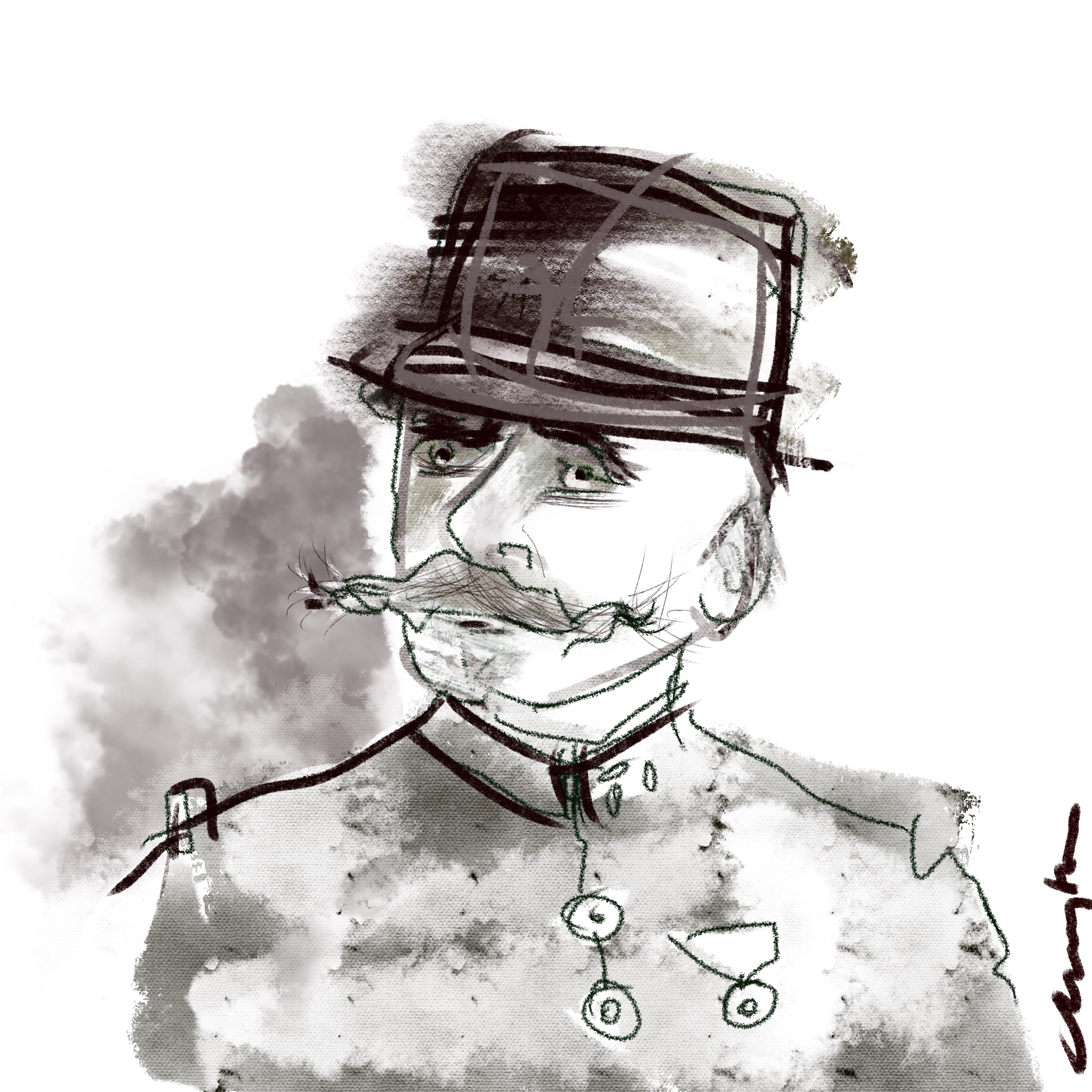
I’ve come with Dipna the OT to review the use of a stand aid that’s been delivered, but it quickly becomes apparent that Thaddeus needs cleaning up, the bed changing and so on. A quick set of obs also makes the idea of anything other than bed care inadvisable. I set up a cleaning station with a trash bag, a bowl of warm soapy water, wipes, towel and barrier cream, and set to work, Dipna assisting with log-rolling as the clean advances and we figure out how to change the sheets. It’s a complex, ruthlessly practical business, but Thaddeus takes it all in good heart, maintaining a commentary of such a wide-ranging and erudite character it’s difficult to keep up. At one point, though, amongst all the French and Latin and what have you, I make out the name Dreyfus.

Sometimes, when you’re watching a quiz like ‘University Challenge’ or ‘Mastermind’, you instinctively respond to the toughest question because it hooks something out of you that you didn’t know you knew. And because you say it so confidently and naturally – like it was nothing at all, something anyone would know – it suddenly makes you look incredibly smart, even though for most of the time you’ve been watching the quiz with your mouth slack, because you’re too lazy to get up and look for the remote. And the truth is, maybe you saw the answer years ago, in an advert, maybe, or overheard it on the train, and it lodged for some reason, like those people who get shot in the war and it’s only years later when they go for an x-ray to investigate migraines and the radiographer points to the pale outline of a bullet. And maybe you have a whole mess of other scraps in there, too, a mess it would take a lifetime of quizzes, or maybe some kind of truth drug, to clean out.

The point is, Thaaddeus says Dreyfus.

‘Ah!’ I say, tossing a wipe. ‘The Dreyfus Affair!’

Thaddeus grabs my gloved hand.

‘I thought I recognised those eyes above the mask! Esterhazy! So it was you!’ he says. ‘Mon Dieu! Now I see it! You’ve been using your time travelling skills and your schmutzig Deutschmarks to foment bitterness about the world! Will you never be satisfied?’
‘C’est vrai!’ I tell him. ‘C’est moi!’

And I just hope he doesn’t expect any more French than that.

nero

When I phone to check if it’s okay to visit, a dog barks so loudly it’s as if the dog has answered and not Eileen. There’s the sound of a desperate struggle – which is either Eileen trying to wrestle the receiver out of the dog’s paw, or Eileen dropping the phone, grabbing the dog by the collar and dragging it off into the kitchen. I’m guessing it’s the later, because after a long pause when all I can hear is the sound of muted, non-specific threats, more barking, doors slamming, and then the sound of slippers and heavy breathing approaching, the phone gets swept up again and Eileen answers with a gasp: ‘Who is it?’
‘My name’s Jim. I’m a nursing assistant from Rapid Response at the hospital. I’ve been asked to come take some blood this afternoon, if that’s okay.’
‘Fine,’ she says. ‘So long as you don’t mind dogs.’
‘I like dogs.’
‘Do you?’ she says. ‘You might change your mind after this one. I’ll put him in the kitchen before I let you in.’
‘Honestly – I’m good with dogs.’
‘Yeah?’ says Eileen. ‘Well there’s dogs and there’s dogs.’
We settle on a time.
I look forward to proving her wrong.

*

From the outside at least, the bungalow looks innocent enough. None of those chintzy warnings you sometimes see: I LIVE HERE! with a picture of a dachshund or something; a door mat with a fake bite taken from one corner: Beware of the Dog! , or one I saw recently, which was a silhouette of a doberman against the words: I can make it to the door in two seconds. Can YOU? and so on.
I knock, and take a step back. There’s an urgent skittering of paws, a crash against the door, and an enormous barking so resonant I feel it more than hear it.
‘Nero! Nero!’ shouts Eileen. ‘No Nero! C’mere!’
More scuffling and cursing. It’s strangely subdued, though, like the violence is quite routine, two bad tempered wrestlers going through the motions.
‘Jes’ a minute! Jes’ a minute!’ wheezes Eileen – although whether to me or Nero it’s impossible to say.
It takes about ten minutes for her to drag him away and bang him up in the kitchen. Eventually she shuffles back to the door and opens it.
‘Hello,’ she says, straightening her wig. There’s the sound of an enormous nose sniffing under the kitchen door – which is actually more of a flimsy screen, and would struggle to hold a rabbit.
‘He’s a bastard,’ says Eileen. ‘He’s not even my dog.’
‘Whose is he then?’
‘My son’s, but he’s away.’
‘How long for?’
‘Too long. C’mon in. Let’s get this done quick before he wrecks the place.’

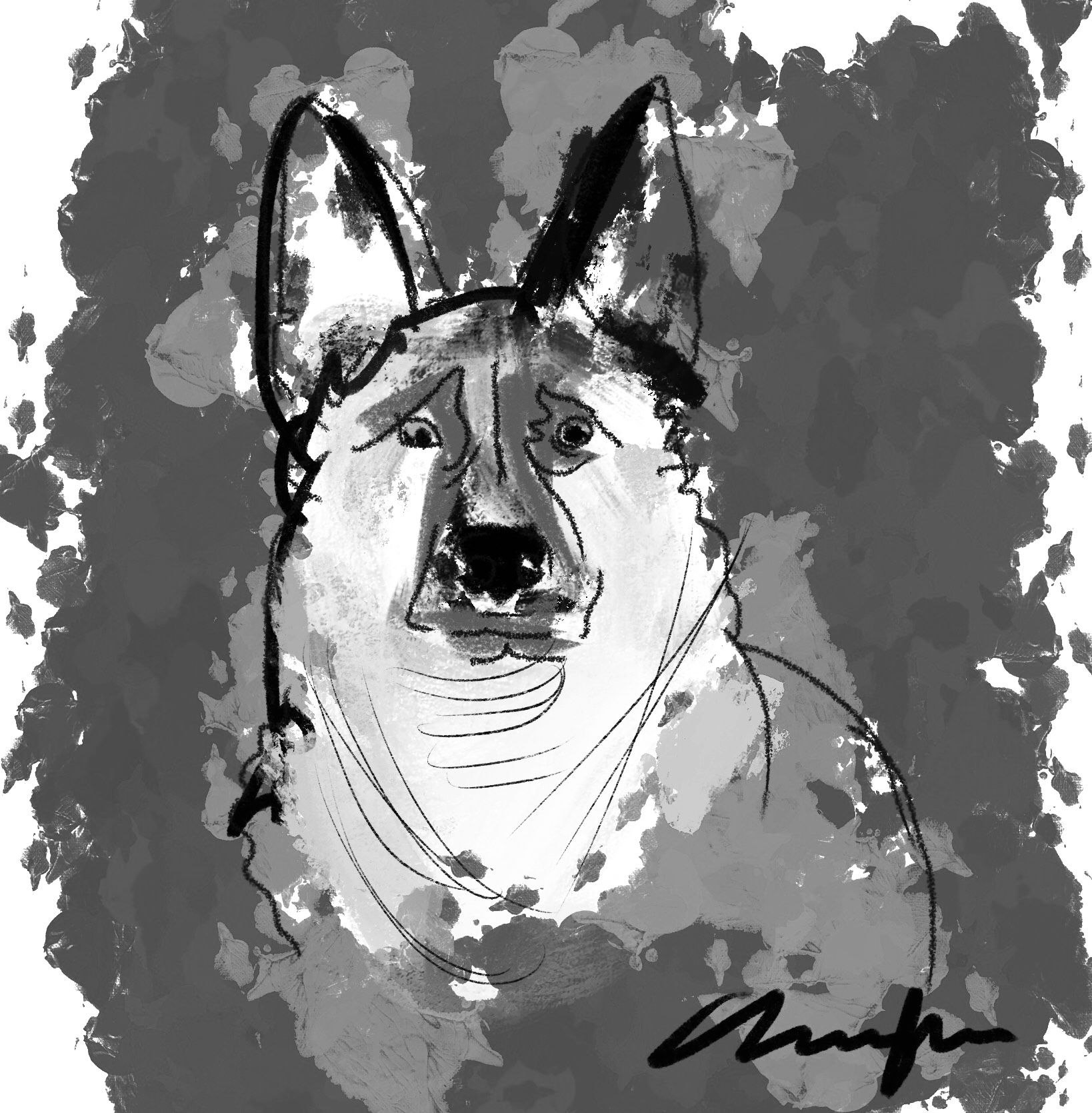
The sitting room is dominated by a gigantic portrait of an Alsatian, and I wonder if Eileen’s baby-sitting this, too. It’s such a funny, formal pose – upright, three-quarter length, the kind of outraged frown you might see on a High Court judge. I wouldn’t be surprised to see the artist had added a houndstooth waistcoat and a pocket watch.
‘Yeah. That’s ‘im,’ says Eileen, collapsing back on the sofa, her legs kicking up so violently her slippers almost fly off. ‘His eyes follow you. Like real life.’
‘He certainly looks like a Nero,’ I say. ‘Very intelligent.’
‘You think? Well if he’s so smart, how come he failed the police exam?’

the summerhouse

Angelina has already said ciao a number of times, to her team, to us, to the office plants. She’s already put on her oversized coat and knitted hat, hooked a mask round her ears, picked up her bags of dressings and things, her laptop bag, her folders and what have you. It’s only then she remembers what it was she wanted to tell us.

‘Ooooh! My God! Listen to me! I have a story to tell you! You will love this story! It is soooo creepy!’

Everyone stops what they’re doing and waits whilst she puts everything back down again.
We know it’ll be worth it. Angelina tells a great story. Her enthusiasm, her playfulness, her Italian accent – the musical way it swoops, stops unexpectedly, tumbles enthusiastically on again – it all rushes together into a fast flowing river of words, carrying you along at breakneck speed and dumping you over a waterfall.

She puts all her things back on the desk, but leaves her hat and mask on. It’s like watching a great actress tell a story from inside a letterbox.

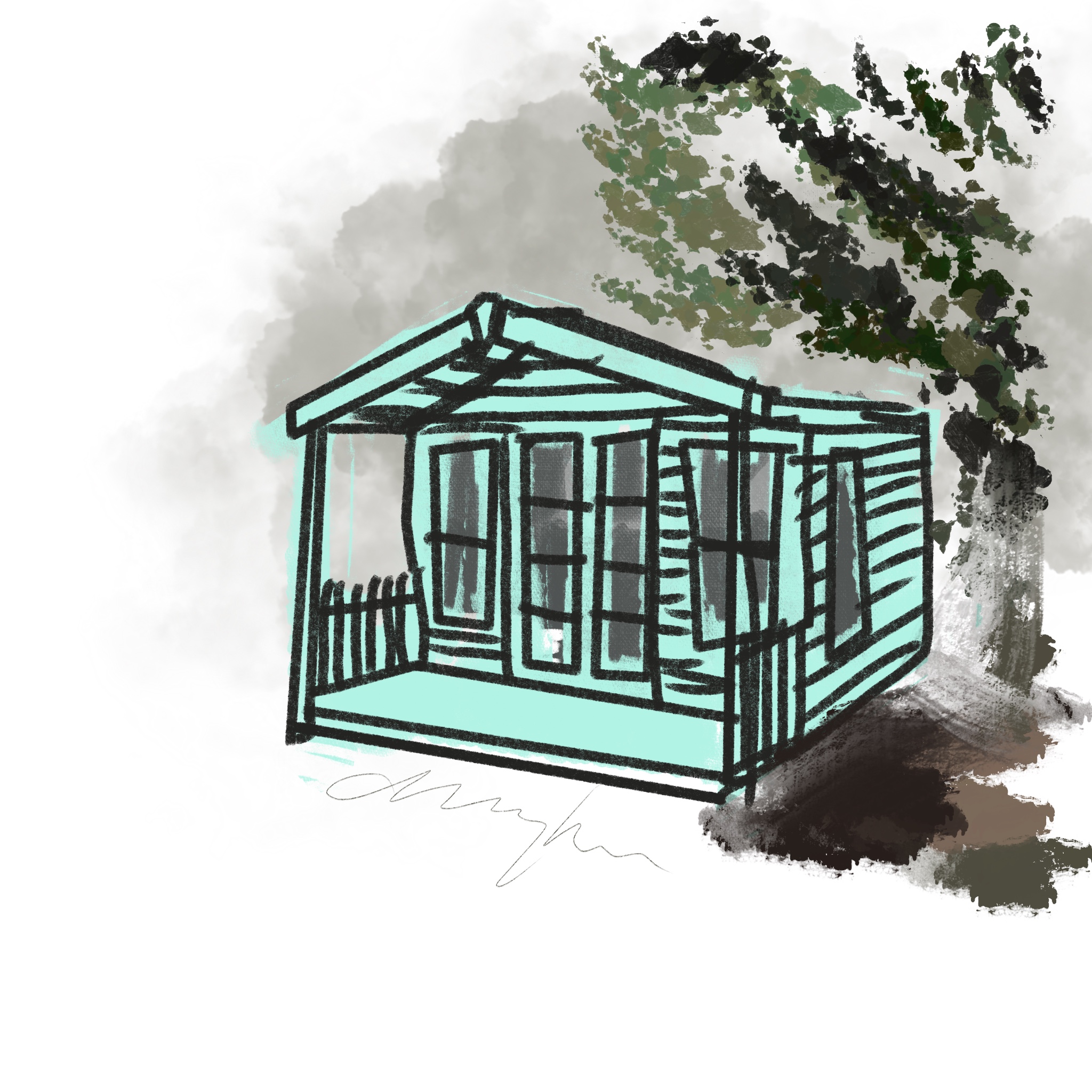
‘Weeeellll! You know Mrs Carpenter, the little old lady who live in the nice flat by the park? Yes? You know her? Well! She told me what happen to her. She used to live in a big old house with her mother, on the other side of the park. In fact, she was born there, and never went nowhere else. Just upstairs, downstairs, in the garden, out to work. She got on fine with her mother, they were very happy in their world. The daughter she do all the shopping and so on. Went to market. Went to work. Happy Christmas. Happy Easter. Like that for many, many years, and no-one coming round much, except a few friend for the book group and whatnot. All very nice and thank you very much and that is it. She told me they had a nice little summerhouse at the end of the garden. Not a shed for the lawn machines or the spades, but a nice little wooden place with windows and a little veranda for the mother to snooze in her lounger on sunny day and do the knitting and watching the apple blossom falling on the grass. So. Then. What happen was, the old lady died, suddenly. In her chair. Mrs Carpenter found her when she took her out some tea. Lying on the lounger, dead. Boom. So. What would you do? Mrs Carpenter panicked. She picked the phone up. She put it down again. She picked it up. She put it down again. She tell me she didn’t want anyone taking her mummy away, because she’d be on her own in the big house. So – she say – she need time to think. So she wrap her mummy up in a blanket, and closed the door of the summerhouse, and went back down the garden. And the more days went by, the more she couldn’t bear to think of her mummy being taken away. She was comfy on her lounger. It wasn’t too bad. And more time passed. She didn’t go inside and disturb the blankets when she went down there, so she didn’t see what happen. But she did go down every day when she finish work, and stand on the veranda of the summerhouse , and say through the door: ‘How are you mummy? How was your day? Mine was okay, thank you for asking…’ Like that. For ten years! TEN YEARS! Until she had to sell the house. She got so used to her mummy being down in the summerhouse she didn’t worry when the estate agent come round to say how much for the place. ‘That’s a nice little summerhouse at the bottom of the garden’ he said. ‘Oh yes,’ she say. ‘My mummy live there’ she say. ‘Your what?’ And oh my God! I would love to have been there when she took him down to say hi! I would LOVE it!’

‘I expect she was a mummy by that time!’ says Andrei.
‘Yeeeees! A big scary mummy, wrapped up in blankets, with a cup of tea and maybe a hat. I ask her if she get in trouble from the police, but she say ‘No – a pathologist took a look at her and didn’t think she had been murdered. So I only got a fine for failing to notify the coroner of unexpected death.’ So she sell the big old house and she move to this sheltered place. And now her mummy is propped up by the door with her arms out – like this – so you can hang up your coat when you go in.’

‘You’re kidding!’
‘Of course I’m kidding. They buried her in the local cemetery. What you think – she CRAZY?’

the foreman

Jack moves like a marionette where the puppeteer got pissed, broke into the theatre, hung a puppet on stage and delivered a long and confusing monologue to a row of empty seats. I definitely get the feeling I may as well not be there. When I’ve gone, no doubt he’ll slide the door chain back into place, pat it once or twice, then drop down on the spot, his strings piled on top of him.

If he is a puppet, the artist carved him with a pretty blunt chisel. A prominent nose-and-chin. Two thickly lidded eyes that blink audibly, out of sync, one in 2021, one in 1958. Two ears made of improvised hubcaps nailed unevenly either side.

Jack doesn’t want any help. He’s happy as he is – rolling unsteadily down the corner shop with his three wheeled walker. Stocking up on Teachers. Rattling back. His daughter drops by occasionally with microwave meals, but I get the impression she’s at her wit’s end. She’s not here for the assessment. She’s home nursing a migraine.

Jack leans forward in his chair. His right hand swings to the front; his left swings round to meet it.
‘First job,’ he says. ‘I was fifteen. I turn up at the yard, and there are all these other guys standing round. And I say ‘Alright?’ and they say ‘Yeah’. Then the foreman turns up in his big, black coat. He looks at me and he says: ‘What do YOU want?’ And I say: ‘I wanna job, don’t I?’ ‘Oh’ he says. ‘Well – how about Foreman?’ And I says; ‘Yeah. That’ll do me.’ ‘Oh,’ he says: ‘Like that, is it? So come on, then. What’s the first thing you’d do if you was the Foreman?’ So I look around, and I see this dustcart parked in the yard. And I shout out: ‘Oi! What’s that bleedin’ great thing doin’ there?’ And the Foreman says ‘Sorry! We didn’t know what to do with it.’ So I say: ‘Right! Get that bastard thing outta here!’ So he give me the job. Five and six a week.’

He blinks, left, then right. Then takes a deep, sighing breath, and carries on.

‘This was the Foreman’s flat, y’know. He give it me. He was sat where you’re sitting now. In his big, black coat. Things got difficult for him. Money this, money that and I don’t know what. He knew it was only going to get worse. So he come in here, took his scarf. Then him and his wife got in the bath. And he tied the scarf round both their necks, and they lay down, and put the taps on, and that was them. Gone. The council come along. Drained the water. Unscrewed the bath. Took ‘em both out in it.’

He gives such an emphatic nod I feel like putting my hands out to catch his head. Then he blinks, gives a throaty sniff, and smiles at me.

‘That’s weird!’ I say. ‘Why did they take them out in the bath?’
‘They emptied it first.’
‘But still. It seems like a lot of work.’
‘That’s the council for you.’

He takes a sip of the tea I made him, then screws his face up. ‘I thought that was whisky,’ he says. ‘Blaargh!’
I take the mug off him before he spills it, then take my chair again.
Jack sits forward. The hands swing round, ready.

‘Next day,’ he says, ‘they send the Foreman over. He’s standing there in his big, black coat. He says to me ‘Jack,’ he says, ‘What do you want? Another bath? Or maybe a shower this time?’ And I say to him ‘You’ve only just taken the bloody bath out of here!’ So he says ‘Alright, alright. Don’t make a fuss.’ So I say ‘Go on – put a shower in. But I want the tiling done nice.’ So they send round this kid, who stands there looking about. And after a while I say to him: ‘So what’ve you come to do, then? Apart from stand there with your thumb up your arse.’ And he says ‘The tiling.’ So I say, ‘D’you know how to do tiling?’ And he says ‘No, I’ve only been here a week. I haven’t done the course yet’. So I say ‘Come here!’ And I did it.’

He flops back in the chair.

‘But that’s the council for you,’ he says, smiling so broadly the tip of his nose and the point of his chin almost meet. ‘That’s the council, right there.’

a twist of lemon

For someone surrounded by model racing cars, paintings of racing cars, signed photographs of racing car drivers, Mr Sullivan moves pretty slowly. The marked curvature of his spine and his general frailty means that making a pit stop to the kitchen can take all morning, lifting the zimmer frame, urging it forwards one slipper length at a time. It’s a painful procedure and fraught with danger.
‘Just a moment. Just a moment,’ he says.
‘Take your time. There’s no rush.’
He stops and – as far as he can – glances back at me over his shoulder.
‘Where are we going?’ he says.
‘To the kitchen. So we can get lunch on the go and I can do your blood pressure while we’re waiting.’
‘Yes,’ he says. ‘I see.’
We carry on.

It’s a large house, with a thick and settled silence that fills each room so palpably, I imagine if you demolished the house, snatched all the bricks and windows and floorboards away in one clean movement, you’d still be left with a silent outline of the place, like some kind of memory jelly plopped from a mould.

Even though the house has rooms upstairs, Mr Sullivan stays on the ground floor, moving between the kitchen, bathroom and front room, where he has a small bed in the lounge to stretch out on after he’s finished watching TV. Although,‘stretching out’ isn’t something he can do these days, his kyphotic spine giving him the flexibility of an ancient fortune cookie.

‘What do you fancy for lunch?’ I say, after getting him settled on the perching stool.
‘Oh I don’t know!’ he snaps. ‘Look in the freezer.’
There’s nothing much in there other than a pack of vegetarian chilli burgers.
I show him.
‘That’s fine,’ he says. ‘Fetch one of those out. I can have it with some bread.’
‘Don’t you have a microwave?’ I ask him. ‘They’re very convenient.’
‘Where would it go?’
I look around. The kitchen is the same as the living room, in a state of orderly confusion, little piles of things everywhere, pill packets, letters, notes, cutlery, batteries and so on.
‘You’d need a bit of … rationalisation,’ I say.
‘I need nothing of the kind. Now – what does it say on the packet?’
I read out the burger cooking instructions.
‘Preheat the oven,’ he says. ‘Middle dial.’
Whilst I’m sorting out the oven and finding a clean plate, he leans forward on the zimmer frame, his forehead on his hands.
‘Are you okay?’ I ask.
‘Yes,’ he says, addressing the floor, then after a pause: ‘I always knew I’d end up like this.’
‘Like what?’
‘Alone. I looked after my parents when they got old and sick. And now it’s my turn, there’s no-one to look after me.’
‘I can see how difficult it is for you,’ I say. ‘But you know – there are services around to help. When I get back to the office I’ll make some calls.’
The oven light goes out. Mr Sullivan flaps his hand to urge me on, so I slide the burger in.
‘Set the timer,’ he says.
I start to fiddle with the dials on the cooker but Mr Sullivan flaps his hand again.
‘No, no! Not that timer!’ he says. ‘The one on the window sill!’
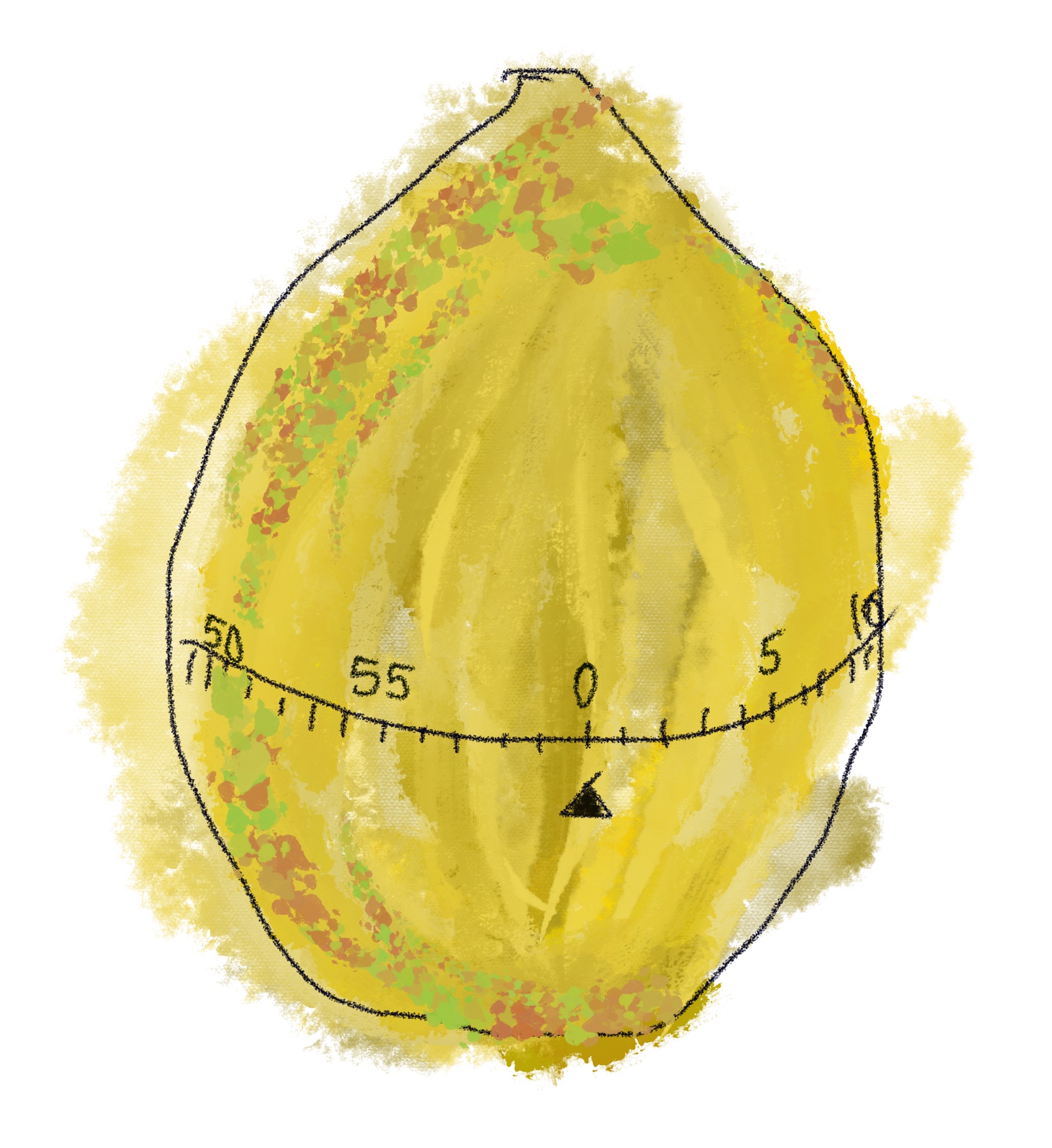
The one he wants is shaped like a lemon. I twist it to twenty five minutes, then set it on the table next to him. It’s an eerie scene, Mr Sullivan crooked forwards in an exaggerated pose of despair, the timer whirring away next to him.
‘What did you do, before you retired?’ I ask him as I write up my notes, as much to break the frantic silence as anything.
‘A loss adjuster,’ he says.
‘Hmm,’ I say. And the timer marks out exactly how long it takes me to think of a reply.

hats off

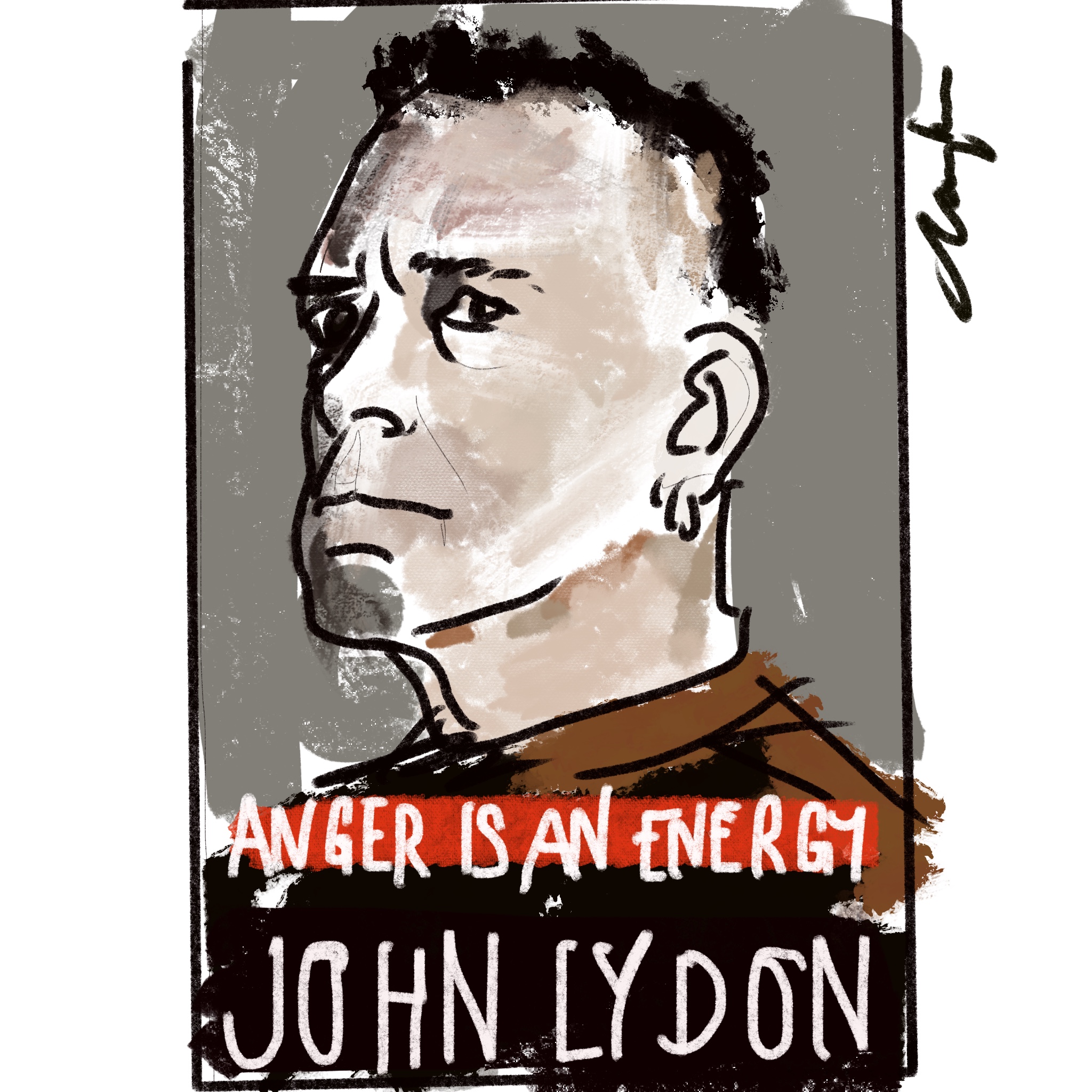
Paul’s flat is an extemporary landscape. Hundreds of empty whisky bottles on the floor, standing up or lying down, a sea of glass around the lifeboat of the sofa; volcanoes of cigarette butts rising from dinner plate islands; a tangled undergrowth of pepperoni packets; squadrons of flies cutting patterns through the air or crawling enthusiastically over everything. And overlooking the dismal scene, glaring like a vengeful god from the top of a filing cabinet, Johnny Rotten’s autobiography: Anger is an Energy.

‘How are you today, Paul?’
He tugs his beard, shrugs.
‘I’m okay,’ he says. ‘More or less.’

It’s a strange feeling, standing amongst the crap, nowhere to put my bag or set up my kit to take blood. So I just stand there a while, and we chat.

‘I’m not going to hospital,’ he says.
‘It’s entirely your decision. So long as you understand the risks.’
‘They keep on about potassium, calcium, magnesium…’
‘They’re all really important minerals, Paul. If you’re low it puts you at risk of serious heart problems. Even cardiac arrest.’
‘Yes,’ he says. ‘They’ve said that. But why?’
‘It’s complicated. I’m not even sure. But it’s something to do with the electrical conductivity of the heart. If your levels are screwed your heart can develop arrhythmias and stop working altogether. So…’
‘But why?’
‘I just don’t know enough about it. You’d need to speak to a cardiologist. Or Google it.’
‘Google it! The paramedics said that! Google it! That’s all everybody does these days.’
‘I know! It’s pretty handy, though. You gotta admit.’
‘Hmm,’ he says, stroking his beard in that classic beard-stroking way thoughtful men have, massaging the pointy end of it with a pulsing motion of his hand like an octopus swimming backwards.

I have to admit, his hair and beard are pretty amazing. He’s so unwashed, they’ve set into a wavy pattern like it’s carved from wood, the hair on his head progressing backwards in defined steps, the beard the other way as a counterbalance.

‘I drink,’ he says, releasing the beard long enough to make a grand gesture at the ruin of the room. ‘It’s an addiction.’
‘I can see that. I know it’s difficult, Paul, but there is help out there. You know – medication, therapy.’
‘Yes,’ he says, back on the beard. ‘Yes, I understand.’

There’s a blue metal chair in the dark of the galley kitchen. I wade through the bottles, tip it clear, wade back and plant my things on it.
‘Shall I take that blood, then?’
‘Be my guest!’ he says, rolling up his sleeve.

We chat whilst I work.
‘The doctor that came the other day? She said she thought I was more intelligent than she was. I said that may well be, but I don’t see what that has to do with the problem at hand.’
‘She was probably thinking about mental capacity. Whether you understood the risks you were running saying no to hospital.’
‘I’m not saying no to hospital as a general principle. I’m merely advancing the idea that it may not be the answer to my particular question.’
‘That’s fair enough, then. But your recent blood results are pretty poor.’
‘I’ve signed the forms,’ he says. ‘All done?’
‘Yep! All done.’
‘Thank you.’
I tape him up.
‘Have you got a cat?’ I say, noticing a flyblown bowl over by the window.
‘Somewhere,’ he says. ‘She’s shy. I’ve also got a collection of hats. How many hats do you think I have?’
‘Ten.’
‘Ten? That’s not a collection. That’s not even a weekend.’
I can’t imagine him wearing a hat. Maybe a stovepipe. Or a beehive beanie. Nothing else would fit.
‘One hundred!’ he says. ‘One hundred hats!’
And I can’t help looking round.
Where?’

auntie gloria

Gloria is surrounded by dozens of crochet rabbits and ducks. In fact, sitting like she is, slumped squashily on the sofa, a tote bag of wool at her feet, tangles of yarn on her lap, a pair of needles all-angles in her hands, it’s hard to resist the idea I’ve just walked in on a woman who’s busy crocheting herself.
The rabbits and ducks all have the same malevolent, lopsided expression. In fact, the only difference between them is that the rabbits have ears and the ducks have beaks; the rabbits have waistcoats and the ducks a bonnet and pinny. There are rows and rows and rows of these things, in little polythene body bags, ready to go (who knows where); piles of them waiting to be dressed; piles of crochet skins waiting to be stuffed.
The rest of the room is subordinated to the manufacture of the rabbits and ducks, everything pushed to the side, piled-up, on the table and shelves and the arms of the sofa and chairs. And whilst it was obvious the place represented a significant trip-hazard, at least you’d have to admit you’d be guaranteed a soft landing.
‘Wha’d’ya think?’ says Gloria, waggling the current rabbit in the air.
‘He’s so cute!’ I say.
‘I like to keep busy,’ she says, jabbing it through the heart with a needle. ‘Now, then. How can I help?’

*

I’m finishing writing up my notes.
‘Do you have any children?’ says Gloria.
‘Two girls. Both grown up now. One’s away at university. The other’s just about to do her GCSEs’
‘How lovely!’
‘We’re very lucky.’
‘Here…’ she says, reaching to her side. She pulls out a bagged duck and rabbit.
‘Oh…no! That’s very kind of you, Gloria, but I couldn’t possibly…’
‘Go on! As a little thankyou. I’m sure your girls would love them…’

I wonder if she’s misunderstood how old the girls are – but I hesitate to put her straight. She looks so happy to be giving away the dolls. The thing is, the dolls aren’t that great. I lied when I said they were cute. Whilst the rabbit looks furious with the world, the duck looks positively vengeful. Even as an ironic knitwear animal they just don’t make the cut. Also, they have the same musty smell as the room. You’d have to run them through a vat of cleaning products to get them anywhere near to the point where you could safely handle them without surgical gloves, which wouldn’t improve their expression. So it’s not as if I could pass them on to anyone else. Charity shops aren’t accepting donations. And even if they were, the rabbit and the duck would sit on the shelves for months quietly hating the customers before discreetly disappearing one morning. So all in all, I’d rather not take them.
‘I’m sorry, Gloria, but we’re strictly forbidden to accept gifts,’ I say, shrugging and smiling as if this is the worst thing that ever happened to me, because ordinarily, of course, I’d leap at the chance of taking these crochet horrors home.
‘I insist!’ says Gloria, reaching forwards and dropping them in my lap. ‘You’ll offend me if you don’t.’
‘Oh,’ I say. ‘Well. That’s so kind of you.’
‘For your girls,’ she says, squeezing her eyes shut and folding her face into a broad smile. ‘From Auntie Gloria.’

stuff the moon

As soon as Frank tells me he used to be a butcher I can totally see it. It’s not just his dressing gown, the long blue and white stripes, exactly like a butcher’s apron. There’s something in the way he sits, his large hands draped over the armrests of his chair, the heavy, slightly disappointed sag of his face, the stainless steel glint of his specs, like someone who stood fifty years behind a chopping block waiting for a customer to choose between the knuckle and the brisket.
‘My sausages were famous,’ he says. ‘They went into space.’
‘How d’you mean?’
‘To Cape Canaveral, anyway.’
‘They took your sausages to Cape Canaveral and shot them into space?’
‘Nearly. One of the astronauts came by and took a coupla pound of my pork and apple specials. Said he was taking them back to Florida.’
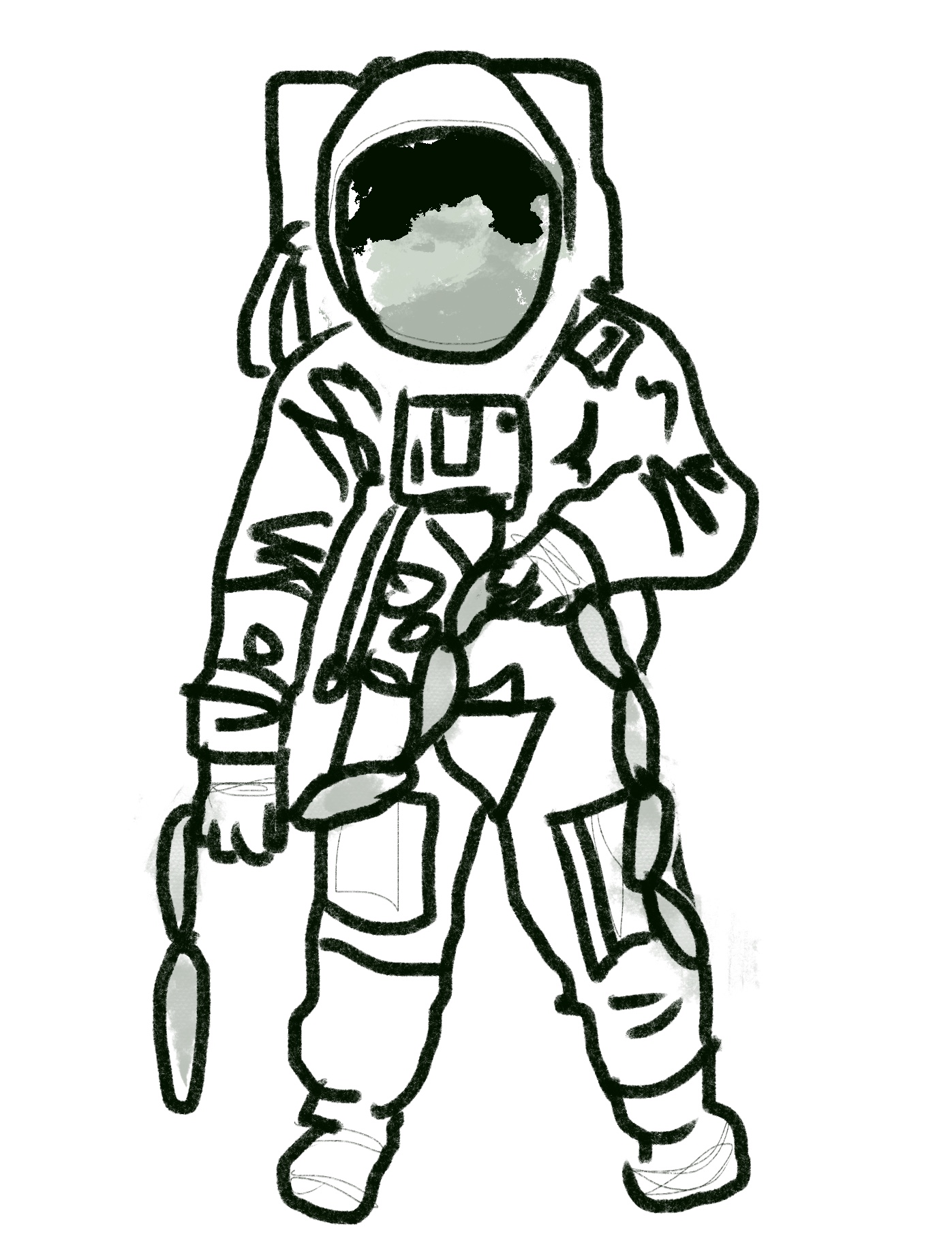
I imagine an astronaut in a space suit, plodding in slow motion through customs, a string of sausages swinging from their respirator.
‘Risky,’ I say.
‘Yeah. Well. Astronauts get special treatment.’
Frank wrinkles his nose and vigorously rubs his forefinger back and forwards under it, a gesture accompanied by such a range of facial distortions it’s like the finger belongs to someone else and he’s only just learned to tolerate it.
‘He said he was an astronaut. I had no reason to doubt him. I had all sorts in my shop.’
He nods to a watercolour picture on the wall, a view of the old place. It’s a nostalgic, mournful kind of picture, like you’re looking at the shop through a shower of rain, or tears.
‘There was another butcher at the end of the street. Not nearly as good.’
‘A bit of competition.’
‘Only on price. You get what you pay for. One thing they absolutely could not do was make dripping. He used to make me laugh. He’d get his mum to come round and ask for a few pounds of dripping. I like it in me sandwiches she used to say. Is that right? I’d say. There’s quite a lot there. And she’d say Yes. I know. I like it a lot. And then the next thing you knew there it was, priced up in the window.’

my bad

I’d rung to say I’d be there in twenty minutes. I’m standing outside the front door exactly twenty minutes later. So I don’t understand why Graham isn’t answering the door.

I reach out to rap the knocker again, the loudest rap so far. The door knocker is one of those weighty, old Victorian affairs, a hand grasping a heart or a brain or something, the whole thing cast in bronze with a green patina. The shock of my knocking reverberates through the house. I fully expect to hear angry footsteps coming down the stairs, Graham shouting Will you just hold on a minute! Even though I’ve been here at least ten.

I step back onto the pavement and look up at the bedroom window.
The curtains are drawn. Nothing disturbs them.

I check the address again, which is pointless, as I was only here a couple of days ago.
I look up at the window again.
Still nothing.

Maybe after I phoned Graham he decided to go to the bathroom and fell over. Maybe he’d been having a nap and fell asleep again the moment he hung up. It makes me think of that line from When Harry Met Sally : you either don’t want to talk to me, or you do want to talk to me but you’re trapped under something heavy…

I look up at the window again.
No movement. Nothing. Nada.

I take out my phone and wonder whether to call again. It’s a landline number, a cordless phone, one handset by the bed and one on the hall table. I know that Graham is slow getting about, but also that he’s determined to be as independent as possible. He absolutely refused to consider having a keysafe fitted outside the front door, even though it would mean he wouldn’t have to go through the pain and rigmarole of coming downstairs to answer the door. When I called him to say I was on my way, I hoped that meant he’d have started his slow and laborious descent to the front door, so that he was there to let me in. But even if he hadn’t – even if he’d waited till he heard that gloomy rapping of the knocker before hauling himself up off the bed – he’d have made it by now.

I put the phone back in my pocket and in lieu of knowing what else to do, wait some more.

I notice some ants wandering about on the flagstones. They don’t seem to be in much of a hurry either. One of them disappears into a gully. Comes out again almost immediately. Pauses to look around. Zig-zags across the stones to a clump of grass. Another ant comes to join it. They’re doing okay. Maybe when they find something they’ll be more energised. As it is, they’re behaving like I do when I’ve finished all my urgent stuff and drag things out a bit to look busy.

This is ridiculous.
I take out my phone again.
Hit redial.
After a few rings Graham picks up.
The moment I say my name he fumbles the phone. I hear a yelp, some swearing, and the line goes dead.

Yikes.

Just as I’m wondering what to do next, the bedroom curtains get hooked aside and a fist bangs repeatedly on the window. I’m not sure what to make of it. Graham’s obviously trying to tell me something but I don’t know what it is. The angry part is pretty clear, though – and at least that means he’s conscious and breathing and able to make it to the window.
I decide to do nothing and see what happens next.

Eventually I hear movement. Cursing, thumping. Something big and angry humping down the stairs. A pause, then the unmistakable sound of Graham in motion, foot and stick: shuffle tap shuffle tap shuffle tap. The chains on the door rattle off. The door flies open.
Graham points at me with his stick.
‘You made me drop the phone on my foot.’