anything close up looks strange

Wanda is happily sawing away at a breaded cod fillet, arms tucked in, elbows up, her woolly hat pushed at an angle by the pillow back of her neck.
‘Sorry to interrupt your lunch,’ I say, coming into the room. ‘Bad timing!’
‘Sit on the bed,’ she says, pointing in that direction with a ketchuppy knife. ‘This won’t take me long.’
‘There’s a bit of paperwork to do, so I’ll get on with that whilst you finish up.’
She jabs up a nest of chips and only manages to get them in her mouth by moving her head from side to side.
‘Don’t give yourself indigestion,’ I say.
‘No,’ she says, ‘Mind you, I’m a martyr for that,’ half-choking as she struggles to get the words past the chips.
I pass her some water.
‘Thanks,’ she says, gulping it down – then sets back to finishing off the plate.

The ambulance service has referred Wanda to us. She’d had a couple of falls recently, minor injuries, observations fine but needed following up with nursing, therapy and so on. Wanda has some medical conditions that put her at more risk of falls, but at first glance I can’t see any more adaptations that could be made, and she lives pretty independently, so I’m not sure there’s much to be done. So long as everything checks out this visit, it might well be just a referral back to the care of her GP.

‘Done!’ she says, tossing the knife onto the empty plate with a clatter and a broad grin, like some kind of niche circus act.
‘Let me take that for you,’ I say. ‘Would you like to see the dessert menu?’
‘I’ll save that as my treat when you’re gone,’ she says. ‘So what’s this all about?’
I explain who I am, the team I work for and why the ambulance suggested we get in touch.
She sighs and brushes bread crumbs from her lap.
‘I don’t know why I’ve been falling so much lately. I suppose if you have one you’re more likely to have another.’
‘That’s true.’
‘I feel alright, though.’
‘Is there anything troubling you at all?’
‘The beetles,’ she says.
‘What beetles?’
She leans to one side and hauls out a mobile phone.
‘Just a minute…’ she says.
She curses and sighs as she tries to remember her pass code, and then navigate to the photos app. At one point she gets so frustrated she bangs the phone on the arm of the chair.
‘Do you want me to….?’
‘Just give me a minute!’ she says.
And then finally: ‘There!’
She hands me the phone.
It seems to be a close-up picture of tiny balls of carpet fluff.
‘I don’t get it.’
‘Zoom in!’ she says. ‘Slide your fingers!’ She makes a pinchy gesture in the air.
‘I know how to zoom in, Wanda,’ I say.
I zoom in.
‘I still don’t get it.’
‘Beetles!’ she says. ‘Look at the eggs! The legs!’
‘I can’t see it. Honestly – it just looks like fluff to me.’
‘The carpet’s infested. I see them all the time.’
She takes the phone back and shrugs.
‘They’re quite beautiful when they’re grown up, though,’ she says. ‘Blue-green backs, like little brooches. There’s one!’
She pushes herself up out of the chair and bends down to pluck something up from the carpet. I have to plant a hand on her shoulder to stop her from pitching head first into the dresser.
‘There!’ she says, brandishing another piece of fluff. She drops it into my palm, then sits back down again.
I look at it.
‘I’m really sorry, Wanda, but I think it’s just fluff.’
‘Look closer!’ she says.
I do, but it makes no difference.
‘The thing is, Wanda,’ I say, carefully giving it back to her – ‘if you look at anything close up it starts to look strange.’
‘Well maybe you can’t see it but I can.’
‘I’m not an expert on pest control,’ I say. ‘But honestly – it looks fine. Let’s do your observations and make sure everything’s okay in that department…’

It takes five minutes. There’s nothing out of the ordinary.
‘Any medication changes recently?’ I ask as I write down the figures.
She says that the doctor has adjusted a few things.
‘Why was that?’ I say.
‘Because they were worried I was having a psychosis or something.’
‘Oh yeah? In what way? What’s been happening?’
She pulls a face.
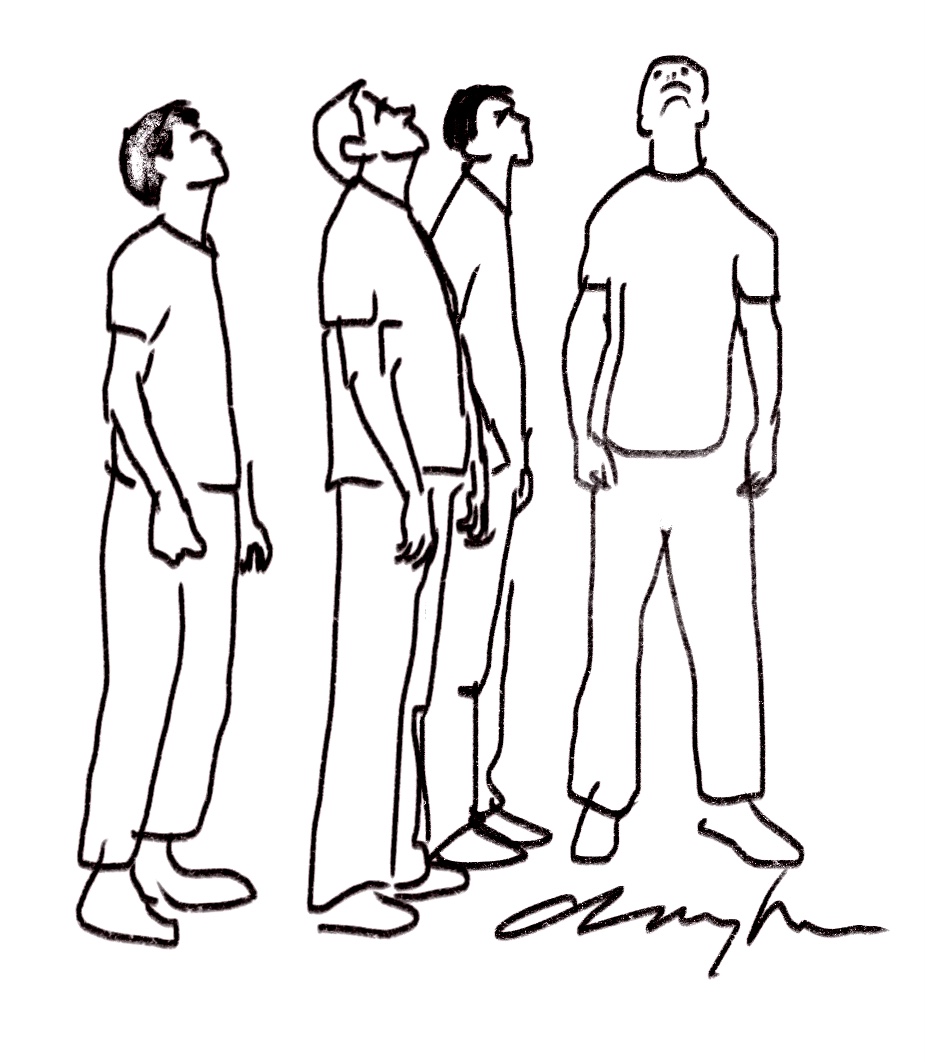
‘I’ve been seeing things. Especially at night. I’ll look out the window and there’ll be half a dozen people standing in the garden looking up at the window.’
She pauses to illustrate, tilting her head up but letting her jaw hang slack.
‘Like that!’ she says. ‘And I have to have the mirror on the floor before I go to bed because otherwise they keep peeking over the top of it and annoying me. Last night there was a woman standing out on the landing. And then when I’m sitting reading my Kindle, I’ll have a boy standing looking over this shoulder and an old man looking over the other.’
‘Does that worry you?’
‘Oh no! I’ve gotten used to it. I talk to them. I say What d’you think about that, then?’
She illustrates again, jabbing at her knee and glancing back over her right shoulder.
‘And what do they say?’
‘Nothing! They never talk!’ she says, looking at me again. ‘But I don’t mind. I like the company.’
She balls her fist and taps herself a couple of times on the centre of her chest.
‘Oof!’ she says, puffing out her cheeks. ‘I shouldn’t have had all them chips. I’ll pay for that later.’
the full set

I turn off Elm Road into Birch Grove and park outside Mulberry Court. It’s a shame Edie isn’t called Mrs Hawthorn or Mrs Rowan, or at least be wearing a hat made of leaves. She does come to the door in a rose patterned housecoat, though, so that’s something, and she’s so elderly she looks like a tree, a gnarly old olive you might see growing out of rocks in Greece, magically galvanised into answering the door, and then rooting it awkwardly back to her perch.

We chat whilst I work through the various tests, and then set out my things to take some blood.
‘I get a bit lonely,’ she says. ‘Especially after Eric passed.’
Edie nods at a portrait on the mantelpiece: a smiling old chestnut with a row of medals on his trunk. Edie starts to cry, so I fetch her a tissue.
‘Sorry,’ she says. ‘But when you’ve been together fifty years, it’s a bit of a wrench.’
‘I bet it is,’ I say.
‘He went in June,’ she says, dabbing her nose. ‘I wish I’d gone with him.’
‘I’m so sorry, Edie. How did you meet?’
‘He was the brother of my eldest sister’s husband. They set us up when he came home on leave.’
‘That’s lovely.’
‘Yes,’ she says. ‘He was a dancer. A lovely little mover.’
‘It looks like he was in the navy?’
‘A submariner.’
‘Oof. I don’t think I could’ve been on the submarines. Imagine that – being stuck underwater for days on end.’
‘Me neither. But he seemed to get on alright. He had the head for it.’
‘He was good in tight places?’
‘He was short.’
‘That must help.’
‘I made a bit of a habit marrying service men.’
‘Did you?’
‘My first husband was in the army. We got married very young. Near the end of the war. Only he got wounded and sent home.’
‘How was he wounded?’
‘He got kicked by a horse.’
‘A horse?’
‘Yes. God knows what that was all about. But he never really got over it. Drank to forget I suppose. Then we got divorced and I ended up with Eric.’
She blows her nose. I fetch her a glass of water and she has a sip.
‘Thank you,’ she says, setting it to one side. ‘Sorry to carry on.’
‘You’ve had a hard time lately.’
‘Yes. Well. There’s nothing to be done about it, I suppose.’
She stuffs the tissue up the sleeve of her housecoat and then takes one of those brave, exaggerated breaths that segues from a shrug to a smile.
‘All I’ve got to do now is find myself an airman and I’ll have the full set!’ she says.

Henry who?

No reply on Henry’s landline or mobile, so I call Nancy, his daughter.
‘He should be in,’ she says. ‘Unless he’s gone out.’
‘Shall I just take pot luck and pitch up? Will he mind?’
‘No. He won’t mind. Are you alright with dogs?’
‘Yeah. I like dogs.’
‘Eric’s yappy.’
‘Don’t worry, Nancy. Look – I’ll call you when I’m there and let you know your dad’s alright.’

*

Half an hour later, I’m standing outside the front door, sheltering as best I can from the kind of supersaturating rain that drags along the street in sudden waves like the pleats of a monstrous ball gown dragging through town. There’s no answer at the door. What’s even more worrying is that when I call Henry’s landline again I can’t hear the phone ringing inside the house. Have I got the right number? There’s a keysafe by the door that I don’t have the code to – so the easiest thing is to ring Nancy again. She confirms the address. When I ask about the keysafe she says there’s no key in it. 
‘Not that I know the code anyway. He keeps changing it. I’m worried he hasn’t answered the door, though.’
‘Maybe he took the dog for a walk,’ I say, glancing behind me at the rain, imagining the two of them paddling off in a canoe.
‘Maybe, she says. ‘He’s crazy enough. I’ll come over.’
‘Do you live nearby?’
‘About twenty minutes at a trot. I’ll come through the park so I’ll catch him if he’s there. See you soon.’
She hangs up. 
I peer through the letterbox and ring the doorbell at the same time. Nothing, not a hint of movement, not the sound of a dog or any other living thing. 
I check the back door. That’s locked, too. I peer through the windows but can’t make anything out. The only thing to do is wait for Nancy, so I hurry back to my car. At least I’ll be warm and dry. I can’t see the front door from there, though, so I decide to wait ten minutes and try again. Maybe Henry will have come back. If not, Nancy will pretty much have made it. 

*

This time when I ring the doorbell, there’s a furious barking from deep inside the house, followed by what sounds like a basketball bouncing down the stairs and colliding with the front door. A light goes on. Just discernible beneath all the barking, the sound of creaking stairs. After a minute or two, the door chain gets thrown back. A white haired Westie – presumably Eric – head butts my ankles as Henry stands there narrowing his eyes. He’s still in his vest and pyjama bottoms. 
‘I was in bed,’ he says, with an edge. 
‘Sorry to disturb you!’ I say. ‘The doctor has asked me to come and take some blood.’
‘Has he?’ says Henry. 
Eric is pretty much frisking me for evidence so I crouch down to make it easier. 
‘Nancy’s on her way over?’ I say.
‘Oh?’ says Henry. ‘What does she want?’
‘She wants to know you’re alright. We were worried because you weren’t answering your phones.’
‘They’re downstairs and I’m upstairs,’ he says, as if that settles it. ‘I suppose you’d best come in.’
Eric gruffs and puffs and snuffs and follows close behind me as I go through into a wood panelled room set up just-so, a high backed chair in front of a television, a fleecy basket between the two, a small breakfast table, a tiny sofa. Henry gestures for me to sit on the sofa. 
‘Won’t be a tick,’ he says, then leaves the room.

I sit on the sofa. Eric jumps up and sits at right angles, staring at me.
‘Alright, Eric?’ I say, tickling his chest, which he accepts a little grumpily, like a guard who’ll take a bribe but won’t commit.
The house falls silent again.
Eric continues to stare at me. 

For a second I have a dizzy, prickly kind of feeling, like I’ve dreamed all this, that actually I’m Henry, and Eric is my dog, and Eric is just concerned because I’m having another one of my turns. 

There’s the sound of a key in the lock. I snap-to and realise with a guilty lurch I should probably have called Nancy to say her dad was home and okay and let me in. But it’s too late. She’s standing in the hallway now, soaked to the bone, frowning at me as she swipes off her hat. And once again I have the disquieting, telescopic feeling that I’m Henry, this is my house, Nancy is my daughter, and I’m going to have to explain to her – once again – why I didn’t answer the phone, and also why I’m sitting on the sofa dressed as a nurse.

It doesn’t help that Eric is still staring at me, unblinking.

‘Hello Nancy,’ I say. 

Smile.

Swallow.

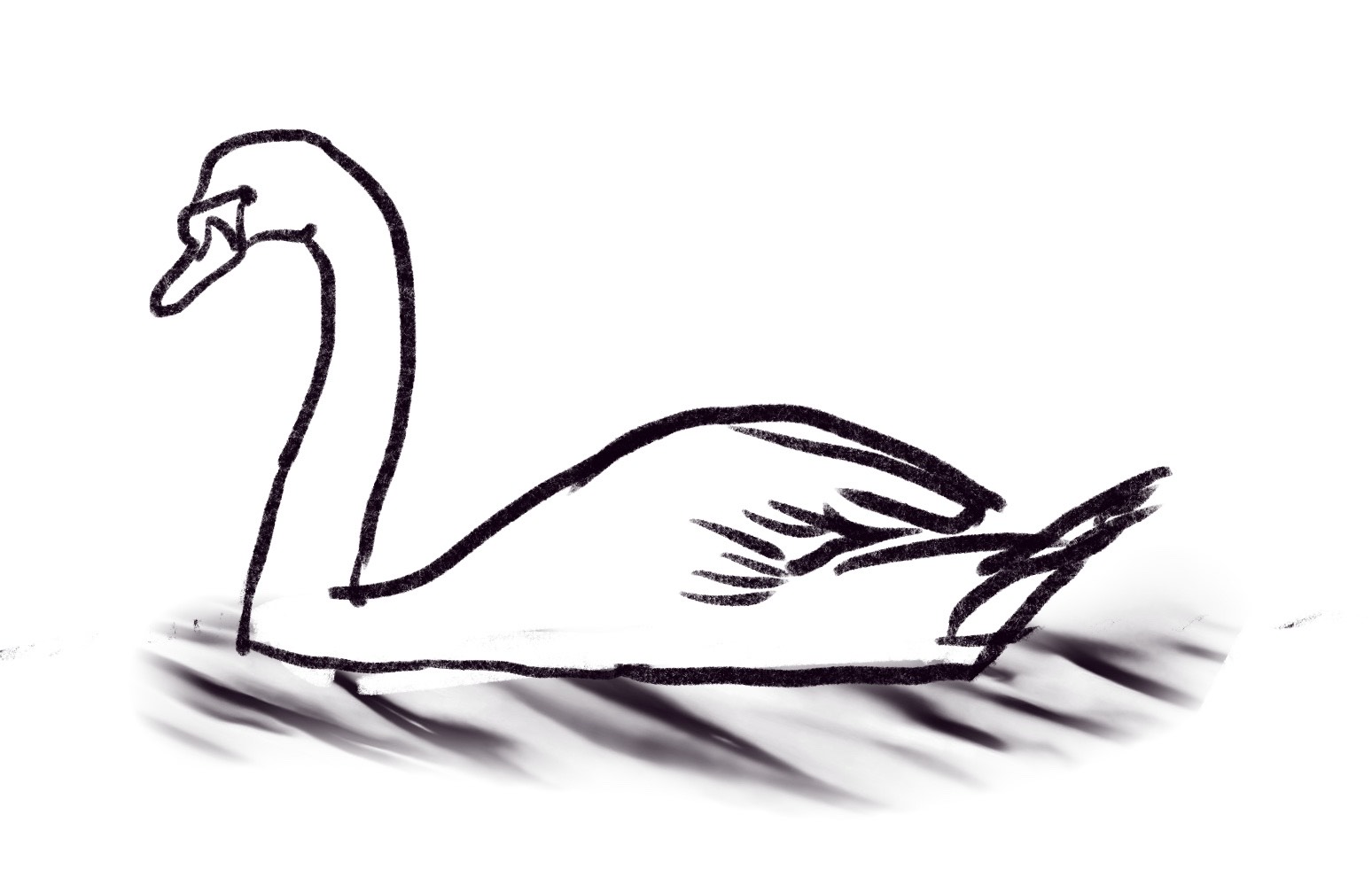
the swans

We’re standing round waiting for the enema to work.
‘Anything yet?’
William moves his head tentatively from side to side without lifting it from the pillow, the tube of his nasal specs shifting only slightly, the air compressor in the corner of the room clunking and whirring. Ralph the dog gives a harrumph from under the bed, rests his chin on his paws. Tina the nurse, William’s daughter Bella and I do much the same.

It’s a peaceful scene, all in all – quite a contrast from the cries of pain William made when we rolled him onto his side to administer the enema.
‘Shouldn’t be long now,’ says Tina.
‘That’s what you said when you give me the suppository,’ says William. ‘What’s the next thing on the list? A stick of dynamite?’

Only Fools and Horses is playing quietly on the TV behind me. I glance back at it. Del boy, Rodney, Grandad and Trigger are all sitting on the sofa, looking depressed. It’s a strangely bleak scene for a sitcom. More like a downbeat suburban drama.

William reminds me of one of the other characters, Boysie, the dodgy guy who ran the car showroom, the one who put on airs and graces and wore a mohair coat over his shoulders like a count but was really as rough as the others. His living room is the kind of living room Boysie might have had – plush velvet drapes pleated like cinema curtains, fancy plates wired to the wall, carved gilt chairs, comedy scatter cushions. It’s an expensive house though, overlooking a quiet stretch of the river.
‘Are the swans back?’ he asks Bella.
‘The what?’
‘The swans. Are the swans back?’
‘The white one is. Not the black one.’
‘I like the black one.’
‘Well he’s not back yet.’
‘Where is he?’
‘I don’t know, Dad. Maybe he’s on his holidays.’
‘At least someone’s having a nice time. This? This is suicide.’

It’s a pretty tough situation for William. He went into hospital with a broken arm and came out with a diagnosis of terminal cancer, prognosis four weeks. We’re filling in for the palliative team, but at least he’s got a hospital bed and so on.

‘How about now? Anything?’ says Tina.
‘You’ll know about it when it happens,’ says William.
‘Dad – the whole neighbourhood’s gonna know about it when it happens,’ says Bella.
‘Yeah,’ says William, then appears to fall asleep.

Tina takes her gloves off, checks her fob watch, then sits outside in the hallway to write up the notes so far. The front door bell rings; Bella hurries downstairs to answer it. I stay standing next to William. He opens his eyes and looks directly at me, as if he’d secretly been watching me from behind his eyelids.
‘I mean – landmines,’ he says, as if we’d just been talking about that.
‘I know,’ I say. ‘It’s a terrible thing.’
‘Why would you make something like that? Killing and maiming innocent people. What’s that all about, then?’
‘I’m pretty sure this country still makes them, though. And other stuff. The arms trade is pretty big.’
‘Why can’t we all just get along? If you want to go to a church, or a mosque, or wherever – fine. It’s none of my business. But the next thing you know, we’re at each other’s throats.’
‘That’s a good point,’ I say. ‘Too many wars over nothing at all.’
‘Then of course what happens is – you say one thing – I say another – fine – your lot have a go at my lot – I say what’s going on here – they move over there – I say hang on a minute – and the next thing you know millions are being slaughtered.’
‘It’s complicated.’
‘Is it really so hard for us to share this planet?’
‘That’s true.’
‘But I tell you one thing.’
‘What’s that?’
‘There ‘ain’t half been some evil bastards in this world.’
‘It’s definitely had more than its fair share.’
‘Take that Clinton woman.’
‘Hillary Clinton?’
‘I read a book about her. Now that’s evil on a whole other level.’
Hillary Clinton?
‘If I wasn’t laid up in bed – if I could get outta this bed – you know what I’d do? I’d take a machine gun and machine gun the lot of ‘em.’
Bella comes back in the room.
‘Amazon delivery,’ she says. ‘Any developments?’
‘The lot of ‘em!’ says William.
Bella looks at me and raises her eyebrows.
Tina walks in, snapping on fresh gloves.
‘Alright?’ she says.
Behind me, the Only Fools and Horses theme tune starts to play.

the three bears

There aren’t many things I remember from Geography class, but one of them is the oxbow lake. It’s that thing that happens when a river meander gets loopier and crazier until the river nips it off at the top and leaves it to one side as a curved body of water. (Note to reader: I did NOT score highly in my Geography exam).

This close reminds me of an oxbow lake. The main drag thunders across the top, leaving a U-bend of terraced houses with a thin strip of wasted grass and brambles in the middle. Driving round it, I can’t figure out the numbers at all. It’s as if they built the houses first, then took a bag of numbers, shook it up, and ran round throwing them randomly at the doors. I can’t see any sequence to it at all – and worse than that, I can’t find any sign of a number eleven. (Note to reader: I did NOT score highly in my Maths exam).

There is an unnumbered door round the corner from number nine, though. So although strictly speaking it should count as an address on the main road, I take my chances and my bags and go down the cluttered path to knock on the door.

There’s a long wait, then the sound of someone clumping downstairs.
The door gets thrown wide.
An elderly woman with thick round glasses and a startled expression.
‘Hello!’ I say. ‘I’m Jim, the nursing assistant from the hospital. I rang your carer Stevie and she said it was okay to visit. Are you Agnes? I’ve come to take some blood!’
I extend my ID badge on its elasticated string but she doesn’t look at it.
‘Come on, then!’ she says, batting the air. ‘Follow me!’
She turns and stomps back up the stairs.

I’m encouraged by how full of life she seems. The Doctor had asked us to visit today as a one-off for bloods and a set of obs. The community phlebs were full so it was a bit of a favour.
‘I didn’t like the sound of it,’ the doctor said. ‘The carer was talking about jaundice and abdo pain. If you could take a look for us that would be great.’

I put the rest of my PPE on in the hallway and follow Agnes up the stairs into her sitting room.
She’s already back in her chair – a throne of white cane, padded with red and yellow cushions and set in the middle of the room, with a card table next to it for her biscuits and orange squash, telephone and remote control. She’s watching Flog It! A punter and a dealer are sitting either side of a table looking down on a tiny vase; the dealer starts laying out lines of twenty pound notes. Uh-huh! says the punter. The dealer lays out some more. ‘Try harder’ says the punter.

‘You’ve come for my blood!’ says Agnes. ‘You’d better be gentle!’
‘How are you feeling?’ I say. ‘Stevie said you haven’t been yourself lately.’
‘Who’ve I been then?’
‘Well. She didn’t go that far.’
‘No. I bet she didn’t.’

Lined up on a small sofa behind Agnes are three bears: one giant polar bear, one medium-sized grizzly bear and one small teddy bear. The teddy bear is perched on the lap of the polar bear.
‘They’re giving me a funny look,’ I say, nodding at them.
‘They do that with everyone,’ says Agnes. ‘Just ignore ‘em.’

We chat about how she’s been feeling. I take a history, give her the once over, take her observations.
‘All good!’ I say. ‘So tell me again how this all started.’
‘It was that burger,’ she says. ‘It was all mushy. And mayonnaise? That wasn’t mayonnaise! It was lumpy and grey.’
‘Eurgh! Doesn’t sound good.’
‘No. It wasn’t good. And that was the start of all my troubles.’
‘Have you felt sick? Or been sick?’
‘No.’
‘Have you had any diarrhoea?’
‘No. I went this morning.’
‘And was that all normal.’
‘Depends what you call normal.’
‘Well – firm. Fully formed.’
She pulls a face.

Behind me in Flog It! things are getting serious. The dealer has spread out a whole wallet of notes now, but the punter folds her arms and leans back in the chair. I can’t believe a tiny vase could be worth so much.

‘Any pain?’ I ask Agnes.
‘A little. Round my middle.’
She makes a sawing motion with the flat of her hand.
‘Sorry to hear it. Is it there now?’
‘No.’
‘Have you taken anything for the pain?’
‘What like?’
I shrug.
‘Paracetamol? That’s quite effective but shouldn’t upset your tummy any more.’
‘I haven’t got any.’
‘Maybe Stevie could get you some.’
‘Maybe.’
‘I’ll talk to her. So – Agnes? Have you had this pain before?’
‘Oh yes.’
‘Tell me about that. When was the last time?’
‘A couple of months ago.’
‘And what happened there?’
‘I had a chilli.’

The punter has taken the vase and put it back in her bag. The dealer is shaking his head and clearing the cash away.

‘Do you mind if I put the light on?’ I ask Agnes. ‘Only Stevie said you were jaundiced and I need to get a better look.’
‘Help yourself. The switch is over there.’
The moment I put it on the room is flooded with light. It’s made more pronounced by the lack of a lampshade, but even so it’s astonishing how powerful that bulb is – like I didn’t throw a sitting room light so much as shoot a flare overhead.
‘Wow!’ I say. ‘That thing’s bright! I need welding goggles.’
‘I like to see what’s happening in the world,’ says Agnes. She thumbs at the bears behind her. ‘And so do they.’

sugar coating

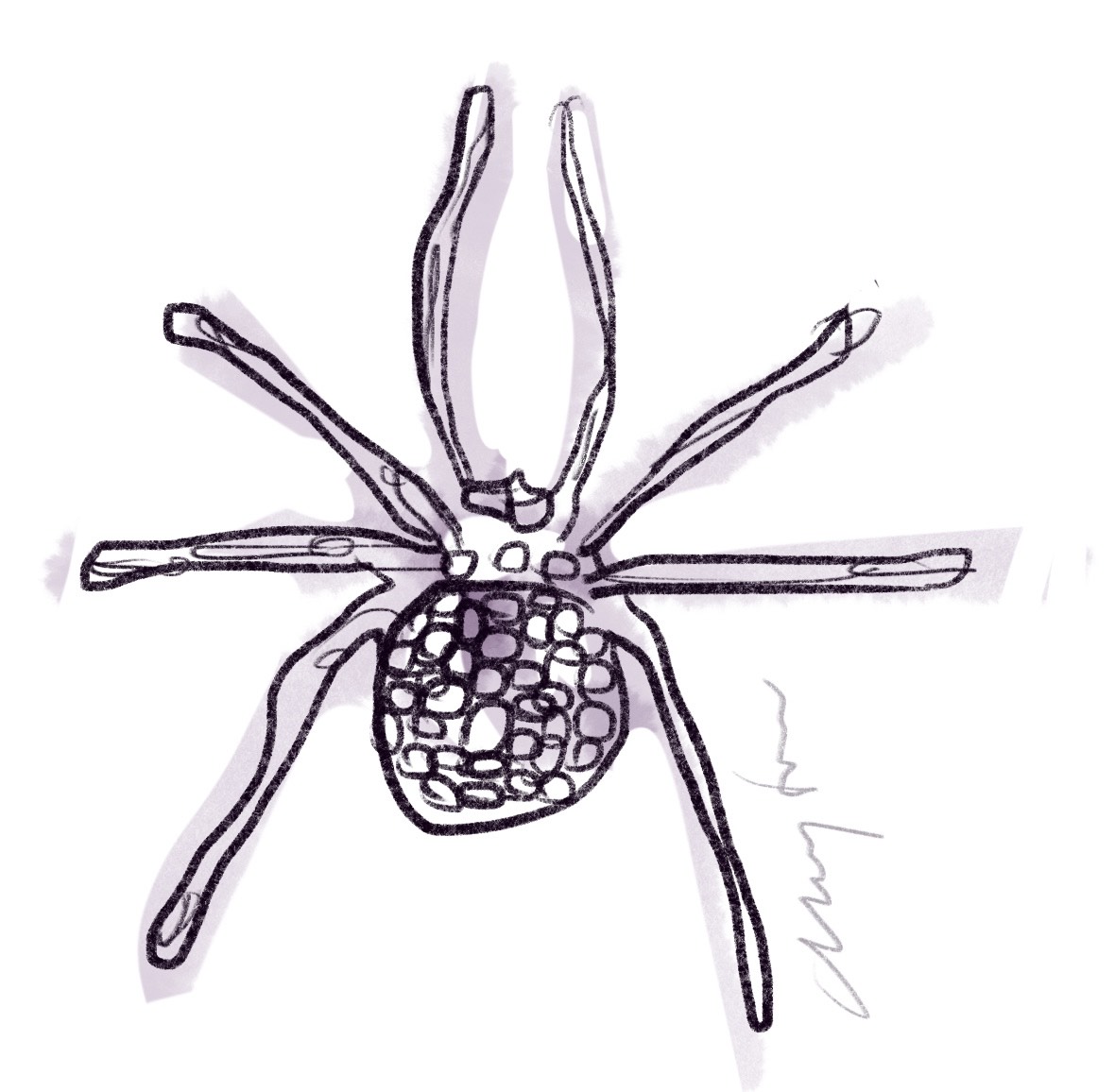
The night has been long and cloudless, so cold that everything is locked in a thick hoar frost. A crystalline web sags heavily on Mr Rawlinson’s front gate. I imagine the spider that spun it must be something of a jewel itself now, glittering like a leggy diamond somewhere, deep-frozen in its lair.

Mr Rawlinson is luckier than the spider, though. His bungalow is filled with a fulsome warmth that seems to ripple as I move into it.
‘Come in! Come in!’ he says. ‘And be quick about it.’

We’re short on carers this morning, so I’ve been asked to drop by. Looking at Mr Rawlinson, I wouldn’t think there’s much to be done, though. Not only has he managed to wash and dress himself, but he’s done it so well he looks almost too perfect, standing straight-backed, holding on to his kitchen trolley, a pensioner on parade. It’s like a team of make-up artists has been challenged to put together the most perfect pensioner they can, and really, they’ve excelled themselves. Mr Rawlinson’s silvery hair is brushed to the left and the right of a geometrically precise parting, his moustache perfectly trimmed, his shirt buttoned to the neck with a blue tie in a Windsor knot symmetrically in place; cuffs sharply in line; cardigan just-so; canvas trousers with pleats like origami folds, and slippers so buff I imagine a valet must have been fussing over them with a monogrammed brush moments before.
‘Are you here to fetch me breakfast?’ he says.
‘Absolutely. Whatever you need.’
‘Smashing. I’ve left it all ready to go. The bowl, the muesli, the sugar and so on. I’d like a portion of muesli, some milk in a jug, a slice of toast with thick-cut Oxford marmalade and a cup of Earl Grey tea, medium strength. Are you okay with all that?’
‘No problem.’
‘Splendid.’

I’ve been given the job on the fly, so I haven’t had a chance to read his notes. It strikes me that Mr Rawlinson is functioning extremely well, and I wonder why the care has been requested. After all, it’s not too much of a stretch to put muesli in a bowl, especially once you’ve gone to the trouble of setting the packet and the bowl out in the first place. But maybe I’m missing something. It could be that without a carer coming in to supervise these things, he’d hit the skids and wouldn’t bother. I’m happy to oblige, of course, but I make a mental note to follow-up the job when I get back to base.

‘Why don’t you sit down at the table and I’ll bring everything over?’ I say to him.
‘Righto!’
‘I thought this muesli already had sugar in it?’
‘Yes, you’re right, it does, but I like it sweet. Three sugars in my tea, as well, if you wouldn’t mind. When you get to my advanced old age, a few extra spoons can’t hurt.’
‘That’s true.’
I fold a square of kitchen towel into a triangle and put it with the point towards him on the table, followed by a knife, dessert spoon and teaspoon. He adjusts the angle of them, to line up more precisely with the napkin.
‘When I was in the RAF,’ he says, folding his arms, ‘there was a chap there, forget his name, Canadian, I think. The most athletic man I have ever met. Played any sport you could think of, and probably a few others. Mostly one of those track types. You know? A runner. Faster than a blessed hare. Well! He used to do it all, sugar, tobacco, alcohol – you name it.’
He finesses the cutlery a little more.
‘Maybe it would have had some effect eventually,’ he says, after a moment. ‘But we were never afforded the privilege of finding out, of course. The poor chap was shot down somewhere over the Atlantic.’

pugs!

If you work on the coordination desk long enough you’ll feel yourself change.

Nothing dramatic or immediate, but imperceptibly, stealthily. It’s a hazard of the job, the frantic business of it, tapping away at the computer keys, answering two phones at once, taking questions from colleagues who wait in a restive line like shoppers at the Deli counter. A function of the distracted firing of your brain cells, the agitated beating of your heart, the immobility of your body in the chair. All these things will take hold, come together and warp you at a genetic level, cannoning your atoms into novel patterns like a drunken God with a billiard cue until – too late – you realise you ARE the phone, you have BECOME the computer, you have ABSORBED the notepad. You’ll only notice at the end of the day, when you go to stretch and your arm snaps in half because it’s changed into a pencil. Or you roll your neck to ease the cramp and your head logs off. Or you go to stand up but you can’t because your vasculature is now the furniture and your spinal cord has extended through the floor tiles and uploaded you to the network.

That’s the down side.

The upside is that eventually you’ll find yourself in synch with the office. You’ll be tuned-in to everything happening around you without even trying. You’ll be working the desk like a dreaming, caffeine-crazed spider, a little bored maybe, a little restless, your compound eyes flickering with the light of the database, whilst you unconsciously monitor the action around you by the vibrations you feel through your feet.

Which is a complicated way of saying I was aware Karen was on the phone before I really knew it.

Sophie was talking to her. Sophie is one of the administrators. She’s on the frontline of the operation, taking calls, giving information, directions, advice, or deciding where to redirect – which more often than not means patching them through to the coordinators. Sophie is great at her job. She’s warm and friendly, however long the day or trying the circumstances. I love the way she answers each call with the same intonation – saying the company name with a flourish like she was throwing a fancy tablecloth over a workbench. But then her tone changes immediately, coming down a notch, and within seconds she’s speaking to the caller as if she was gossiping with a favourite aunt.

Only this time, she wasn’t.

Sometimes even Sophie struggles to connect with the caller – especially if the caller is Karen.

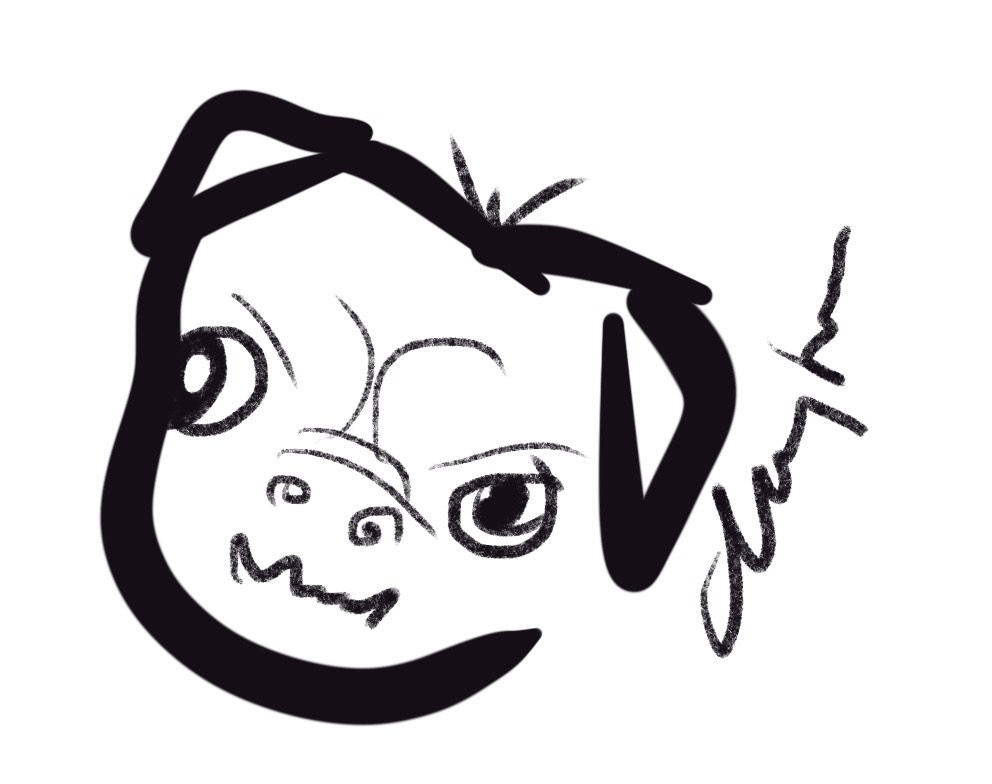
Karen has been referred to us many times before. She’s difficult, in the way that Medusa was difficult, except in Karen’s case it’s not snakes but pugs. She lives in a state of constant war with everyone and everything, storming through the world with a half dozen pugs clutched to her chest, their bug eyes an expression of the stress she’s under, or the strength of her grip, or both.

I zone into the conversation half way through.

‘…Karen? Karen? I’m afraid you’ll have to put the dogs in another room or something because I can’t hear a word you’re saying…. Karen? Karen? Honestly – it’s impossible. Put the pugs in another room, Karen. Yes. That’s right. Another room. And shut the door… I’m sure they’ll be fine… it’s just for a minute, Karen, so I can understand what the problem is. Lovely. Thank you. Could you start again, please? …. Okay… Okay…. So you need help of some kind, is that right? A nurse. Okay. Well – I see from the notes here that a nurse came round to see you about an hour ago and you didn’t let them in… Is that right, Karen? …. Okay…. Okay…. Well, as I’m sure you’ll appreciate, it’s difficult for us to specify male or female… No, Karen. They’re all nurses. They’ve taken the same qualification…. It’s very difficult to do that, Karen. We can try, but it may mean a delay in getting you the help… Yes. I understand that, Karen…. I’m sorry you feel that, Karen…. but they probably only knocked like the police because they didn’t know whether you’d heard them or not… Well, because of the dogs barking….Yes, well, I’m sorry your dogs were upset by that… I’m sure they do… Karen? If you want to put in a complaint you’re more than welcome to do so. But if I could just… if I could just… No, that’s not what I’m saying, Karen…. if I could just…Have you let the dogs back in, Karen?..Karen…?’

Sophie holds the phone away from her ear, catches my eye, shakes her head, plunges back in.

‘Let me put you through to Jim,’ she says. ‘Maybe he can help…’

She punches in my extension.

‘Karen for you,’ she says when I pick up. ‘Good luck.’

And when my phone connects, it’s like a bone being tossed in the middle of a dog fight.

‘Karen? Karen…?’

raiders in the sky

Bill is sitting in his lounger, his black velcro support boot up on a stool, one hand draped over a walking stick. He’s watching an old British war film, Dirk Bogarde tapping a map of Europe with his swag stick, laying out the bad news with a ‘look here chaps’ and a ‘jolly decent of you old boy’ whilst the room of bomber crews heckle him respectfully and laugh heartily but fall silent just as quickly because anyone can see the whole thing looks like a bally serious show.
‘I’ve brought you that stuff!’ I say, struggling in with a perching stool, urinal bottle and pressure relieving cushion. ‘Happy Christmas!’
‘That’s very good of you!’ he says. ‘Where you’ll put it all, I don’t know.’
‘Well – the perching stool goes in the bathroom, you sit on the cushion, and the urinal sits by the bed.’
‘It’s not a big bathroom,’ he says. ‘But you’re welcome to have a look.’

He’s right about the bathroom. There’s just enough space to put the stool in front of the sink and still be able to open the door to get in. It’s a bleak but well-ordered room, one toothbrush and one shaver on a single glass shelf, a soap dish, a mirror, a towel. I experiment with a couple of positions, then leave the chair square on to the sink and go back into the living room.

The briefing has ended. Dirk Bogarde is having a chat with one of the lower ranks, a buck-toothed cockney sergeant who screws up his cap as he tells DB he’s married with six kids and how she’ll cope this Christmas without him he don’t know. Dirk Bogarde puts a hand on his shoulder and winces, which doesn’t bode well for the mission. But the cockney sergeant doesn’t seem to pick up on it, thankfully, and the sergeant and the scene move on.

‘See what you think,’ I say to Bill as I go back through. ‘I think you should still be able to get in and out alright. You and your leg.’
‘I’m grateful,’ he says. ‘Sorry to drag you out at Christmas.’
‘I was working anyway. It’s a pleasure. Ho ho ho.’
‘Yes,’ he says. ‘And a ho ho ho to you, too.’

Whilst I check Bill over for blood pressure, SATS and so on, the film cuts to a montage of mechanics putting the last touches to the Lancaster bombers, the crews clambering into the cockpits, going through their flight checks, calling out this and that, waving cheero, snapping on their masks.

‘Could be worse,’ I tell him, looping the stethoscope back round my neck.
‘What – my blood pressure?’
‘No. We could be at war. Anyway – your blood pressure’s fine, Bill. Better than mine.’
‘Is that right?’ he says. ‘Well. Something’s working, then.’
‘So how come you fell and broke your ankle? I didn’t get the full story.’
‘Me neither. One minute I was getting out of bed, the next I was lying on the floor with my leg twisted under me.’
‘What did the doctors say about it at the hospital?’
‘I don’t know. And I didn’t care to ask.’
‘Oh? Why not?’
‘Well. They might turn round and tell me.’
‘That’s true enough.’

We both look at the TV. The bombers are leaving, one after the other, a flock of monstrous black birds roaring off into the night.

‘Lock the door on your way out,’ says Bill.

the great conjunction

Saturn and Jupiter are lining up.

Apparently it’s a thing that happens every twenty years, but a great conjunction, where the two planets get so close they look like a single bright star – well, that only happens every four hundred years or so. Kepler, the seventeenth century astronomer, pointed out that a great conjunction happened in 7 BCE, and may account for the Star of Bethlehem in The Nativity.

Today we’ve had nothing but thick fog and a cruel variety of fine, saturating rain that makes walking forwards feel like swimming up. It was just as well the weather was kinder all those years ago in Bethlehem, otherwise the Birth of Christ would have featured a comedy moment where three bedraggled kings holding fancy boxes over their heads high-step three hours late into an empty stable where an innkeeper is sweeping up.

Two thousand years back in the CE, though, Saturn and Jupiter aren’t the only things lining up.

Karen, the physio, is waiting for us under the porch outside Mr and Mrs Billingham’s house. She’s brought a walking stick. Jack the carer is here for a lunchtime call. I’ve turned up to deliver and fit a shower stool and a toilet frame, and to do some obs. There’s not much room under the porch, so I’m at the bottom of the steps leaning in.
‘I’ve rung the bell but nothing’s happening,’ says Karen, her eyes smiling above her mask. ‘I’m not even sure it’s working.’
‘Shall I knock?’ says Jack. He goes up to the door – an iron-bounded oak affair, with a door knocker so huge it wouldn’t look out of place on a quayside with a ship tied up to it – and flips it three times.
‘It’s like Jack and the Beanstalk,’ I say. ‘When he goes up to the castle and knocks.’
‘Have you met Mr Billingham?’ says Jack. ‘I don’t think ogre is far off, as it goes.’
We wait.
The house is silent.
‘Are they in?’
‘They don’t go out.’
‘Do you think they’re in?’
‘Hang on…’ says Karen, leaning into the door. We all listen.
‘No. Sorry,’ she says, straightening up again. ‘I thought I heard something.’
Jack sighs.
‘This is ridiculous,’ he says. ‘We keep coming back, and the same thing keeps happening.’
‘He’d better hurry up,’ I say. ‘I’m worried about this shower stool getting wet.’
They both laugh.
‘Actually – aren’t they designed to get wet?’ says Karen.
Jack gets his phone out.
‘I’ll ring him.’
Amazingly, Mrs Billingham picks up almost immediately. Karen and I only hear half of the conversation, but this is roughly how it goes.
‘… we’ve come to see how you are, Joan…. because the doctor asked us to…. you had that fall, didn’t you? And people were worried… well… Joan… actually it isn’t that early. It’s lunchtime, Joan… that’s why I’m here, to help you get something to eat and whatnot… and I’ve got some other people here to see you, too… colleagues of mine… well, there’s Karen, the physio, she’s here to help you get back on your feet… and there’s Jim, the nursing assistant to make sure you’re okay, and to put in some equipment to help with this and that… we talked about it the other day, d’you remember?…. yep… yep… but Joan… yep… yep… Joan?… the thing is, we really need to see you today… no, the phone doesn’t really count… we need to clap eyes on you, to make sure everything’s okay… yep… sure, put him on….’
Jack widens his eyes at us and breathes out heavily, which immediately steams up his glasses. Then Mr Billingham comes to the phone and Jack starts up again:
‘…hello ….Mr Billingham? …. it’s Jack, the carer. Hi! We met the other day? How are you?… yep… and I’m sorry to disturb you… well – I did phone ahead, but the phone cut out… no, a few times…. yep… I appreciate that… yep… I know you’re in bed… but the thing is, Mr Billingham, we really need to see Joan… because the GP asked us to… he’s worried, Mr Billingham… yep… yep… I understand that… but the thing is, Mr Billingham – with the greatest respect – Joan is our patient. She’s our responsibility. And that’s why we need to see her for ourselves….’

The conversation carries on like this for some time. He persists long after I would’ve given up, and I’m impressed with Jack’s patience. He doesn’t raise his voice or start to sound hectoring or patronising at all. Instead, like some accomplished hostage negotiator, he makes subtle changes of argument, trying to coax Mr Billingham downstairs to unlock the front door and let us in.

Meanwhile, more people have started to arrive. Two representatives of the care agency who’ve come to do their initial assessment. They’re bulky, approximate figures, swathed in enormous parka coats, the furry hoods up, tightly clutching blue folders to them like aliens holding manuals to life on Earth. Next is another figure in a smaller but still pretty substantial shiny black puffa jacket, with some kind of Norwegian hat pulled hard down over her head, the ear flaps resting on her shoulders. When I nod and smile at her she just sways a little from side to side and bobs at the knee. I get the impression she’s a social worker. Last to join the line is a postman. He’s like the Royal Mail version of Lear on the heath, his long grey hair completely soaked and bedraggled, his beard, too. All he has on are a lightweight jacket and cargo shorts, none of which would be any good on a summer’s evening, let alone the current horror show. He’s weighed down by an enormous mail sack, of course – but he seems remarkably chipper.
‘What’s up?’ he says from the back of the queue. ‘Are they having a sale or something?’
Before anyone can answer he taps the social worker on the back.
‘Here ya go, Pingu,’ he says. ‘Pass these along and stuff ‘em in the box, would ya?’
Then he waves and marches off.
The letters make their way forward. I hand them to Karen, she hands them to Jack, who – still talking on the phone and cradling it to his ear – pushes them through the letterbox.
‘Mr Billingham! Your mail’s arrived!’ he says as he does it. ‘Some exciting looking envelopes… cards and all sorts … why don’t you nip down and have a look…?’

the test

I had an appointment for a swab at the Walk-in Covid Testing Station at the local park. I’d developed a cough, and although I had no other symptoms and felt quite well, still, I needed to have confirmation I wasn’t infected.

It was around five o’clock. Temporary floodlights brutally illuminated a series of chain link safety fences; two walkways of interlinked boards that led into a gap marked ENTRANCE and then out of one marked EXIT; a white portakabin,and then the big, white marquee beyond. It looked like some kind of festival, except – a particularly bleak and sinister one, held at night, where you’re the only guest. There was a Covid marshall in a visor and surgical mask, hi-vis tabard, beanie hat and boots, stamping and rocking from side to side, blowing into his cupped hands.
‘Alright?’ I said as I approached.
‘Blinding!’ he said.
He made a gesture with his right hand, the cliche kind of thing you see in spy films when the tough border guard demands to see your papers. I showed him my phone, and the thing I’d downloaded from the government site. He scanned it.
‘Go on, then,’ he said. ‘Knock yourself out.’ Then holstered his scanner, and carried on stamping.

I followed the walkway through the fence and the rolled-back flaps of the marquee. There was a test official waiting for me by a camping table laid out with sealed packets and things. He was friendlier than the door guy, but I thought that was only because he was standing by a patio heater.
‘Hello!’ he said, beaming behind his visor. ‘Can I see your appointment code again, please?’
I showed him the phone.
‘That’s great!’ he said. ‘Lovely!’ And handed me a pack.
‘Just find yourself a cubicle and follow the instructions,’ he said. ‘I’ll pop in and see you’ve got everything you need and know what to do. Okay? Great!’

The marquee had been divided into thirds by two huge sections of canvas running the length of the space. The middle third was left clear – just a stretch of grass and the metal walkway down the centre; the remaining thirds were subdivided horizontally into cubicles by smaller canvases. There was clear plastic at the entrance to each, like windows. I went into the nearest empty cubicle, although – to be fair – I could’ve used any of them, because the place seemed pretty empty.

I sat down at the camping table they’d set up for the test, put my pack in front of me, and started to read the instructions. The test official hooked back the flap of my cubicle and looked in.
‘Alright?’ he said. ‘Got everything you need?’
‘Yep. It all seems pretty straighforward. Anyway – I’ve done it before.’
‘Oh?’ he said. ‘Experienced!’
‘Yeah. A drive-in place.’
‘Really?’ he said – but that’s as far as it went. There didn’t seem an awful more to say about it. To fill the dead air, I suppose, I said the first thing that came to mind.
‘I wasn’t sure about the app,’ I said.
‘Oh? Why?’
‘When I used the Q Code it took me to a strange place.’
‘What strange place?’
‘Oh – some website. I don’t know what it was. Lots of links and things.’
He widened his eyes above his mask.
‘Mmm!’ he said. ‘Where do you think THEY led to?’
‘I don’t know,’ I said. ‘Somewhere amazing, probably.’
‘Well!’ said the official. ‘Maybe next time you should click.’
‘Maybe I should.’
He stayed there a second more, kind of swinging on the flap. Then he straightened up and pointed at me.
‘Shout if you need anything!’
‘Will do!’ I said, trying to match his energy but blushing instead.
He left.

I opened the packet and lay out the kit, cleaned my hands with the alcohol gel, and got ready to swab my throat and nose. There was a little round hand mirror on the table, so I used that.

In my own defence, I think the cough had sensitised my throat. I mean – last time I did the swab I retched a little. It’s not a great feeling at the best of time, paddling a giant cotton bud around at the back of your throat. Today, though, was especially difficult.

I made such a fuss about it the guy came back.
‘What on EARTH is going on?’ he said, swinging on the flap again. ‘We’ve had some gaggers in today but you’re the absolute WORST!’
‘Sorry!’ I gasped. ‘I’m finding it hard today.’
‘You certainly are!’ he said. ‘You sound like a cat with a hairball. You sure you’re okay?’
‘Yeah. I’ll be fine.’
‘Well – alright then. But you be careful what you put down there. And see me when you’re done.’

The nose was easy after the throat. I shoved the business end of the swab into the phial of liquid, snapped it off, screwed on the lid, put one thing inside another in the way the instructions directed, then cleared up my station and left the cubicle.

The test official was there, waiting.
‘This way!’ he said, and I followed him down the bouncing metal walkway to another long camping table, this one set up in front of a larger cubicle with a clear plastic hatch.
‘Another customer for you, Malcolm!’ he said, leaning on the table. Malcolm didn’t seem enthusiastic, though. He was waiting just the other side of the hatch, so motionless he could’ve been a mannequin dressed in PPE, there to make the place look busier. But then he moved, and asked me in a bored voice to hold up my pack so he could scan it. After the beep he pushed open the flap for me to drop the pack into the bin the other side. I wondered whether they swapped jobs from time to time, just to liven things up, but I didn’t feel able to ask.
‘Thanks so much!’ I said, as if they’d just treated me to an amazing dinner.
‘You’re VERY welcome!’ said the test official. ‘And DON’T go following any strange numbers!’

I left the marquee, following the boards, eventually leaving parallel to the ones I’d used to enter the place. The marshall was still there, doing his wintery, side-to-side shuffle. He was right under the halogen scene lights, picked out like an actor on stage. It would’ve been great to see him launch into a Kung Fu routine. But he didn’t.
I waved to him; he nodded back.
‘Have a good night!’ I said.
‘You’re kidding, right?’ he said.
I shrugged, shoved my hands my hands deep in my pockets, headed for the car.