a head for depths

Craig has the key so we agree to meet outside Sally’s flat at midday, when he’s due to make her lunch.
‘Have you been here before?’ he says, bending down to stretch some blue plastic covers over his trainers.
‘I hear it’s bad,’ I say, taking some out of my bag.
‘It’s not the worst, but you’ll definitely need these.’
Craig seems tired, a reflection of my own state of mind. It’s not so much the number of patients on the list and the number of miles we cover, hurrying from place to place. It’s more the endless parachuting in to situations that are failing in one way or another, trying to set them straight – or, at least, straight enough so you can feel some kind of progress is being made, and that things might change for the better.
An adult safeguarding report has already been put in on Sally, but it’s complicated. In the meantime, we’re going in to do what we can to ameliorate the situation.
‘Ready?’
‘Ready.’
‘Okay then.’
He knocks on the door and then opens it with the key.
‘Sallly? It’s Craig – and Jim. From the hospital. How are you doing?’

He’s right. Whilst it’s not as bad as many places I’ve been in, it’s definitely the kind of place you have to start with shallow mouth-breathing for a minute or two, till you’ve adjusted sufficiently to breathe normally through your nose. Walking down the hallway, our covered shoes make the ticky-tacky noise so characteristic of encrusted and unsanitary surfaces, and the air has a familiar and gloomy sag to it.
‘Hello?’

Sally’s waiting for us in the lounge, in an armchair so low and squashy and discoloured it looks less like a piece of furniture than some giant, malignant bloom. She’s wearing an electric blue silk nightie with a green cardigan over the top. Her bare legs are mottled, swollen, pressed together at the knee. She smiles easily, reaches up to shake our hands, but her conversation is muddled and difficult to follow. One of my tasks is to take some blood, to determine whether infection is making her more confused, but I can see I’m going to have to sidle up to it.

Whilst Craig busies himself preparing a microwave meal in the kitchen, I chat to Sally about this and that, and take her observations as carelessly as I can, almost as if I’m as surprised as her to be doing it.

When Sally talks it’s the equivalent of pretend writing. The patterns of her words, the fact that they follow a line, and start and stop in the usual way, with the usual loops and flourishes, everything looks superficially like conversation. But the truth is, I have to make assumptions about what she might mean, and reflect it back to her, and she’ll either laugh or frown, or wave her hand in the air, and we’ll move on, as if something’s been said, though neither of us really knows. But there’s the reassurance of the tone of what we’re saying, if nothing else, and it does seem to be working. She’s distracted sufficiently to let me take some blood, and whilst she obviously doesn’t have mental capacity to refuse, I take the fact that she doesn’t pull her arm away as consent.
Just before I actually puncture the vein, I ask her some more about her family, particularly her father, who (I think) she said was a miner.
‘Have you ever been down a mine?’ I say, preparing the needle.
She answers with a laugh and a string of garbled words that, if they were in a foreign language and I was forced to guess the meaning, I would say: That was a long time ago now / He was a lovely man / He worked so hard.
‘He sounds great!’ I tell her. ‘You know – I’ve always quite fancied the idea of going down a mine.’
She laughs again.
The blood flows into the tube.
‘God knows, it must be a difficult job.  But I quite fancy seeing what it’s like. I mean, when you think where it all came from, what it was, all that coal. Millions of years ago, all these giant trees and plants in some wacking great swamp somewhere, and then it all gets buried and changed into black rocks you can burn. I know I probably wouldn’t pay much attention to any of that if I had to go down in a cage every morning and swing away with a pick. If that’s what they do. I’ve really no idea.’
She listens to me with a tolerant smile on her face, tutting at some things, frowning at others, but keeping her arm still so I can get what I need.
‘There! All done!’ I say, taping a piece of gauze to the crook of her arm. ‘You’re a model patient!’
Meanwhile, Craig has come through with lunch. He’s standing just behind me with a tray of Lancashire hotpot.
‘You thinking of a career change, Jim?’ he says, helping Sally get set up in the chair, ready.
‘Me? Maybe,’ I say, stashing the phials of blood and peeling off the gloves. ‘I don’t know though. I’m not sure I’ve got a head for depths.’

dogs & what they do

Working three long days straight is a sapping experience, so it was a relief to have the day off today and start with a good long walk with Lola through the woods.

It didn’t start well. We’d barely made it over the park when Lola got a little snappy with a chocolate lab. It had wandered over to have a sniff whilst she was relieving herself against a tree, so she growled and bared her teeth. Luckily the owner, an elderly man who looked so friendly and soft and grey he could actually have been a life-sized cloth puppet, was perfectly easy about the whole thing.

‘Serves him right,’ he said, laughing. ‘He’s got a nose for trouble. D’you know – yesterday – he found this disgusting old rabbit carcass, and he was munching away like a diner enjoying the most delicious meal. But I really couldn’t bear it, so I called him off. And blow me, today, as soon as we were within a mile, he made a direct line back to it and finished the damned thing off.’

more mushrooms

As I was walking I was thinking about my guided meditation that morning (using the Headspace app – thoroughly recommended). In the last few sessions, Andy had been exploring the idea that sometimes we have certain emotions that we come back to again and again, emotions that end up defining us and our way of thinking. Ironically, the resistance we put up to these emotions can end up giving them strength and permanence. He put the idea that it would helpful not only to recognise what these recurrent emotions might be, but also recognising when the usual pattern of resistance was happening, so that we could rob them of their power by letting them go. (I think that was the gist).

He put the question: What would it be like to be free of them?

Depression has been a problem with me for so long I’ve come to accept it as a fact of nature, like the weather. Sometimes worse than others, exacerbated by circumstances, no doubt, but always there, a latent voice, a bad-mouthed genie in a dirty bottle I’m doomed to rub at certain phases of the moon, ready with the same old tropes, scenarios in which I’m the hopeless case, the dreamer with nothing to offer, the bad lot, the waste of space.

What would it be like to be free of all that?

And actually – I could imagine it. Bizarrely. But then where would that leave me? It’s been the way I’ve orientated myself in the world for so long, I had the light-headed feeling I’d be left with nothing.

But wouldn’t that be great? A blank slate. A chance to start over. A chance to be myself without fighting against some wormy, outdated version of myself.

Anyway,  that’s where I am at the minute. I’m definitely carrying on with the meditation, because this is the furthest I’ve got with this, and it feels right, and anyway, it’s less fattening and blurring than SSRIs.

As I was walking and thinking about all this I was taking more pictures of mushrooms. I was particularly looking for raddled old, slug-sculpted specimens. Don’t know why – just seemed appropriate!


new poem

trailer b 2_sm
Trailer B II

I wrote another poem today. It carries on from Trailer B, so I suppose it’s really Verse 2


Thanks for reading!

sig


trailer b II

so listen
I didn’t mean to bust your balloon like that
there are too many people
comin to the party with pins these days
and I didn’ oughta add to it
so what’d’ya say?
are you ready to jump out the window of the pin factory?
we could be – I don’t know – inflatorers or somethin’
yeah?
yeah!

I mean, jay edgar christ
call me steve naïve, but I do wanna save the goddam whale,
wyoming, the world
whatever else you got starts with a wubbleyou
I mean, purlease
have you buried your face in the papers recently?
did you take your CNN this morning?
no? well let me tell ya
as the Julie Andrews sisters once had it
let’s start at the very beginning
you can ignore all that Lord of the Onion Rings
Jesus on a Unicorn
slidin’ down a Rainbow
wavin’ the bill o’ rights bullcrack
it’s time for a little mano a mano
you gotta say goodbye
to the other furbies in the nursery
sweet pea
and take the red pill

look here
look at this
d’ya see it?
they’re razorin’ up the fleet, my friend
they’re zeroing their zip codes
everything cock-shaped
is swivelling east
this ain’t no time for no baked goods yard sale
there ain’t room on the bus
for no wet dream about Lennon
you ain’t got the luxury no more
of getting’ all Tin-Tin
over some polar bear who once looked sad
‘cos he had to douche with an oil pipe live on Twitter
Goldilocks – look at me
it’s time to eat from the big bowl now
These ain’t tears of joy
This is ninety-eight per cent patriotic moonshine
and there ain’t nothin’ better for the soul than that
I love you like a son I never wanted but grew to love anyway
but you know that
c’mon
make like the filmstrailer b 2
let’s stand together on this one
George and Lennnie
i gotta we gotta
so tell me
WHEN CAN YOU GET ME TRAILER B?

Friday 04

Alistair is one of those easy-going friends where the conversation picks up where it left off, no matter how many days or weeks have gone before. A geologist by trade, his natural inquisitiveness extends endlessly, to everything, from dinosaurs to the Trump administration, computer hackers to the future of transportation – everything flowing one thing to another as bright and lively and refreshing as a spring from an artesian well. I don’t see Alistair so much these days, more’s the pity. We met dog walking, and that’s what I’ve come to do today, driving out to his new house in the country.

So after getting there early, pulling on our boots and discussing the route, we set off, his collie Ailsa running on ahead with Lola, our lurcher, trying to keep up. Briefly stopping to check on the two new chickens he’s added to his flock, in a pen at the bottom of the garden, we have the usual family updates neatly out of the way by the time we’ve reached a gap in the hedge, and the conversation opens out as we step through into the first field.

Religion

ferns on wall ‘Do you think the whole religion thing just boils down to people being scared of dying?’ I say, stopping to take a photo of some ferns on an old wall.  ‘Or maybe it started off when people painted pictures of animals they hunted and then confused the picture with the real thing.’
‘I don’t know,’ says Alistair, examining a twig. ‘It’s such a world-wide phenomenon. It’s like a function of who we are. I read this book once that looked at religion in the context of societal development. It was a bit turgid, but I think he had a point.’
‘Which was…?’
‘Well to begin with you had groups of people wandering about, following the migratory routes and the seasons, settling in places only so long. You get an idea of how their religions might have looked from old peoples like the Native Americans or the Aborigines, where it’s all very much linked to the land, ancestors, spirit animals and so on. I mean, some things you can imagine. Like worrying whether the sun’s coming back, or thinking that lightning or earthquakes are the world being angry. But then as soon as people start settling in to one place, and they start being able to support themselves, and an artisan class, then the more monotheistic religions come in, which fit with the way society starts to stratify into working and ruling classes.’
‘Be content with your lot because your reward will be in heaven’
‘Exactly. And it sanctifies wars of acquisition, because God’s on your side, even though it’s obvious they’ve got a version on their side, too.’

We come to a pine tree that’s been pushed over by a storm. The roots have been leveredtilted tree up, so the bole looks like the door to the underworld prised open. I stop to take a photo whilst Alistair re-laces his boots.
‘Have you ever been to Jerusalem?’ he says. ‘I went there once – by accident – long story – but anyway, fascinating place. We went to Temple Mount, to see the stone Mohammed was supposed to have launched himself from to meet Allah. I was standing there with the rest of the crowd, and I was trying to get into it all – you know – the idea that here was something magical and divine. But I just couldn’t get past the thought that here we all were, standing round an outcrop of limestone on a bit of a tilt.’

Eyes

‘You’d think with evolution you’d see lots of redundant species,’ I say. ‘But you don’t. Everything seems finished. Although hammerhead sharks are pretty weird.’
‘I think the thing is, evolution happens over such a long period of time, and at a genetic level, it’s hard to comprehend,’ says Alistair. ‘But then – think of the spectacular variations you get in eyes. It’s such a specialised bit of kit, adapted for all kinds of environments. Flounders, lying on the sea bed facing up. Or flies, with compound eyes that look like blackberries.’
‘I think I read somewhere that a hawk has two lenses in each eye, one for distance, one for close up.’railway bridge
‘And dogs. Dogs have way more peripheral vision than we do because they needed it for the plains. And that’s why they tilt their head to look at you. Not because they’re trying to be cute. They’re just trying to get past the end of their nose to read your expression better.’

We come to an overgrown railway bridge, abandoned years ago along with hundreds of other branch lines in the sixties. It’s a poignant scene, and seems to fit with the idea of evolution, redundancy, for better or worse.

Left brain, right brain

‘You know swifts?’ I say, stopping to take a picture. ‘Apparently they live almost their whole life on the wing. When they want to sleep, they fly up ten thousand feet, then half their brain shuts down, with the other half adjusting to the wind currents so they stay in the same place.’
‘The whole sleep thing’s interesting,’ says Alistair. ‘I mean – this idea that you close down for hours, in some kind of suspension. I think there’ve been studies done that show if you hear a regular noise you don’t respond, but if you hear something sudden and out of character, you wake up. So you’re actually monitoring your environment – which suggests you’re never completely out. Which makes sense.’
‘Maybe that’s why your brain’s in two halves, so one half can keep an eye on things while the other rests.’
‘There’s definitely something in this whole symmetry thing. Two arms, two legs, two sides of the brain. I don’t know. It kind of fits with the rest of the design.’
‘Didn’t they debunk that whole left brain, right brain thing?’
‘It’s over-played. You get regions responsible for different tasks, and it all comes together. It’s like eyes again. The two inputs merging to give you a stereoscopic picture. It’s probaly something like that. A kind of rounded, three-dimensional apprehension of whatever it is you’re thinking about…’

You are old, father william

We meet an elderly man at a gate, out walking his large, chocolate labrador. The man looks a country sort – gilet jacket with loops for shotgun shells, and a small pair of binoculars. We stop to chat, but Alistair’s from Edinburgh, and his accent completely flummoxes him. Hmm? he says, and then looks at me to translate. Alistair asks him whether he’s spotted anything interesting whilst he’s been out. The man looks to me again. I point to the binoculars.
‘I’ve got a defibrillating pacemaker,’ he says, as if that’s what I could have possibly meant.
‘Oh?’ I say.
He goes on to describe in great detail absolutely everything pertaining to his heart condition. The number of times surgery was cancelled, even though a wire was actually hanging loose, he says.
‘And picking up a local taxi cab’ says Alistair.
Hmm?
I don’t translate. He carries on… the dose adjustments to his Warfarin, transport arrangements, failures, symptoms out walking, and on and on. It’s an exhaustive and comprehensive account. Ten minutes later and the dogs have given up, going on into the next field to sniff about, and even though I keep glancing in their direction and making slight movements of my body to hint that perhaps we should follow, and it’s all been lovely, the man carries on talking. I start to feel desperate and consider my options, but Alistair seems happy enough, standing with his arms folded, listening to the man, drinking it all in. Eventually, through some miracle not of our making, the man runs aground.
‘…but I mustn’t keep you,’ he says. ‘Cheero!’ and abruptly hooking his labrador to him with the crook of his walking stick, he turns and shuffles off.

‘You see!’ says Alistair, utterly unfazed. But I’ve completely lost the thread, and I’m not sure I do.

tailgating

I can only imagine
you’re in cardiac arrest
and haven’t got five minutes
to wait for an ambulance
you’re probably giving
yourself CPR right now
bobbing up and down
on the steering wheel
in time to Jon Bon Jovi
Livin’ on a Prayer
as you drive yourself
to A&E

either that, or you’re trying
to outrun that white
van of assassins I can see
rampaging on your tail
I’m sure one of them’ll
be leaning out the window
sometime soon
a plumber with an RPG
hopefully

it makes me nostalgic
for a simpler time I never knew
thousands of years ago
no cars, no commute
just sabre-tooth cats,
infection, hard grains
and long hours
watching from the mouth
of a cave we gazumped
from a great bear
(big, I mean, not wonderful)
I can totally imagine it
you, me, the van men
sitting down to knap flints
round a fire
at the end of another
busy day surviving
but then – wait.
I bet you’d all be head down
working as fast as you could
flakes flying left and right
I’d probably have to move aside
flashing you a wild
backwards look
beneath all that hair
bastards (neolithic equiv)
what’s the rush

the story of Old No.7

Before I go up to the first floor I stop by the warden’s office.
‘Pete? He’s what you might call a colourful individual,’ says the warden. ‘He’s certainly done a lot in his life, what with his boxing and his business interests and his running around. I’m not so sure about the Krays, though. You have to take a lot of what he says with a shovel of salt. But y’know – we’re all worried about him. Pete’s always had a short fuse, but he’s gotten a whole lot crankier. The carers are having to double-up.  For safety – y’understand? God knows he’s got a lot on his plate, poor bastard, what with his eyes and his back. We take his meals up and try to rouse a bit more of a spark in him, but.he’s retreated to his room these last few weeks, and short of dragging him out by the feet, there’s not a lot else to be done. It’s like he’s given up.’
‘They’ve sent me round to take some blood this morning.’
‘Yeah? Well good luck with that!’ says the warden, shaking his head and leaning back in his office chair. ‘My advice? Keep it simple. Don’t fuss. And wear a tin hat.’

Pete is standing waiting for me in the doorway to his flat. A tall, pale, withered figure, dressed in boxer shorts and a string vest, he peers out at me as I approach along the corridor.
‘What took you so long?’ he says.
‘Sorry, Pete. I stopped by to have a word with Gerry.’
‘What for?’
‘Just a quick hello. He’s a nice guy, isn’t he?’
‘If you say so. Anyway. What’ve you come for? I’m sick of all these people barging in all hours of the day and night.’
‘It must be annoying,’ I say. ‘But I suppose it’s just because people are worried about you. They want to make sure you’re okay.’
‘What people?’
‘Carers, nurses. The usual.’
‘Well, I’m fed up with it.’
‘So how are you today, Peter?’
He shrugs, but lets go of the door handle and turns to walk back to his armchair.
‘Just be quick,’ he says.
‘I promise I won’t keep you long.’
He settles back into his chair as I get my things ready.
‘What are you? Some kinda nurse?’ he says.
‘Nursing assistant.’
‘Ah!’ he says. Then after a pause: ‘In Spain you’d be called a practicado.’
‘I like that. Practicado. That feels about right. So – how come you know Spanish?’
‘Well I should do. I lived there ten years. I had a bar on the Costa del Sol.’
‘Wow! That sounds great. Hard work though, I expect.’
‘See that bottle up there,’ he says, pointing to an ornate glass bottle on the top of a shelf of sculptures and photographs. ‘That’s a traditional Spanish whisky, about a million per cent. So spicy it’ll blow your tits off.’
‘I bet.’
‘I haven’t touched it in over twenty years. Don’t suppose I ever will now.’
‘You know – the worst drunk I ever got was on an American whiskey. Something called Wild Turkey. I was knocking it back because it was so smooth and easy. And I was thinking This is all right! This is great! And the next thing I knew, I was lying flat on the floor with my eyes going round and round, like the red spot on one of those old electricity meters.’
‘American whiskeys are the best,’ he says. ‘Have you ever had Jack Daniels?’
‘Yep. Love it.’
‘D’you know the story behind it?’
‘Was it something to do with the Civil War? Or was that Colonel Sanders?’
‘No! He was the chicken man, you numpty. What I mean is – why’d they call it Number Seven?’
‘Don’t know’
‘It’s because his first batch was just seven barrels, and they all come loose in a storm and rolled down the mountain, and the only one they never found was this number seven. And it’s still out there now. So if you went and found it, you’d be a millionaire.’
‘I’ll just take this blood and then I’ll be off.’
‘Ye-es, mate. I’ve lived all over the world. Spain, Italy. America. I’m no good now, though. I mean – look at me! And then have a look at me on the beach.’
He nods over at a bookcase as I tape a wad of gauze to his arm. Shaking the vials of blood, I go over to the picture. A young man in his twenties, doing that greased-up, muscle-man thing of leaning forwards whilst flexing his arms and shoulders, smile-grimacing into the lens.
‘You look quite a prospect.’
‘Wha’d’ya mean, prospect?’
‘I mean you look handy.’
‘I could take care of myself, don’t you worry.’
I sit down to write the vials up when he says, in a surprisingly shaky and vulnerable change of tone: ‘What d’you suggest I do about all this, then?’
‘About what, Pete?’
‘About all this what I feel. I’m no good any more. I’ve got pain the whole time. I can’t hardly see nothing. The doctors have run out of ideas.’
He licks his lips and then adds: ‘Do you know what irony is, Jim?’
‘What – d’you mean it’s ironic you were so fit and now you’ve got all these health problems?’
‘No. The irony is – a few years back everyone wanted to kill me, and now that I’m properly fucked and want to die, they all want to keep me alive.’
‘I’m sorry you’re feeling so low. It’s not surprising, though, given all the things you’ve got to put up with.’
‘Yeah, well,’ he says.
‘I can refer you on to our Mental Health nurse. She’s really good – and she can start figuring out ways to help you feeling better again.’
‘If you think,’ he says.
‘Good. I’ll speak to her when I get back to the office.’
I’m just putting my stuff away when he leans forwards and says:
‘Have you heard the one about the two psychiatrists in Chicago?’
‘No. Go on.’
‘So there are these two psychiatrists in Chicago, both working in the same building, nodding to each other when they pass in the lobby. The first one’s always bright and cheerful, dressed nice, expensive hat, big cigar, whilst the second one, he drags himself around looking shabby and down at heel, with a face like a smacked arse. So anyway, eventually, this second, sad psychiatrist, he can’t take it no more, and he stops the first one in the lobby, and he says: I don’t get it, mate. We spend all our time listening to the same old dreary problems, none of which we can’t do nothing about, and yet there you are with this big smile on your face. And the first one, he turns round, and he says: ‘Who listens?’

acts of god

I was down by the pond
cutting the willow back
I had to. It was my responsibility.
I’d been like that guy in the bible
who stuck his rod in the ground
and bingo! overnight, it was a tree
but now, instead of thousands
of believers gathering in the garden
to follow where so ever I should walk
it was just Val leaning over the fence
telling me to do something about that tree

it was whilst I was wrestling with the branches
bending them to put stress at the point
I was about to cut with the secateurs,
counter-balancing my weight
in a haphazard and ill-advised way
trying not to fall into the pond
and wondering if I did
whether Val would see
and how hard would she laugh
that I remembered
a clowning workshop
I’d taken when I was at university

the circuit clown who took the class
a morose but patient man
with a face like a dodgy walnut
stood at the back of the hall
‘I want you to go up
juggle three balls
and see what happens’ he said.
I was nervous when it was my turn
I stood on the stage
moving the balls
through their figure of eight
breathing, looking around
trying to be neutral
when suddenly my braces gave way
(yes, I know, I was the kind of student
who juggled, wore braces
and went to clowning workshops)
Everyone laughed!
It felt great!
I’d found my place in the world!
I made a big deal
of struggling with the braces
turning round on the spot
like a dog chasing his tail
feigning embarrassment
dropping the balls and then
accidentally kicking them away

‘Stop’ said the clown
‘The braces thing was an act of God.
The rest of it was bullshit.’

the strange case of the branch loppers

There’s a meeting place over the woods. A hexagon of rough benches, each one a stack of four cut timbers capped with a plank and then wired together. I’ve never seen anyone sitting on them, let alone a fire in the middle – which they must light sometimes, as the centre is blackened with a scattering of cold embers. It must be nice to sit there chatting about this and that with the fire burning and the light playing over the perimeter of trees and undergrowth. Like old times.

Yesterday when my dog walk with Lola took us through the woods past the meeting place, I thought I’d stop for a while, sit down on one of the benches and imagine what it must be like. As soon as I sat down, the plank wobbled alarmingly and I got up again to see what the problem was.

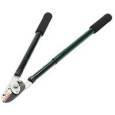
A long-handled branch lopper. I could see what had happened. One of the volunteers who work in the woods must have left it out. And then someone else found it, and hid it under the plank to keep it safe until it was found again. The volunteers have a tin shack nearby with all their tools locked away. The bench was as good a spot as any – or was it? The meeting place is pretty open. I figured it might be better to take the branch lopper and hide it round the side of the shack.

So that’s what I did. There was some timber to the right and I hid it under that. I was a little anxious someone might see me and wonder what I was doing. It looked suspicious, rootling around like that. But if they came close enough I’d explain, and we’d all have a good laugh about it.

When I was happy the branch lopper was well hidden, I set off again with Lola, aiming for the meeting place again. This time I didn’t stop, but walked right through. And it was just when I’d left the hexagon on the north side that I saw them – another pair of branch loppers, lying in the grass.

It was all so unlikely. What was this? Some kind of sign? How many times would I have to repeat the same thing before I realised what was happening?

I picked up the branch loppers and headed back to the shack. Lola took a while to come back – as if even she was uneasy about the way the walk was going. But I dealt with it quickly. I was an old hand already with the whole lost branch lopper thing. I knew exactly where to put it.

As I made my way back to the shack I started to think of a story that might account for this scattering of branch loppers, and what I might find next. And it was then that I remembered years back when I was out walking with a friend and we found a body.

We’d been trespassing on private land. We knew it was private because there were all these crazy signs, red paint on warped boards, saying KEEP OUT and TRESPASSERS WILL BE SHOT. By the look of the place no-one had been around for years, so we thought it was a fair chance we’d be okay. We carried on past the ruined farmhouse and into the overgrown fields beyond, making up a cliché horror story about the guy who lived here and all the people he’d killed. It was only when I pretended to get shot and did a spectacular cartwheel death fall that I noticed the jacket

It was dropped in the long grass just exactly as if someone had taken it off and carried on walking. There were odd things in the pocket – a bus pass, a ball of string, a blood-stained handkerchief.

‘Shit!’ said Rich, glancing back in the direction of the farmhouse.
We started looking around. We came across other things: a shoe, a pair of trousers. And then we saw the body, lying on its right side over by the barbed wire fence at the nearest edge of the field. We both ran over, but as I’d done a first aid course by that time, I went first.
‘Are you all right?’ I said, leaning over and tentatively touching the body on its shoulder. But the face was all rotten and fallen in, and when I jerked back I remembered the trousers we’d found, and realised that the legs were uncovered and blackened. It was winter, though, and there was no smell. I remember a blackbird perched on a post just a little way away, bobbing up and down, chip-chip-chipping in alarm.
‘We’d better call the police’ I said.
‘Has he been shot?’ said Rich. ‘Turn him over and look.’
But I didn’t really want to do that and in the end neither did Rich.
‘We’d better call the police.’

This was before mobile phones. We could see the roof of a cottage over a nearby hedge, some smoke rising. We walked over there. I climbed on a stump and peered over. There was an elderly woman gently prodding around in a flower bed with an immaculate trowel.
‘Excuse me’ I said
She straightened, and looked about, the trowel held out to one side.
‘Over here,’ I said. ‘The other side of the hedge.’
‘What do you want?’ she said. ‘I’m not alone.’
‘No. It’s okay. Only – we found a body and we wondered if you’d call the police.’
‘I will call the police!’ she said.
‘Great. Thanks. We’ll wait on the road by the abandoned farmhouse.’
‘I’m going to call them right now!’
‘Thank you very much’ I said, jumping back down.

There was a long wait, but eventually they came. Two patrol cars, blue lights flashing, no sirens. We took them to the spot, and then whilst one of them made calls on his radio, another drove us back to the police station to take statements. It was only months later I got a call to let me know what happened. An elderly man had absconded from a home for people with dementia. He’d become lost and confused, and the weather was bad, and the likely cause of death was hypothermia.
‘Why’d he take his clothes off like that?’
‘It’s called paradoxical undressing. People do that when they’re very cold. Apparently,’ said the officer on the phone. He sounded like he was in a rush and didn’t want to be drawn into anything. I thanked him for the update.
And that was that.branch loppers

the anxious forager

Mushrooms are great, but you have GOT to be sure.

It’s a salutary story, the one about the two families who went out mushroom picking, both thinking the other knew what they’re doing, both ending up on dialysis a few days later. Because the trouble is, the differences are often subtle and really hard to spot.

I’ve got a field guide to mushrooms & toadstools (first lesson = there’s no real, scientific difference between a mushroom and a toadstool), but I don’t find it easy at all. There are handy logos at the top of each page – a knife and fork on a plate, a knife and fork on a plate in brackets, a knife and fork on a plate with a line through it, and a grinning skull.

It’s the grinning skull that puts me off the other three.

The distinctions between each specimen are often extremely subtle, and go against your natural inclination. Take the smell. Strong odour of cucumber, or cedar wood? Or prussic acid? Which amongst those would you want to eat? That’s right – the prussic acid odour. Belongs to the Fairy Ring Champignon  – delicious, apparently, if you could ever relax enough to force it down.

The whole thing seems rigged. For example, the Deathcap – the mushroom vying for friendliest name, along with the Destroying Angel – well, apparently when it’s young it’s encapsulated in a ‘universal veil’ which gradually disintegrates. Before it does, though, it looks exactly like an edible puffball.

Great. Thanks.

If all that wasn’t enough, the deadly varieties like nothing better than to sneak in amongst the edibles. The Deadly Webcap has been known to grown next to hallucinogenic Liberty Caps, so you’d get way more of a trip than you bargained for.

Although there is the Contrary Webcap, which you can eat.

It’s supposed to be reassuring that most of the poisonous varieties will only give you severe cramps, diarrhoea and vomiting and a mild longing for death. There are only two or three with no antidote and a guaranteed one-way trip to complete renal and liver failure and a plot of your own for the mushrooms to spring up in. *shiver*.

All of which is to say that I’m a complete coward when it comes to picking mushrooms to eat. I did actually go on a one day course once, to get more confidence. The woman running it was amazing. In her late seventies, keen naturalist all her life. She looked more at home in the woods than anyone I’d ever seen. Well – at one point she cut a mushroom, held it up for a while, and said Hmm. I’m not sure about this one. So I’m content with taking a few pictures, and buying the cultivated kind from the supermarket.

I prefer this, anyway. To be really sure about a mushroom you have to cut it and have a good look. (You’re not killing it. What you see above ground is the fruiting body, with the mycelia extending underground to a surprising extent). You have to examine the thing carefully, the gills, the stipe and so on, slicing it in half to see what colour the flesh is and what happens to it. But the mushrooms look so beautiful in situ, it seems a shame. I’m not ruthless enough to be a collector, or a (safe) forager. I’ll content myself with taking pictures, and leave the rest to nature.

Here are a few I took today. (Once you become aware, you start seeing them everywhere…)


sig

mantell piece

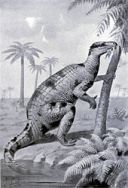
two hundred years ago
Mantell filled a bucket
with teeth and bones
from the local quarry
hurried home
put two and two together
and came up with a crocodile
later, re-jigging the puzzle,
he made a giant iguana
with a hook on its nose
named it Iguanadon
(the hook was actually
a claw; well,
even monstrous herbivores
needed a little something,
given the size
of the carnivores
hanging around
back then)

now it’s all changed
mountains have peaked
and gone, the earth’s
plates spun out
the Isle of Wight isn’t where Egypt is anymore
and the river delta
where that Iguanadon
chewed his leaves
staring unblinking
at the horizon
– even those endless
shivering softly yielding sands
are rock hard
and where the iguanodon fell
the meat counter at Sainsbury’s

I’m sitting in the foyer
of the health centre
thinking about nothing in particular
sipping a mocha
glad I hadn’t gone for the sprinkles
when a guy walks past with his hood up
the hood is designed to look like
a dinosaur head
not so much Iguanodon
as Godzilla
quite convincing though
especially the way he’s hunched
over an energy bar
the size of a small bus

I wonder what Mantell would’ve made of it

Iguanodon_feeding

notes from the frontline of adult social care