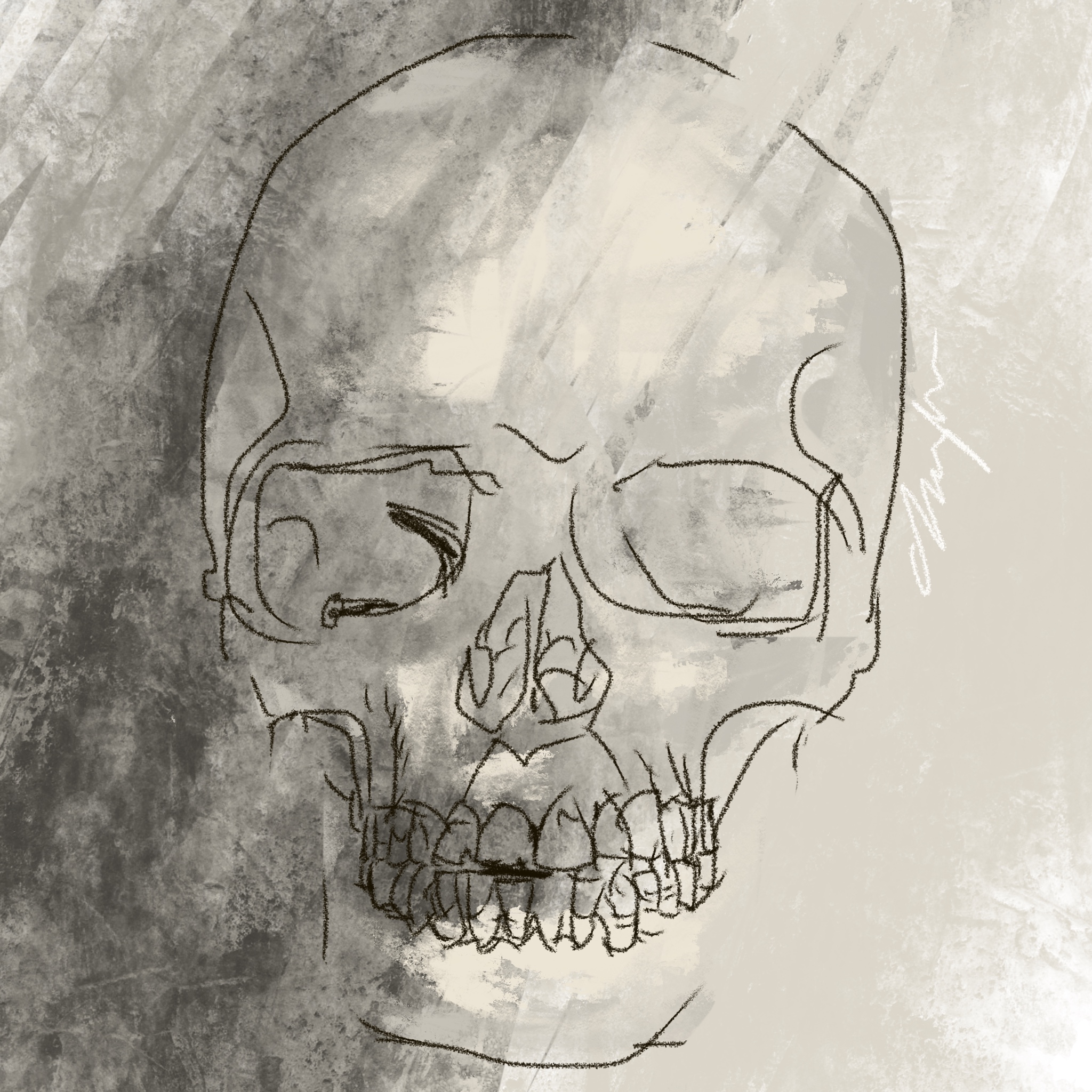
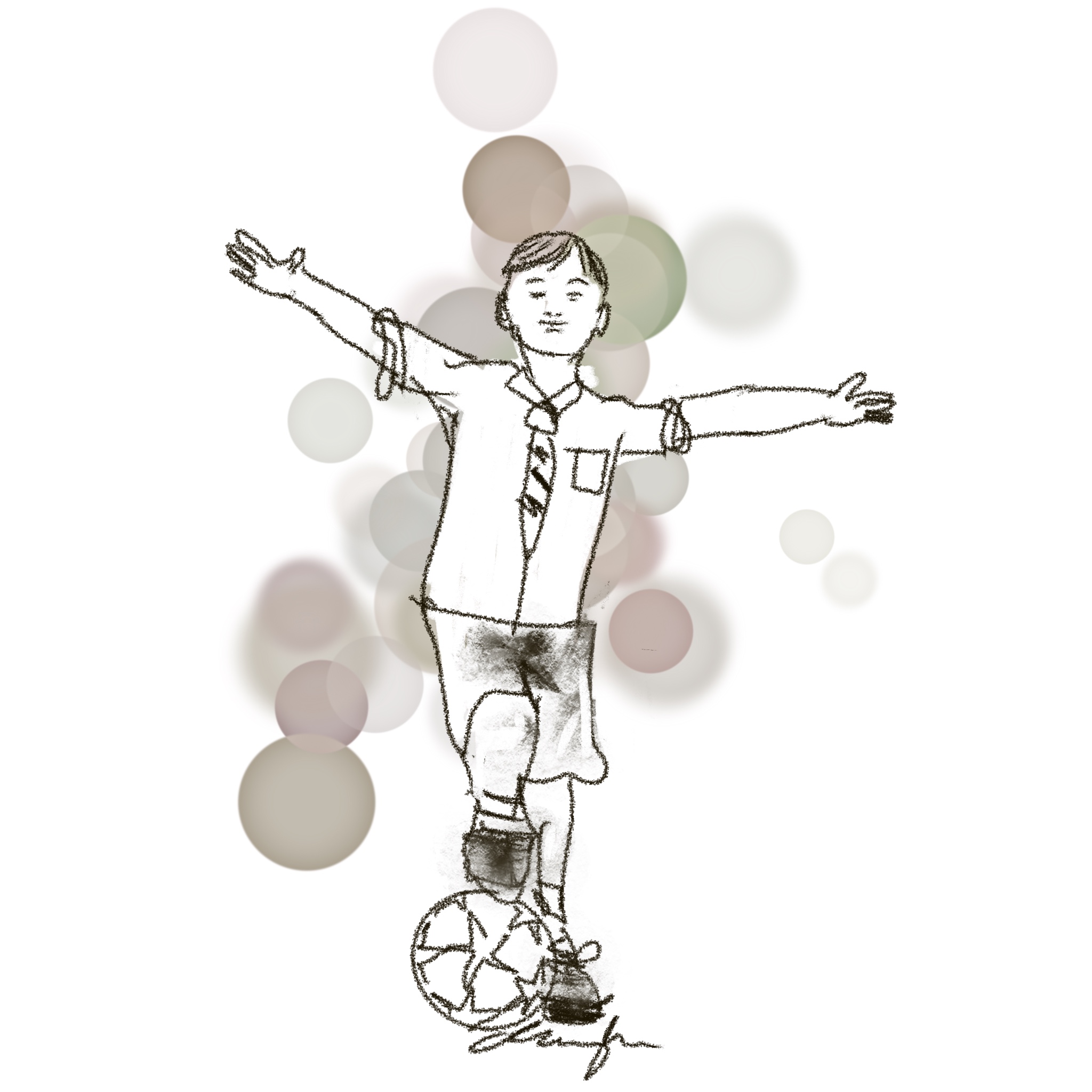
white plastic flowers

There are three brightly-coloured, classic American cars parked nose-to-fin along the side of the road. It’s strange to see them in this thoroughly-suburban scene, like I’ve wandered into a perverse mash-up of LA Confidential and One Foot in the Grave. Frank’s bungalow is a little further up. It’s got a perfect square of grass out front, edged in pink cemetery chip, a white fountain in the centre with a cherub continuously urinating into a scallop shell. A little closer and you can see that everything is plastic, including the grass, which explains the sharpness of the lines and the colours, everything accentuated by the sky, low and grey, rumbling, threatening rain.

Frank answers the door, hunched over a zimmer frame, his dressing gown swinging open, his ascitic belly poking through.
‘Thanks for seeing me,’ he wheezes. ‘Come on in.’
The bungalow is meticulously clear. It’s a laminate floor and it squeaks a little as Frank wheels his zimmer frame along it. He leads me through to the conservatory out back, the most prominent feature being a small-scale but perfectly detailed drinks bar – a Thirties-themed affair, with optics against a checkerboard background of black and white glass tiles, shelves of fancy cocktail glasses, old cigarette trays, mats, ice buckets, the whole deal.

It’s a routine assessment. Frank only needs a little care support since coming back from hospital. Everything else, all the nursing and therapy needs, have already been taken care of. It doesn’t take long.

Whilst I’m finishing off the paperwork, writing out the folder notes, Frank readjusts his dressing gown and looks out into the garden. It’s a larger version of the one out front, although the lawn, the silver birch and the shrubs look real enough. He’s hung thick skeins of white plastic flowers everywhere, to give the scene a rich, Hawaiian look, I suppose. The sky is so dark with the coming rain, they stand out with a strange intensity.

‘Watch out! Here it comes!’ says Frank, as the rain suddenly clatters down on the conservatory roof. The noise is so loud, he even has to shout a little. ‘It’s like being on stage!’ he says. ‘The crowd goes wild…’ And he waves out at the garden, smiling, nodding his head right and left, graciously accepting the applause, as the white plastic flowers shiver in the rain.

my first little book of trump

A is for America, land of the free
B is for Bussing in the military

C is for Covfefe, Confusion, Collusion
D is for Denial, Distraction, Delusion

E is for Editing the lies in Wikipedia
F is for the Fakes in the Lamestream Media

G is for Golfing in Mar A Lago
H is for Holding another embargo

I is for Ivanka’s consulting fee
J is for justices six vs. three

K is for the Kids in the KKK
L for the Losers who get in their way

M is for Melania’s ‘I really don’t care, do u?’
N is for Nominations, rushing them through

O is for the Orange of his big, sticky paws
P is for the Phony Emoluments clause

Q is for Questionable accounting procedures
R is for Rescheduling corporate foreclosures

S is for Slander, the Locker Room snicker
T is for Tantrums on TV and Twitter

U is for the Unforeseen virus’ reach
V is for Vaccinating with kitchen bleach

W is for the White House, the Office, the Garden
X is for Exonerating his friends with a pardon

Y is for Yearning, the dreams of ‘You’re Fired!’
but
Z is for the Zillions he’ll sneak when he’s retired

operation broken wing

William shows me into a large, glossy, wooden-floored hallway. There’s a rack for shoes against the far window, covered with so many trainers and school shoes and slippers and fancy boots and things it looks more like someone backed a truck filled with odds and ends from a shoe store and had them tipped in one enormous heap onto the rack. Amongst all the shoes are micro-scooters, rugby balls, school bags, laundry bags, bags for life.
‘Sorry about the mess,’ says William.
I follow him through into the house. It’s a large, detached building where most of the ground floor has been knocked-through into one, vast living area. There’s a suggestion of corridors leading off into smaller, more private rooms, the bathroom and so on, but mostly it’s this wide, white space, a wall of glass at the far end past the kitchen area, skylights sunk deep in the ceiling here and there, and then enormous sofas and chairs dotted about the place. It’s a surprise to come into such an orderly area after the chaos of the hall, but maybe that’s the protocol in this house – you shrug off all your clutter there, like an airlock. This space is much more formal, like a departure lounge at an airport. But instead of a few people sitting on the sofas next to wheeled suitcases with the handles up, there’s just William’s mum, perched on the edge of an armchair, as upright and watchful as a buzzard in a raptor sanctuary.
‘Hello Mrs Claymore,’ I say, putting down my bags.
‘Hello,’ she says, turning her head to blink once at me, firmly. ‘And who do we have here?’
‘Mum’s staying with us whilst her arm gets better. Aren’t you mum?’
‘Yes,’ she says. ‘Apparently.’
‘And how is the arm today?’
She gives a tentative shrug, the broken right arm shifting uncomfortably in its collar and cuff.
‘Still broken,’ she says.
‘Much pain?’
‘Oh – not too bad. I’ve had worse.’
‘Really?’
‘Oh yes. Much worse. I’m ninety-six, you know.’
‘So the pain medication’s helping?’
‘It is and it isn’t,’ she says. ‘It makes one feel rather woozy. Do you know what I mean by woozy?’
‘I think so. A bit off centre.’
‘Yes. A bit doolally. And of course, it acts as a kind of brake on the whole bowel issue.’
‘That’s the codeine.’
‘So they say. But I’m eating well and all that jazz, so there we are.’
She looks around, a little forlornly, as if she’d much rather be hopping around in her own forest – and gives another, small shrug.
‘Everyone’s been marvelous,’ says William, sitting on the arm of one of the big sofas. ‘Haven’t they, Mum?’
‘What darling?’
‘I say everyone’s been marvelous.’
‘Yes. Absolutely. First class.’
She doesn’t sound all that convinced, though.

*

After I’ve performed the usual tests and asked about the practicalities of the thing, whether they need any extra equipment, how much physio we can offer and so on, I sit with the yellow folder on my knees, writing up the visit. William is attentive and polite. He’s done the right thing by taking his mother in and looking after her, but I can see it’s a strain. He’s perched on the arm of the sofa with his arms folded. Every so often he vigorously rubs his face, or pulls his phone out of his pocket and scans it for something – anything – that might demand his attention and give him leave to step out.
‘What did you do before you retired, Mrs Claymore?’ I ask her – as much to cover a sudden fall of silence as anything else.
‘The Foreign Office!’ she says.
‘Yes,’ says William. ‘She got up to a few things, didn’t you Mum?’
‘I did what?’
‘I say you had a few adventures.’
‘You could say that,’ she says.
‘Where did you serve?’ I ask her.
‘The Middle East, mostly. A stint in Hong Kong.’
‘Really? You know – my brother in law’s in Hong Kong.’
‘Is he?’ she says, blinking at me through a fog of codeine. ‘In what capacity?’
‘I couldn’t tell you,’ I say. ‘Something businessy. I must admit I don’t really understand it – what with the pandemic and China being a lot more heavy-handed. You’d think you’d do anything not to go back there. But of course – you know what our theory is, don’t you?’
‘What theory?’
‘We all think he’s a spy.’
‘Oh? And what makes you think that?’
‘One – he’s going back there in the first place. Two – he’s got more passports than Jason Bourne.’
‘Jason who?’
William leans in.
‘A character in a popular film franchise, Mum. About spies.’
‘Oh?’ she says. ‘Never heard of him.’
Then – gently cradling her broken arm and leaning a little towards me, she whispers: ‘S.O.E?’

B.J in a Box

Someone bought me a Boris Johnson doll
faithfully rendered in wipe clean plastic
the detail was fantastic
white blond hair that stuck up
a shabby shirt that rucked up
eyes that narrowed and slid
and written in big blue letters on the lid
TAKE BACK CONTROL

Back of the box was a list of features:
realistic hands for passing the buck
cloak of invisibility when things come unstuck
extra large pockets so there’s room enough
for paternity suits and bungs and stuff
additional velcro suit, hat and stick
so he can change into Churchill pretty quick
Tough! Dynamic! A real world-beater!

But I got a shock when I pulled him out
In his back was a cord to make him speak
Waffle and spoffle and schoolboy Greek
and underneath where the batteries went
was another, peculiar looking vent
so I put the doll on the kitchen floor
got a spoon from the cutlery drawer
levered it open and gave it a clout

Inside was a figure like a decorated peg
in a shell-suit, lanyard and beanie
I’d never seen a person so weenie
or so grumpy, I have to confess
with a hard little stare like he couldn’t care less
I’d performed a C-section with a spoon
and sprung him from his womb
like a crappy toy from a Kinder egg

There was nothing on the box to say he was there
nothing in the instructions
the long list of functions
so I wondered what it was all about
I mean – it’s something I can do without
I think it’s pretty standard when you buy a doll
that you’re the one who’s in control
and not some other fucker hidden somewhere

please welcome on stage

Thomas is alert but strangely neutral, propped up on the ambulance trolley, his white hair wild on the pillow, his mouth slack. He’s put on so much weight it’s taken a team of four to wheel him off the ambulance, up the drive, through the portico and into the house. Jenny the OT and I have arrived just in time to help, although there’s not much for us to do other than carry in all the bags of personal possessions, drugs and so on. The patient transport crew are a loud and pleasant bunch, eyes smiling over their masks, plenty of to you / to me banter as they patslide Thomas into bed, make things good, get ready to go. One of them nods for me to follow her back out to the truck, though.

‘I don’t know what help you can give them,’ she says. ‘But I gotta tell ya – I’m worried about the daughter. She’s a donkey on the edge. See what you think. Personally – I don’t know – I wouldn’t put money on it.’

The story is that Thomas went into hospital after a fall, stayed a month, then got transferred to a nursing home for a few weeks’ rehabilitation. Meanwhile, the hospital OTs visited the house, put in a hospital bed, stand aid, commode and so on, and then referred him to us for more therapy and nursing support, along with bridging care until a full time agency can take over. All in all it’s about as much as anyone can do short of adoption, or residential care, of course. But we’ve been tasked to visit for the initial assessment, to see how it all looks, and if the plan is workable.

The house is like a spacious, somewhat incongruous pink Spanish villa, set back on a rise at the head of the close. Thomas’ hospital bed has been set up in the L of the vast, low-ceilinged living area, with bare stone walls, a heavily-timbered fireplace, brasses hanging here and there, a hunting horn, a few framed portraits. Even though it’s hot and bright outside, the late summer morning doesn’t penetrate overmuch; what light there is only makes it so far through the patio glass at the far end, lying like a glossy green sweat on the backs of the clubby sofas and chairs.

In fact, the scale of the place is a little overwhelming. It’s the details that make you dizzy. On the wall behind the head-end of Thomas’ bed is a giant oil-painting of a horse’s head; at the foot of the bed, on a granite pedestal, a fish tank filled with tiny silver fish.

Thomas’ daughter, Helen brings in a giant mug, filled almost to the brim with tea.
‘Don’t spill it!’ she says to him, putting it on the overbed table.
He glances down, shakily jerks his hands, the tea slops.
‘Look what you’re doing!’ she says.
I take the cup from him, move the table to one side, hand the cup back to Helen.
‘He really needs one of those spill-free mugs – you know – the ones with the spout.’
‘What – like kids use? For kids?’
I nod.
‘That’s it!’
‘Have you got any?’
‘We don’t carry them. But you can get them anywhere. The supermarket, pharmacy…’
‘A beaker for kids? You mean Tommy Tippee?’
‘A lot of people use them.’
She looks horrified, takes the tea back into the kitchen.

Whilst Jenny starts doing the paperwork and an audit of the equipment we’ll need to check, I run some basic obs. It’s immediately obvious things aren’t right.
‘I think this is looking like a failed discharge,’ I say, looping the steth back over my neck.

Alice and Frank, two of our most experienced carers, turn up for the lunchtime call. It’s good to see them – they’re so cheerful and grounded, it immediately makes any situation a hundred times better. Between us we set about sorting Thomas out, log-rolling him, tearing off his pads, cleaning him up, putting on fresh pads, changing the sheets, sitting him up again. Thomas coughs throughout. Frank raises his eyebrows at me.
‘Tested for Covid?’
‘A month ago.’
‘Oh-kay…’

Helen appears in the doorway. She stands watching us, her arms folded, staring at the pile of sheets on the floor.
‘What’s that?’ she says. ‘Why’s that there?’

Jenny goes over to her to explain the situation whilst we finish up.
‘They’ve just had to clean your dad up and make him comfortable. Have you got a washing machine?’
‘What do you mean? I’m not doing any washing.’
‘It’s not too bad, Helen. It just needs tossing in the machine with a tab of something.’
‘Well you can do that because I’m not. Isn’t that what you’re supposed to do?’
‘No, I’m afraid not. We’re effectively an emergency service. The carers will be coming in four times a day for bed washes, pad changes, and then simple meal prep and medication if that’s needed, too. But everything else – things like washing, cleaning, shopping – well, they’re all classed as domestic chores. You’ll need to find someone to cover that if you can’t.’
‘Well I’m certainly not doing it,’ she says. ‘Why should I? I’m not touching anything soiled.’
‘You can put gloves on.’
‘Gloves? Gloves? I’m not putting gloves on. Look – you do what you have to do, but I can’t … I just can’t… I’ll go and stay at a friend’s if that’s what you think’s going to happen.’
Jenny looks over to me.
‘It might all be a little academic…’ I say, feeling Thomas’ pulse again. He sits propped up on the pillows, the focus of everyone’s attention, his mouth bouncing up and down, mute as a ventriloquist’s dummy who still has a whole bunch of things to say – important things, mad things, funny things – but the hand some time ago let go of the lever, and left him on stage to carry the show alone.

fridge magnets

Mr Yelnats talks with an unending cadence, running one sentence into the next. It wrong-foots me, because when it sounds like he’s coming to a full stop and I’ll be able to answer some of his anxieties, he picks up steam again and carries on. The result is that I spend the next five minutes occasionally drawing a breath ready to speak, then letting it out slowly again, nodding sympathetically, trying to keep a hold on the points I’ll need to cover to calm him down. In the end, though, I’m driven to talk over him a little, and ease him to a stop, like intercepting a bolting horse by standing in its path, holding my hands out and stroking its nose.

‘Well first of all – has anyone told you who we are?’ I say.
He changes his position on the sofa again, throwing his right arm over his head to scratch the opposite ear, then changes back again.

‘No,’ he says. ‘No they haven’t. What they did say is that all this would be done. I mean – I wasn’t expecting brass bands and flags in the street. I mean – I’ve been away a long time but I’m not stupid. I know how these things go. But why did they say it’d all be done? I’d have the things that go over the toilet. I’d have the stair rails. I’d have the thing that goes over the bath. A perching stool, whatever that is. I mean – I wasn’t expecting a team of workmen drilling holes in the wall as I walked in the door. This isn’t the movies. But still – a promise is a promise. Why did they say they’d do these things if they weren’t going to happen? I mean …’

‘I’m sorry you were given the wrong impression about how it all works, Mr Yelnats,’ I say. ‘But let me just explain…’

‘I’m not as bad as some. I’m pretty bad, as you can see. But I do my best. I can get about – of sorts. I’ve been away three months and things are a bit difficult at the moment. Don’t get me wrong. I’m an independent sort of chap. Still. My wife died six years ago and I’m still getting over that. Not that you ever do.’

‘I’m sorry to hear that.’

‘It’s as well to know your limits. I want to get better. I think I can get better. In fact I’d go as far as to say I expect to get better. But I’ll need a little help. As things stand I’m not sure what I can do and what I can’t do. Let me tell you something. When I was on that ward…’

He holds out his hand, spreads his fingers and taps them one after the other with the other hand, listing all the things he was told on the ward. And – actually – it comes down to five things. He’d have a toilet aid, a walking frame for upstairs, a bath board, a perching stool, and care support all waiting for him when he got home.

‘Okay,’ I say, as evenly as I can. ‘Okay. First things first. Let me quickly tell you who we are. We’re an NHS community health team. We’ve got lots of people on the team – physios, OTs, nurses, pharmacists – you name it. It’s a pretty big team. We’ve also got a small bank of carers who give emergency support to patients. Our job is to either support people being discharged from hospital – like you – or to stop them being admitted in the first place. So the hospital has referred you to us, and I’ve come round on a kind of fact-finding mission to see exactly what it is you need.’

‘Let me stop you there…’ he says.

‘Just one more thing,’ I say. ‘And this is pretty key. We’re a short-term service, so we work very very quickly. We like to move things on as fast as we can. If someone needs longer term help, we refer them on to the District Nurses or any of the other specialist teams. And if they need longer term care, we refer them on to full-time care agencies.’

‘Yes, yes, I get all that,’ he says, as I nod and gesture for him to continue. ‘But why did they say it’d all be in place when it wasn’t?’

‘I don’t know. There are two types of arrangement. One is an access visit, where an OT from the hospital comes to the house to put in essential equipment ahead of the discharge, and then there’s a referral to us.’

‘What – coming to my house when I’m not here? I wouldn’t want that.’

‘Okay – so that’s probably why they referred you to us. But as I say, we work pretty quickly.’

‘How quickly?’

‘I could call the office now and see if they’ve got availability for an OT to come out with the stuff. They’re horribly busy, but it’s worth a shot.’

He frowns at me.

‘What are you like with toilets?’ he says.

‘Toilets?’

‘My toilet won’t flush.’

‘Oh. Well. I’m not a plumber. But I could have a look…’

He struggles up out of the sofa, waving me away when I go to help. It’s like watching a daddy long-legs trying to free itself from a glob of treacle.

‘That’s quite low for you,’ I say.

‘It’s comfortable,’ he says, puffing and straining. ‘I’m used to it.’

Eventually he manages it, and after taking a breath, straightening his cardigan and swiping his hair to the right, he staggers out of the room with me following behind. We pass along through a narrow kitchen, Mr Yelnats using the counters and cupboards for support, me with my hands out like an anxious parent ready to catch.
‘I need some rails here,’ he says, slapping the wall.
‘I can see that.’
‘It’s in there,’ he says, chinning me in the direction of the loo.

A creamy green toilet with one of those cisterns with a push-button flush. I’ve really no idea, but I take off the heavy lid and look inside. The water is up to the top. There’s a strange looking plastic box on a push-fit over the handle spindle. I pull it off, flip the lid open and try to figure out how it works. When you push the button on the outside of the cistern, a rod pushes a sprung thing that tugs on a wire that feeds down a tube into some other thing that operates the flush. The sprung thing is sticky, so I wiggle it. Eventually – miraculously – it seems to work again. The water empties with a gratifying rush.

‘Don’t it?’ says Mr Yelnats, waiting outside the door.
‘All done! Seems to be fine now.’
But … when the flush is finished and the water starts to come back into the cistern again, the water level doesn’t go beyond a couple of inches, and all the excess runs off into the toilet bowl. No amount of wiggling makes any difference.
‘Oh,’ I say.
‘What?’ says Mr Yelnats.
‘I can’t stop it filling.’
‘Let me see…’ he says, and comes into the toilet. There’s no room for both of us at the loo, so I squeeze past him. Eventually he supports himself on both hands, staring down into the noisy cistern.
‘What have you done?’ he says.
‘Like I say – I’m not a plumber…’
‘It’s going to run like that without stopping now.’
He tries some wiggling, too, but nothing makes any difference.
‘Let me have one more look,’ I say. We go through the same elaborate manoeuvre as before, and swap places.
In the end, for want of anything else, I get a Toilet Duck and wedge it under the ballcock, stopping the water about half-way up the cistern.
‘It’s only temporary,’ I tell him. ‘I’m afraid you’re going to have to get a plumber in.’
‘Where am I going to get a plumber?’
I shrug.
‘Do you have any family nearby? Any friends, or…?’
‘No.’
‘The internet?’
‘Hmm,’ he says. ‘There’s a plastic bucket back in the kitchen. Fetch that in here, would you? I can use it to flush things through.’
‘Okay.’

I find the bucket on a stool beside the fridge. The fridge is covered with a grid of fridge magnets – a Picasso portrait, an abstract pattern, hokey one liners with cartoon illustrations: My wife might not always be right but she’s always the boss or There’s nothing wrong with me that a little chocolate won’t fix. A Fender Stratocaster. A Triumph.
‘Where’s that bucket?’ shouts Mr Yelnats.
‘Coming!’

lobby elevator pitch

You wanna know / what’d make a great animated TV show? / a bunch of lovable characters that grow / and sprout / and rootlessly run about / in a spooky, kooky kinda Victorian hothouse / on the balmy banks of the Thames / I mean – okay – it’s basically MPs and their shady business friends / but this time as HERBS! / with nothing much to disturb / their cute little cummings & goings / apart from the odd village showings / where the local duchess / who is actually a horseradish / turns up to award a certificate and cup / to the herb with the seeds to back them up

So anyway – here’s a back-of-the-envelope cast of characters / excluding all the walk-on CEOs and barristers / (there’s plenty of room for vegetables and fruit / but I’m sticking with herbs for the pilot shoot) / and one other thing / to make this even more deliciously tempting / I think there’s plenty of scope for merchandising / I mean – I’ve already had preliminary talks with Schleich / who want clarity on the parody but the herbs they like

Boris Basil – thinks work’s a hassle, babbles and baffles
Pritti Parsley – looks quite sweet but her character’s ghastly
Matt Dill – hung out to dry on the windowsill
Dominic Shrub – hides behind the water tub
Grant Shapweed – sappy, ratty, gone to seed
Jacob Rees-Mint – droopy & snooty, always putting his roots in it
Gavin Tarragon – a toothless, hapless, utterly hopeless kinda dragon
Liz Cress – okay with cheese, otherwise clueless
Robert Chervil – cheerful but awful
Mr Michael Gove – a wise and loyal ol’ gardener, by jove (as he heats his knives in the potting shed stove)
Brandon Onion – a good, all-round companion (some might say / in a very specific and limited way)
Thérèse Daisy – old school Tory, totally crazy
Sagey Sunak – the smartest leaf in the pack, struggling to keep the garden on track

Working title: In the Herb Garden
(open your wallet – I’ll drop my card in)

Chapter 17: Ice Age Stanley

Evolution of a Bark – a frozen cave bear – Werner Herzog – the life and habits of the Pleistocene Cave Bear described – dogs from wolves – what’s a Smilodon got to smile about? – Stanley’s good deed – and the treat he wins – domestic chores finally done

However annoying Stanley’s barking is – and, for the record, I have to say that really he doesn’t bark all that much – twenty thousand years ago we’d have been very glad of his bark indeed. In fact, we’d probably have kept him for that very purpose, along with his comedy walk, his empathetic expression, his crazy fur, his lolloping good humour and the rest of it.

The only reason I mention any of this is because on the news the other day I saw that some reindeer herders in northern Siberia had come across the carcass of a frozen cave bear. It was incredible. The whole bear, right there, emerging from the thawing permafrost with a terrifying snarl on its lips. (Mind you, I’m the same. If I don’t get the full forty thousand I’m a real grouch).

I remember seeing a documentary by Werner Herzog about the Chauvet caves in southern France. Apart from the fantastic animal paintings they’d found there, and the handprints of the artists who’d made them some thirty thousand years ago, I remember Herzog talking about the skull of cave bear. It had been put up on a plinth of rock, very much like an altar. And there were claw marks in the cave, too, where other bears had come to make their own contribution to the murals, or maybe to protest about their friend being made into a god. It’s hard to know from this distance – which is a point Herzog makes using an albino crocodile (you have to see the film).

Anyway, apparently these cave bears grew to quite a size – eleven feet or more when they stood up and waved their paws about, which they must’ve done a lot, especially when you accidentally went into the wrong cave, looking for a nice place to do some painting in, or living, coming to that. And then of course, the cave bear was omnivorous, which meant that although a pawful of berries or a scooched salmon or two would be more than welcome, a nice, fresh, screaming human would’ve been a particular treat.

Seeing how enormous the fangs on that icy bear were, I can imagine having a barky dog around to let you know if one was sneaking up would’ve been very handy indeed.

The theory is, of course, that dogs are domesticated wolves. They reckon it happened about fourteen thousand years ago, because there’s direct fossil evidence of dogs being buried with their owners. It may be that wolves started hanging round human camps, intrigued by the noise and the light and the delicious cooking smells. And I can corroborate this theory anecdotally, based on Stanley’s intense interest in the slightest sound of cupboards being opened in the kitchen – although cupboards didn’t appear in the fossil record until quite recently, of course. The humans may well have encouraged these feral but inquisitive animals, tempting them with scraps, laughing at them when they fell asleep and twitched as if they were still hunting or something. And after a few generations, maybe some of these wolf-dogs started tagging along on the hunt, and earned rewards for flushing out deer, or corralling aurochs, and generally making the whole thing more of a day out.

And then or course, there were the bears. And the saber-toothed tigers. Which, to be honest, I never did get. I mean – why would you need teeth like that, except maybe to impress? But at what cost to your table manners?

(I just Googled that. Apparently saber-toothed tigers weren’t actually tigers and were more properly called Smilodon. A Smilodon had teeth specially adapted to ambush big prey like bison and camels, biting them in a special way that scientists can’t agree on, except to say it wasn’t all that pleasant. Which makes the name Smilodon seem darkly ironic.)

I think Stanley would’ve been in his element, twenty thousand years ago. The earth was still frozen in the last great ice age. Woolly mammoths and giant ground sloths were hulking about. There were packs of wolves chasing down giant elk through the snowy forests. In fact, everything was giant, so Stanley would’ve fitted right in, especially his ears. I can imagine him, sleeping towards the front of the cave, twitching happily on his pelt, lulled by the flickering embers of the fire – until he suddenly sits straight up and starts barking, the dreadful hoooof-hooooofing echoing around the cave, and everyone groaning and stirring, swearing and cussing like flint-knappers, throwing quern stones and mammoth shoes and eagle bone flutes at him, until someone has the grace to realise that actually, he’s just saved them all from a particular savage cave bear, who’d been tippy-clawing up the slope in an effort to claim back its home. And then Stanley gets a great deal of cuddles and fuss, and a Pleistocene treat, being his favourite – the femur of a Moa (very low fat, high in magnesium, great for healthy teeth and bones and shiny coat, the only drawback being it’s so big you can’t pick it up). And the cave bear would grouch away along the glacier line, and trip, and get more completely frozen than those vegetarian burgers you have absolutely no memory of buying, and which only emerge twenty thousand years later when you finally get round to defrosting the fridge.

thank god it’s not friday

Fridays are the worst.

It’s more than just the hospitals clearing the decks before the weekend. There’s something else about the day – an end-of-the-week, last-chance, store-closing, now-or-never vibe that means from shutters up to shutters down the phone never stops ringing and every call is a crisis. Coming to work at eight on a Friday, you feel like stacking sandbags round the desk and putting on a tin hat. As it is, you make a cup of tea, get a fresh notepad, a pen and a highlighter, open up as many useful programs as you have access to on the computer, crack your neck, and wait.

But you can oversell these things, of course. And there’s a certain satisfaction to be had from stumbling from one thing to the next, like a clown fireman at the circus. Once you surrender to the chaos, and focus on the audience, it’s actually quite a rush.

Luckily, I only had to work the phones till three, when I was released to go on a couple of visits. It was so busy, though, thank goodness my replacement actually showed up. If they hadn’t, and I’d had to stay for the rest of the shift – well – who knows what would’ve happened? I’d probably have been found by a cleaner, alone in the office, lit by the ghostly glare of the screen. They’d have tapped me on the shoulder.
‘Are you alright?’
And I’d have swung slowly round. And the cleaner would scream – because they’d see my ears were merged with the headset, my hands with the armrests, my eyes would be flickering like two little plasma screens, and the veins in my neck and face would be spread all over like wires.

*

The first visit is easy enough. The second is a disaster.

Being exhausted doesn’t help, and the fact that my patient, Mr Reece has only just arrived back home after being discharged from a rehab place, weeks and weeks after he went in. All he wants to do is smoke a fag and watch the wrestling.

His flat is in a wretched state, lit by two shadeless, ineffectual, energy saving bulbs. Mr Reece is sitting in a ruined armchair, an electric scooter to his immediate left, a zimmer frame to the right, and a TV just in front. Around the chair is a scattering of papers, leaflets, unopened mail. In the corner of the room is an unmade bed, the centre of the mattress sagged and seamy. The whole place is suffused with a settled fug of neglect.

‘Hello Mr Reece!’ I say, as brightly as I can, struggling in with all my bags. ‘Sorry to disturb you so soon after you got home, but we’re a short term service and we need to get things started.’
He frowns at me, then pointedly plants a cigarette between his lips and reaches for a lighter.
‘Would you mind not smoking whilst I’m here?’ I say, putting my bags down and then wringing my hands together, like an apprentice vicar leading prayers for the first time.
‘Why?’
‘Because I’ll stink of smoke the rest of the day. And it’s not good for me. Sorry! I won’t keep you long.’
Mr Reece twists his lips together with a displeasure so violent the cigarette falls out into his lap.
‘You’ve got ten minutes!’ he snaps, throwing it onto the scooter. Then he jabs his hands towards me, palms flat, fingers spread wide. ‘Ten!’
‘Okay. Thanks. Well – has anyone told you who we are?’
‘No. They haven’t.’
‘Oh. I’m sorry about that. Well – we’re an NHS community health team whose job is to support people being discharged from hospital, or stop them going into hospital in the first place. Mr Reece? Are you okay?’
He’s leaning over the side of the armchair, rootling about in a pile of mail and newspapers.
‘I had £850 there and it’s gone.’
‘Oh. Shall I help you look?’
‘No. You stay there.’
‘Okay.’
I watch him scrabbling around for a minute. He struggles to get out of the armchair. When I go forward to help he tells me to keep away. He tries using the zimmer, but it gets caught up in the scooter. I offer to move the scooter.
‘Leave it!’ he says. ‘Leave that thing where it is!’
He abandons trying to use the zimmer, and shuffles around the chair instead, using the arms and the headrest as a support. He kicks his bare feet amongst the detritus, like a bad-tempered park keeper through a heavy fall of leaves, peering down.
‘Mr Reece? If you had £850, and it’s not there anymore, do you think it’s been stolen? Shouldn’t we be calling the police?’
‘I don’t know,’ he says. Then he stops, straightens, and – gripping the back of the chair with his hands – draws a bead on me down the sharp crook of his nose. ‘We’ll see if I find it. Won’t we?’